
Why Goldman Sachs slashed its Nifty 50 target by 3,400 points

0
0
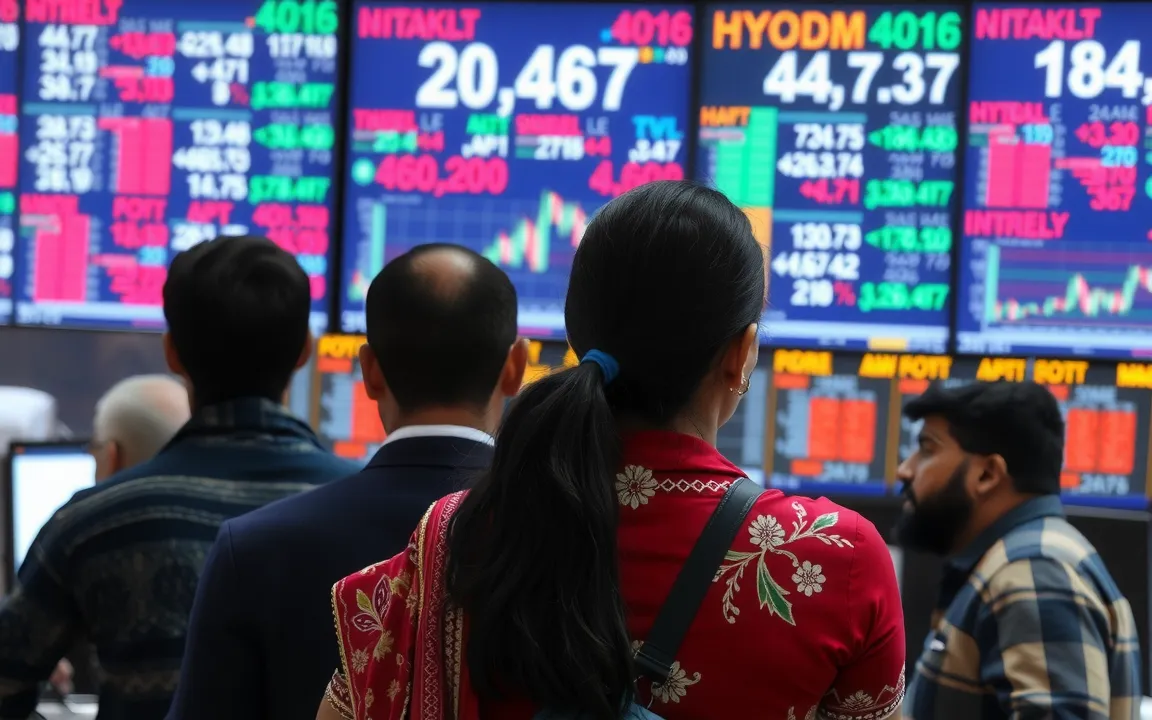
Goldman Sachs’ latest India call felt less like a routine target cut and more like a change in script.
The investment bank downgraded Indian equities to “marketweight” from “overweight” and cut its 12-month Nifty 50 target to 25,900 from 29,300.
The shift is striking because Goldman had only upgraded India in November 2025 and predicted that Nifty would reach 29,000 by the end of 2026.
The downgrade has landed in a market that is already under stress.
On Friday, the Nifty 50 fell 1.24% to 23,018.25, while the rupee slid to a record low of 94.2950 against the dollar.
Nifty 50: From optimism to caution
The latest call by Goldman Sachs matters more because it reverses a narrative that had worked in India’s favour for much of the past year.
The higher rating came after the investment banks highlighted bullish factors like earnings recovery, better growth visibility and policy support.
And now, Goldman Sachs is taking the completely opposite directions as it pointed out external shocks, tighter financial conditions and a worsening macro backdrop will likely limit returns.
In plain terms, “marketweight” means Goldman no longer expects India to outperform its benchmark or deliver meaningfully superior returns to peers.
To be sure, this is not an outright bearish call.
But the message is that the easy part of the India trade is over and investors must look at comprehensive dynamics before investing in Indian markets.
It must be noted that Goldman’s new 25,900 target still sits above current levels, implying some upside from where the market is trading now.
Oil is now the market's central variable
At the heart of Goldman’s rethink is oil.
In a March 24 macro note, the bank cut India’s 2026 growth forecast to 5.9% from 7.0% and raised its inflation forecast to 4.6% from 3.9%.
Moreover, Goldman Sachs also said that India's central bank, the Reserve Bank of India, may need to raise rates by 50 basis points in 2026.
The forecasts rest on factors like higher crude prices, a weaker rupee and imported inflation straining the economy.
The transmission mechanism is straightforward, and that is what makes the call compelling.
Higher crude lifts India’s import bill, widens the current account deficit and puts fresh pressure on the rupee.
A weaker currency then makes imported goods more expensive, feeding inflation and raising the odds of tighter monetary policy.
India Premium is being tested
The most important part of Goldman’s new note may be what it says about earnings and valuations.
The bank now assumes earnings growth of 8% in calendar 2026 and 13% in calendar 2027, and a lower target price-to-earnings multiple of 19.5 times, down from 20.8 times earlier.
That is a double hit with lower profits and a lower multiple on those profits.
For a market like India, which has long traded at a premium to most emerging markets, that shift is significant.
India’s premium can survive only if the macro backdrop remains supportive, the investment bank argued.
The post Why Goldman Sachs slashed its Nifty 50 target by 3,400 points appeared first on Invezz
0
0


 Manage all your crypto, NFT and DeFi from one place
Securely connect the portfolio you’re using to start.

0
0


0
0