
Is Cardano Facing Its Biggest Security Test Yet?
0
0
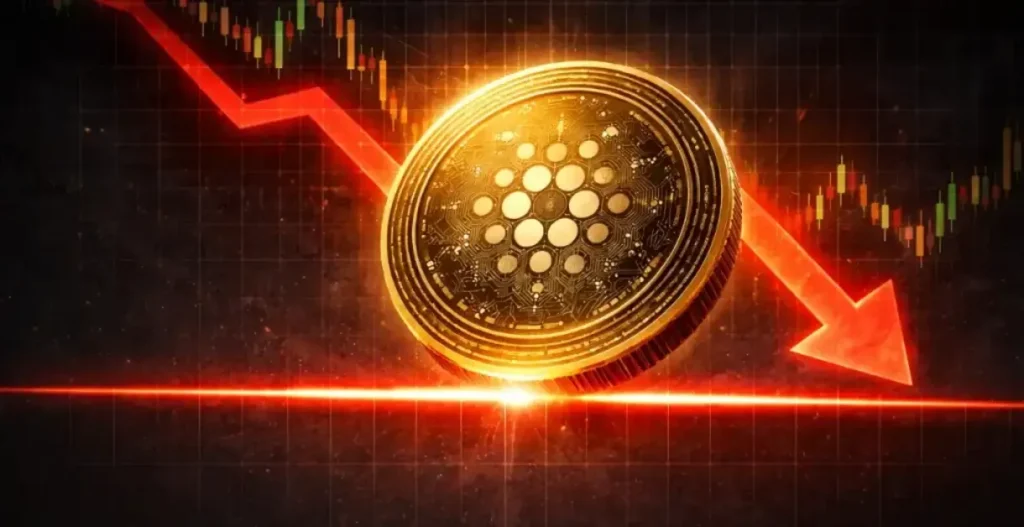

A $20 million exploit is never just a financial event. It is a trust event — and for Cardano, a network that has built much of its identity around rigorous security and peer-reviewed development, the timing and nature of this breach carry weight that goes well beyond the dollar figure.
On June 24, 2026, Whale Factor flagged that SecondFi, a protocol built on Cardano, was drained of over 129 million ADA worth more than $20 million due to a wallet generation flaw.
Security firm SlowMist confirmed the exploit. The vulnerability was not in Cardano’s core protocol — it was in the way SecondFi generated wallets, a flaw that left user funds exposed at the infrastructure level rather than the blockchain level.
The distinction matters technically. But for users who lost funds, it offers little comfort.
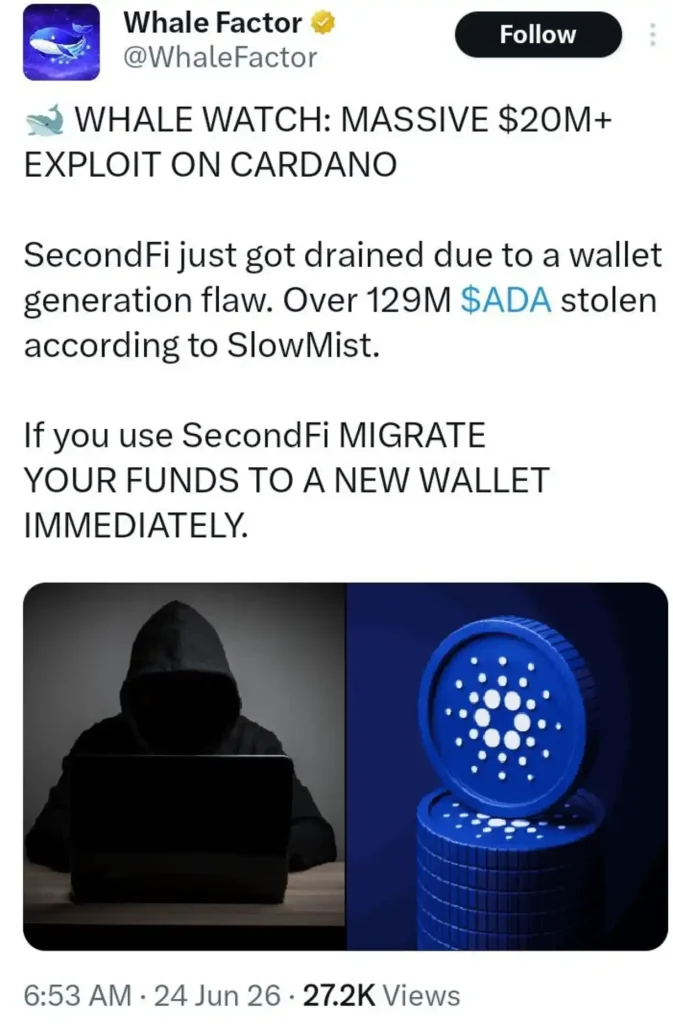
If you currently use SecondFi, the immediate action is clear: migrate your funds to a new wallet immediately.
What a Wallet Generation Flaw Actually Means
A wallet generation flaw is one of the more serious categories of vulnerability in crypto.
It typically means that the process used to create private keys was flawed — producing keys that appear random but are predictable enough for an attacker to reconstruct.
Unlike a smart contract exploit that targets a specific function, a wallet generation vulnerability can expose every wallet created through the affected system.
That is why the scale of this drain — 129 million ADA across what appears to be multiple wallets — is consistent with this type of attack.
The attacker likely identified the flaw, reverse-engineered affected wallet keys, and systematically drained them.
Wallet generation vulnerabilities are particularly dangerous because they are invisible to users. The wallet looks legitimate, functions normally, and gives no warning — until the moment it doesn’t.
The Chart Was Already Struggling Before This Hit
Data pulled from CoinGecko on June 24, 2026 at approximately 12:15 PM shows ADA trading at $0.146609, down a significant 13.4% over seven days.
The weekly chart tells a story of uninterrupted decline — ADA opened near $0.17 on June 18, sold off steadily each day through the week, and has now broken below $0.15 to touch $0.14 at its lowest point on June 24.
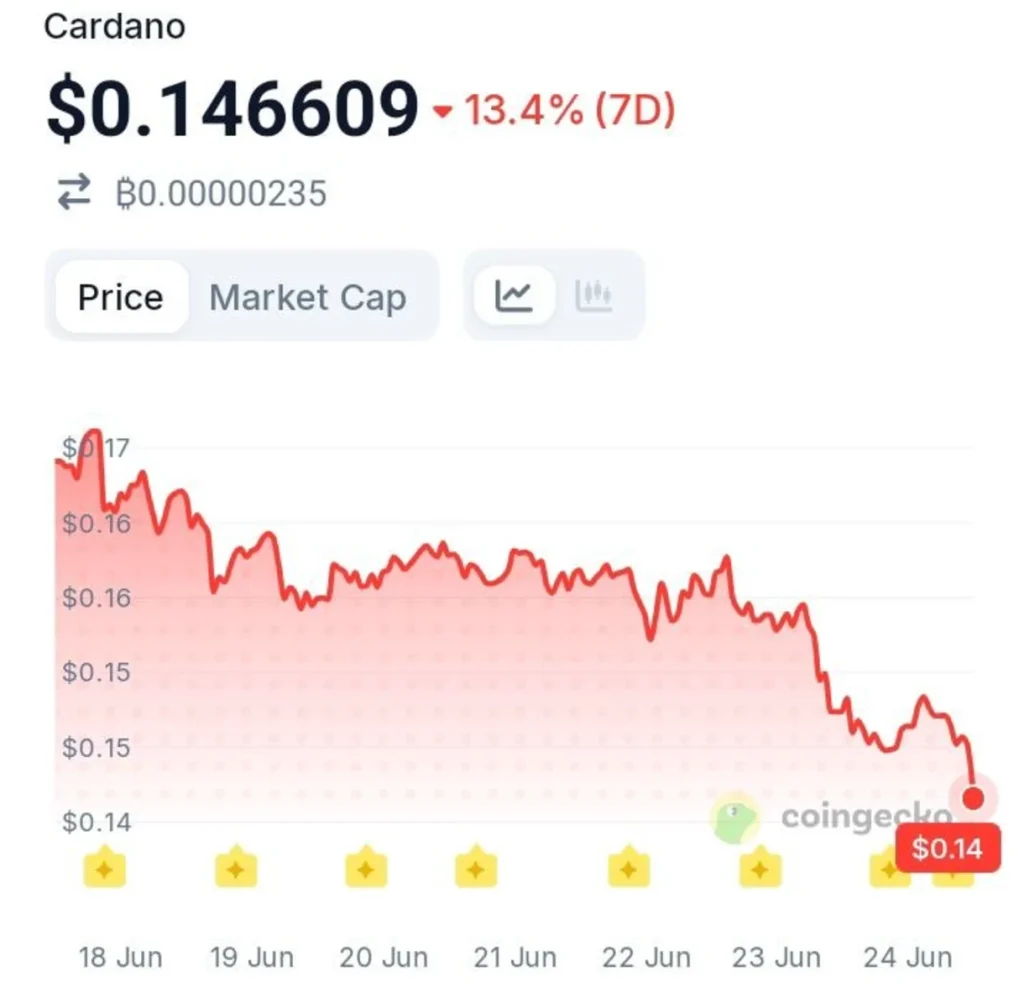
There was no bounce, no consolidation, no moment of support that held. The chart printed a clean, steep downtrend that the SecondFi news has now accelerated rather than created.
Two Problems at Once
This is the difficult part of Cardano’s current situation. The price was already under pressure from broader market weakness before the exploit surfaced.
The SecondFi drain now adds a second layer of negative sentiment — one that speaks specifically to security perception rather than macro conditions.
Cardano’s development philosophy has always emphasised formal verification and mathematical rigour.
A high-profile exploit, even one that originates in a third-party protocol rather than the core chain, tests how resilient that reputation is under real-world pressure.
Cardano’s ecosystem has been expanding steadily in terms of developer activity and DeFi TVL.
None of that fundamental progress disappears overnight because of a single protocol’s vulnerability.
But in crypto, perception can move faster than fundamentals — and right now, the perception around ADA is being shaped by a falling price and a $20 million security headline landing on the same day.
Whether the $0.14 level holds as support — and whether the Cardano community’s response to SecondFi’s exploit builds or erodes confidence — will shape the next move more than any chart pattern currently visible.
Disclaimer:
This article is for informational purposes only and does not constitute financial, investment, or trading advice. The views expressed are based on publicly available data, market observations, and the author’s interpretation at the time of writing. Cryptocurrency markets are highly volatile and unpredictable, and past performance or current technical setups do not guarantee future results. Readers should conduct their own research and consult with a qualified financial advisor before making any investment decisions. TechGaged does not accept liability for any losses incurred based on the information presented.
The post Is Cardano Facing Its Biggest Security Test Yet? appeared first on TechGaged.com.
0
0

 Manage all your crypto, NFT and DeFi from one place
Securely connect the portfolio you’re using to start.

0
0


0
0

0
0