
Polymarket MicroStrategy Bitcoin sale dispute sparks $500K loss and legal challenge over settlement timing

0
0
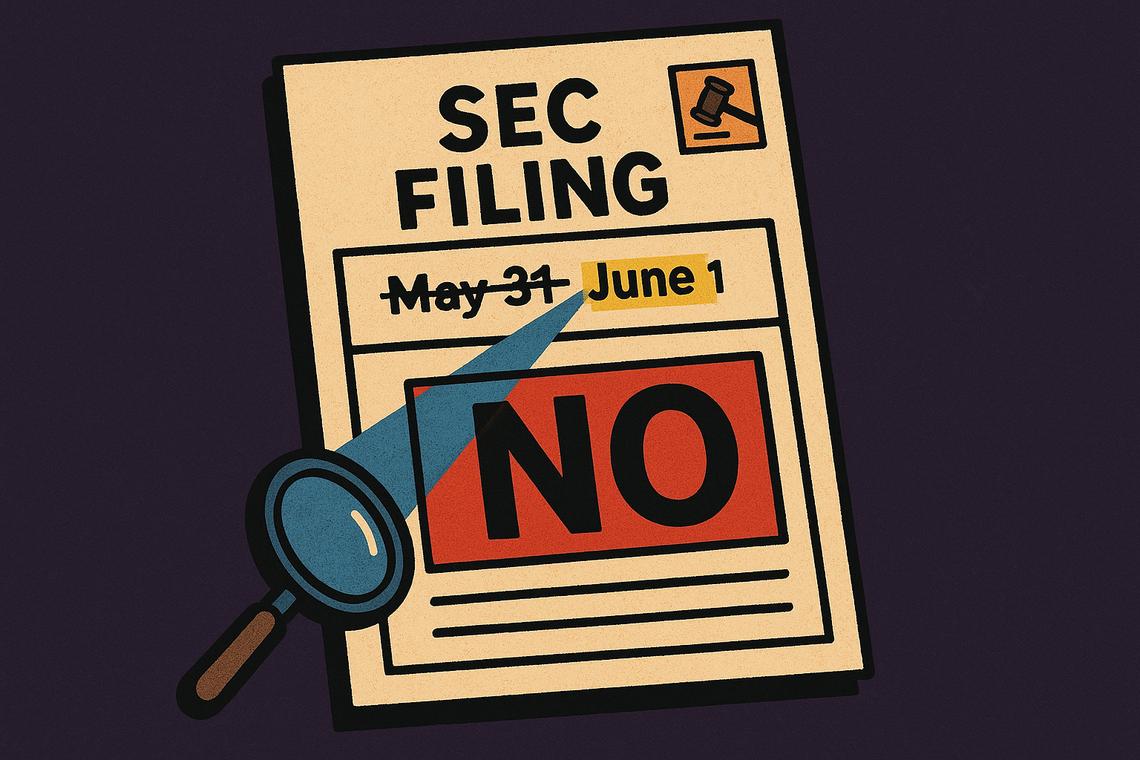
A Polymarket MicroStrategy Bitcoin sale dispute has turned into one of the sharpest tests yet for prediction market settlement. Polymarket settled a market as “No” on whether MicroStrategy sold Bitcoin by May 31, 2026, even though MicroStrategy’s own SEC filing later confirmed that it had sold 32 BTC.
The twist is simple but consequential: the filing was published on June 1, one day after the contract expired. That timing pushed Polymarket’s resolution process, backed by an UMA governance vote, toward a result that says the sale did not happen for settlement purposes. In other words, the event occurred, but the market said it did not.
That one-day gap has now triggered a broader prediction market settlement controversy, with traders, governance critics, and legal watchers all raising the same question: should a market settle on what happened, or on when it became public?
Why the Polymarket MicroStrategy Bitcoin sale dispute matters
The market question and the answer Polymarket gave
The contract was straightforward. It asked whether MicroStrategy had sold any Bitcoin before the May 31 deadline. For traders following SEC filings, the answer appeared to be yes.
MicroStrategy’s regulatory filing confirmed that the company sold 32 BTC between May 26 and May 31. However, because the filing did not become public until June 1, Polymarket settled the market as “No.”
That decision put SEC filing timing impact at the center of the dispute. Polymarket’s reasoning focused on what was publicly verifiable before the contract expired, rather than on the underlying transaction itself.
How the filing date changed the outcome
This is where the case becomes more than a technicality. The sale happened within the contract window, but the filing confirming it arrived after the deadline. Had MicroStrategy published the same 8-K on May 31 instead of June 1, the outcome would likely have been different.
As a result, Polymarket effectively treated public disclosure as the deciding factor. That approach is defensible in theory because prediction markets rely on verifiable information. Still, it also means the result turned on a filing schedule, not on whether MicroStrategy sold Bitcoin.
For traders who backed “Yes,” that distinction felt arbitrary. More importantly, it raised a practical warning for anyone using prediction markets to price real-world events.
Trader losses and the legal pressure on Polymarket
The fallout has been immediate. A pseudonymous trader known as willo2 says they lost about $500,000 on the “Yes” side of the trade. Meanwhile, another affected user has reportedly filed a formal legal demand against Polymarket.
These are not casual complaints about a bad bet. They involve participants who say they read the SEC filing, understood what it confirmed, and placed meaningful capital behind that reading. From their perspective, the platform changed the meaning of the question after the market was already over.
The legal demand matters because prediction markets usually resolve disputes internally. However, a formal challenge introduces a different level of scrutiny and puts pressure on Polymarket beyond its usual governance process.
UMA governance vote and the decentralization question
The disputed settlement went through UMA’s decentralized governance mechanism, which Polymarket uses to resolve contested markets. In theory, UMA token holders vote independently and determine the outcome without platform control.
In practice, critics say the process was compromised by Polymarket’s own clarification during the dispute. According to observers, whale voters — the holders with enough UMA token power to sway the result — lined up behind the “No” outcome after the team issued its guidance.
That criticism goes to the core of the system. If a platform clarification can steer a UMA governance vote, then the governance model begins to look less like an independent check and more like a signal amplifier.
For a platform built around censorship resistance and trustless resolution, that is a serious problem. It also leaves a harder question hanging over the Polymarket MicroStrategy Bitcoin sale dispute: who really controls the outcome when governance is supposed to be decentralized?
What this prediction market settlement controversy means for future bets
Strip away the trader losses and governance fight, and the dispute exposes a basic rule question that prediction markets cannot avoid forever: does a market settle when an event happens, or when the event becomes publicly verifiable?
Polymarket’s ruling comes down clearly on the side of public disclosure. That matters because it changes how traders have to think about future contracts. They will not only need to predict events, but also the timing of confirmations, filings, and official statements.
- Traders may need to track when supporting documents become public, not just whether the event occurred.
- Platform clarifications issued during a dispute can influence how governance votes unfold.
- Settlement risk now includes timing risk, not only factual risk.
That shift has consequences beyond this one market. It makes prediction market settlement more complex for anyone who assumed documented facts would automatically decide the result.
What the dispute reveals about trust in Polymarket
Polymarket remains the most prominent decentralized prediction platform in crypto, and its credibility depends on two promises: that outcomes are based on verifiable facts, and that governance works independently. This case tests both at once.
The settlement was not wrong under Polymarket’s stated approach, because the filing was not public before the deadline. However, the process still left many traders uneasy, especially because the clarification appeared to shape the vote rather than simply explain it.
That is why the dispute may linger. Even if the market is closed, the larger issue is still open: whether sophisticated users will trust Polymarket to resolve future markets without ambiguity, or whether they will start pricing in governance risk as well as event risk.
FAQ
Why did Polymarket settle the market as “No” when MicroStrategy sold Bitcoin?
Polymarket settled the market as “No” because MicroStrategy’s SEC filing confirming the 32 BTC sale was published on June 1, 2026, one day after the contract’s May 31 deadline. The platform relied on what was publicly verifiable before expiry, not on the underlying transaction alone.
What role did the timing of the SEC filing play in the settlement?
The timing was decisive. MicroStrategy sold 32 BTC between May 26 and May 31, but the filing confirming the sale did not appear until June 1. Because of that, Polymarket treated the sale as outside the contract’s verifiable window.
How did UMA governance influence the market outcome?
UMA token holders voted to settle the market as “No” after a clarification from the Polymarket team. Critics argue that the clarification signaled whale voters how to vote, which raised questions about whether the governance process remained fully independent.
What risks do traders face in decentralized prediction markets after this dispute?
Traders now face more than just the risk of picking the wrong event. They also have to consider when official confirmation becomes public and whether platform guidance could affect how a disputed market is resolved.
What does this case reveal about event occurrence versus public disclosure in settlements?
The case shows that, on Polymarket, public verifiability can override the underlying event when a market settles. That distinction matters for any trader betting on real-world events that may be confirmed only after the deadline has passed.
0
0


 Manage all your crypto, NFT and DeFi from one place
Securely connect the portfolio you’re using to start.


