
Is Solana a Good Buy in 2026? SOL Price Analysis and Potential ROI

0
0
Recognized for its ultra-fast throughput and high-efficiency architecture, Solana (SOL) has weathered a volatile macroeconomic climate to secure its place as a cornerstone institutional asset.
As market participants realign their portfolios for the remainder of the year, a central question emerges: is Solana a good buy in 2026, or do competing layer-1 networks and legacy blue-chip cryptos offer a more compelling risk-to-reward ratio?
Is SOL a Strategic Buy above $80?
For investors seeking a direct answer: Yes, Solana presents a highly favorable structural setup at its current valuation of $84. Moving within a well-defined consolidation channel between $75 and $98 throughout the first half of the year, the asset is building significant technical momentum.
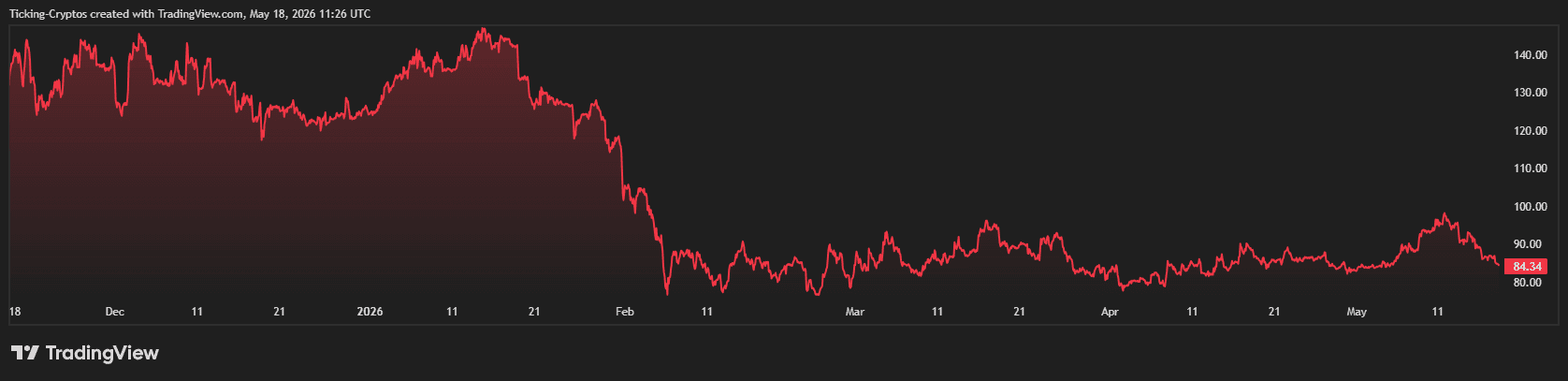
With a short-term target firmly set at $100, entering a position at the current $84 mark offers an immediate prospective upside of 19.05%. When weighed against the macro development of the Solana ecosystem—including massive institutional adoption and upcoming network overhauls—the current range serves as a historical accumulation zone before a potential macro trend reversal.
Why is Solana a Good Project
To evaluate if Solana is a sustainable long-term asset, one must look at what it fundamentally brings to the blockchain ecosystem. Solana is a high-performance, open-source Layer-1 blockchain utilizing a unique hybrid consensus mechanism.
Unlike older Proof-of-Work systems or standard Proof-of-Stake protocols, Solana optimizes transaction ordering to achieve unparalleled performance parameters.
- Throughput & Speed: Capable of processing tens of thousands of transactions per second (TPS).
- Cost Efficiency: Transaction fees remain fractions of a cent, making it the premier network for high-frequency trading, consumer decentralized applications (dApps), and global micropayments.
- Institutional Inflows: Spot Solana ETFs in the United States have officially surpassed $1 billion in Assets Under Management (AUM), signaling that major financial entities are actively treating SOL as a digital commodity.
Comparative ROI Analysis: Solana vs. BTC, ETH, and XRP
To truly contextualize whether Solana is the best allocation of capital right now, we must analyze its percentage returns against other major market caps based on their respective medium-term targets.
The table below illustrates the projected growth profiles across the industry's leading assets:
| Cryptocurrency | Current Price (May 2026) | Target Price | Projected Percentage Gain |
|---|---|---|---|
| Solana (SOL) | $84.00 | $100.00 | +19.05% |
| Bitcoin (BTC) | $76,000.00 | $100,000.00 | +31.58% |
| Ethereum (ETH) | $2,100.00 | $3,000.00 | +42.86% |
| Ripple (XRP) | $1.38 | $2.00 | +44.93% |
Solana ($84 -> $100)
A move from $84 to the key psychological resistance of $100 yields a neat 19.05% return. While this short-term percentage is technically lower than the macro projections of its peers, the target represents a foundational structural breakout. Securing a daily close above $100 opens the technical floodgates toward Fibonacci extensions at $117 and $262, meaning the $100 target is merely the starting line for exponential expansion. Take a look at the live asset pricing through the CryptoTicker Token Ticker to see how these macro pairs shift daily.
Bitcoin ($76k -> $100k)
With Bitcoin trading firmly at $76,000, a march to the elusive six-figure mark of $100,000 offers a 31.58% return. Bitcoin remains the safest asset in the Web3 ecosystem, but it demands significantly heavier capital inflows to move its multi-trillion-dollar market cap compared to Solana's leaner architecture.
Ethereum ($2.1k -> $3.0k)
Ethereum is currently priced at $2,100 with a medium-term target of $3,000, presenting a 42.86% potential upside. While ETH captures massive institutional liquidity, its scaling reliance on Layer-2 solutions fragments liquidity—an issue Solana bypasses entirely via its monolithic, single-state machine design.
Ripple ($1.38 -> $2.00)
XRP sits at $1.38 with eyes on a move to $2.00, yielding a 44.93% return. Though highly lucrative on paper, XRP is highly dependent on localized regulatory resolutions and cross-border bank integrations, carrying a different risk profile compared to Solana's vibrant on-chain ecosystem. If you are comparing platforms to build your positions, look through our updated Crypto Exchange Comparison guide.
Solana Price Analysis The Alpenglow Upgrade & ETF Inflows
Solana's performance in the latter half of 2026 is structurally underpinned by two massive fundamental catalysts that distinguish it from the rest of the altcoin market.
1. The Alpenglow Consensus Upgrade
Spearheaded by co-founder Anatoly Yakovenko, the Alpenglow upgrade stands as the most critical architectural overhaul in Solana’s history. Slated for full mainnet deployment, Alpenglow transitions the network's core structure to introduce components known as Votor and Rotor.
The primary goal? Slashing block finality from roughly 12.8 seconds down to a blistering 150 milliseconds. This sub-second finality fundamentally changes the landscape for high-frequency trading desks and institutional settlement engines. Furthermore, Alpenglow implements structural penalties for validators attempting to delay blocks for Maximal Extractable Value (MEV) extraction, guaranteeing a fairer and more predictable execution layer for everyday retail users.
2. Deep Institutional Liquidity
According to reports tracking capital flows, spot Solana ETFs have captured robust market share, boasting structural resilience even through the liquidations of early Q1. Major remittance firms, including Western Union via its USDPT stablecoin integration, have turned to Solana for real-world settlement layers. This structural transition from a purely speculative retail platform to a corporate utility ledger creates a sustainable floor for the token's valuation.
Is Solana Coin Risky?
No analytical framework is complete without inspecting the downward pressures. While the bull case for SOL is heavily supported, technical analysts warn of a split outlook if macroeconomic factors deteriorate.
If Solana fails to break through the persistent $98 to $100 wall, it risks a short-term breakdown back to its lower support channels. A definitive breach below the $81.30 support pivot could see SOL retest its primary accumulation floor between $50 and $70. Investors managing large-scale spot positions must balance this short-term downside risk against the overarching long-term fundamental upgrades. To secure your assets safely through these multi-month cycles, explore our comprehensive review on the safest storage devices in the Hardware Wallets Comparison.
Is Solana a Good Buy in 2026?
Is Solana a good buy in 2026? When looking past immediate price action, the combination of an $84 entry point, an impending structural breakout above $100, and the game-changing Alpenglow consensus upgrade positions SOL as one of the most asymmetric risk-to-reward opportunities in the current market.
While legacy assets like Bitcoin and Ethereum offer alternative growth paths, Solana delivers an optimal blend of institutional backing, real-world cross-border utility, and disruptive technical scaling that makes it a premier addition to any forward-thinking digital asset portfolio.
0
0

 Manage all your crypto, NFT and DeFi from one place
Securely connect the portfolio you’re using to start.


0
0

0
0

0
0