
Bitcoin Rally Stalls as Japan Inflation and Iran War Pressure Markets

0
0

Bitcoin price analysis shows a market losing momentum as global risks tighten their grip. The rally that once looked steady now feels uncertain, with traders reacting to inflation signals and rising geopolitical stress. Momentum has slowed, and confidence appears fragile.
According to the source, fresh inflation data from Japan and rising tensions linked to the Iran conflict 2026 have unsettled investors. The crypto market has moved into a cautious phase, reflecting pressure from outside forces rather than internal weakness.
A Rally That Stumbled Near $80K Resistance
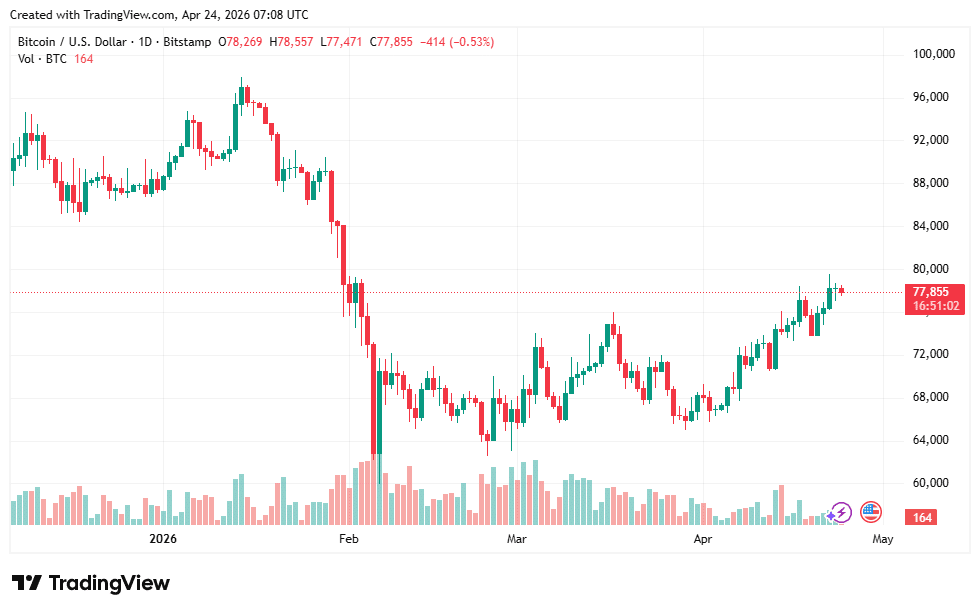
In the recent Bitcoin price analysis, we observe Bitcoin as it languishes right below $77,800 after rejecting from breaking over $78,700. But now we get another rejection at this important resistance level. A rally from near $65,000 in the latter half of March has now stalled since around midweek indicating buyers retreating.
Meanwhile, most major altcoins were flat to slightly negative. This absence of wide-spread involvement indicates that the crypto market is not really behind move. The fewer assets participate in a rally, the less momentum it has.
Market behavior suggests that traders are becoming cautious. A recent market insight notes that “risk assets often lose strength when macro pressure builds,” pointing to the growing influence of global factors.
Ethereum Slips Further as Market Confidence Weakens
Ethereum’s movement adds another layer to this Bitcoin price analysis narrative. Ether traded near $2,300 and declined by 0.8 percent, underperforming Bitcoin’s smaller 0.6 percent drop. This gap reflects weaker demand for higher-risk assets within the crypto market.
Ethereum often acts as a signal for broader sentiment. When it underperforms, it suggests that traders are reducing exposure to riskier positions. This pattern aligns with the current environment, where uncertainty is rising.
The divergence between Bitcoin and Ethereum also shows that the market lacks strong conviction. Instead of moving together, major assets are drifting apart, which is rarely a sign of strength.
Bitcoin Price Analysis Feels the Weight of Japan Inflation Data
This phase of Bitcoin price analysis is closely tied to inflation signals in Japan. The Corporate Service Price Index rose to 3.1 percent, slightly above expectations. Core inflation climbed to 1.8 percent from 1.6 percent, marking its first increase in months.
Headline inflation reached 1.5 percent but remained below the 2 percent target set by the Bank of Japan. Meanwhile, core-core inflation eased to 2.4 percent, its lowest level since October 2024. These mixed signals show that inflation pressure still exists.
Analysts expect the central bank to hold rates for now but hint at future tightening. A market view suggests that policymakers may “hold fire but warn that rate hikes could arrive as early as June”. Such signals can quickly shift global sentiment.
Oil Shock and Yen Dynamics Add Hidden Market Pressure
Another key factor in this Bitcoin price analysis is the oil market shock. Disruptions in the Strait of Hormuz, which carries about 20 percent of global oil, have pushed crude prices up more than 40 percent to around $96.
Japan, being a net oil importer endures greater inflationary pressure due to energy costs pinch more. Shipping traffic plummeted in the wake of Iran’s planting of naval mines. They may only be cleared six months after the end of hostilities, defense estimates indicate.
It is currency markets that add risks at the same time. Globally, the Japanese yen has been used in carry trades for quite a while. These trades could reverse quickly if the yen weakens as anticipated rate hikes get priced in. The process has the ability to siphon capital from risk assets, (such as the crypto market).
Current positioning data shows traders are very short the yen which could provide space to see a quick bounce. Immediate action could cause chaos across markets. Rising inflation has made it increasingly hard for the Federal Reserve to cut rates, in turn tightening liquidity.
Conclusion
The Bitcoin price analysis indicates a market at the precipice of another shift direction. Inflation, oil shocks and geopolitical risks have taken the sheen off this rally. Momentums are not dead, but the sense of security evaporated.
Dynamic based on how these global pressures play out, that determines crypto. Confidence may return as long as inflation freezes and tensions become less acute. Otherwise, the present stall could evolve into a wider correction. For the time being, the market is a bit cautious and looking for clarity.
This article is for informational purposes only and does not constitute financial advice. Readers should conduct their own research before making investment decisions.
Glossary of Key Terms
Bitcoin price analysis: Study of Bitcoin’s price trends and influencing factors.
Crypto market: The overall market of digital currencies and trading activity.
Inflation: Increase in prices that reduces purchasing power.
Carry trade: Borrowing in a low-interest currency to invest in higher-return assets.
Strait of Hormuz: A major global route for oil transportation.
FAQs About Bitcoin Price Analysis
What is Bitcoin price analysis?
It examines Bitcoin’s price trends and external factors to understand future direction.
Why is Ethereum falling faster than Bitcoin?
Ethereum is seen as riskier, so it often drops more during uncertain market conditions.
How does Japan inflation affect crypto?
Higher inflation may lead to rate hikes, which reduce global liquidity and impact crypto assets.
Why do oil prices matter for Bitcoin?
Higher oil prices increase inflation, which limits central bank support and affects risk assets.
Sources/References
Read More: Bitcoin Rally Stalls as Japan Inflation and Iran War Pressure Markets">Bitcoin Rally Stalls as Japan Inflation and Iran War Pressure Markets
0
0


 Manage all your crypto, NFT and DeFi from one place
Securely connect the portfolio you’re using to start.

0
0

0
0

0
0

0
0