
Hangzhou opens a robot school where 30 humanoids sit certification exams

0
0
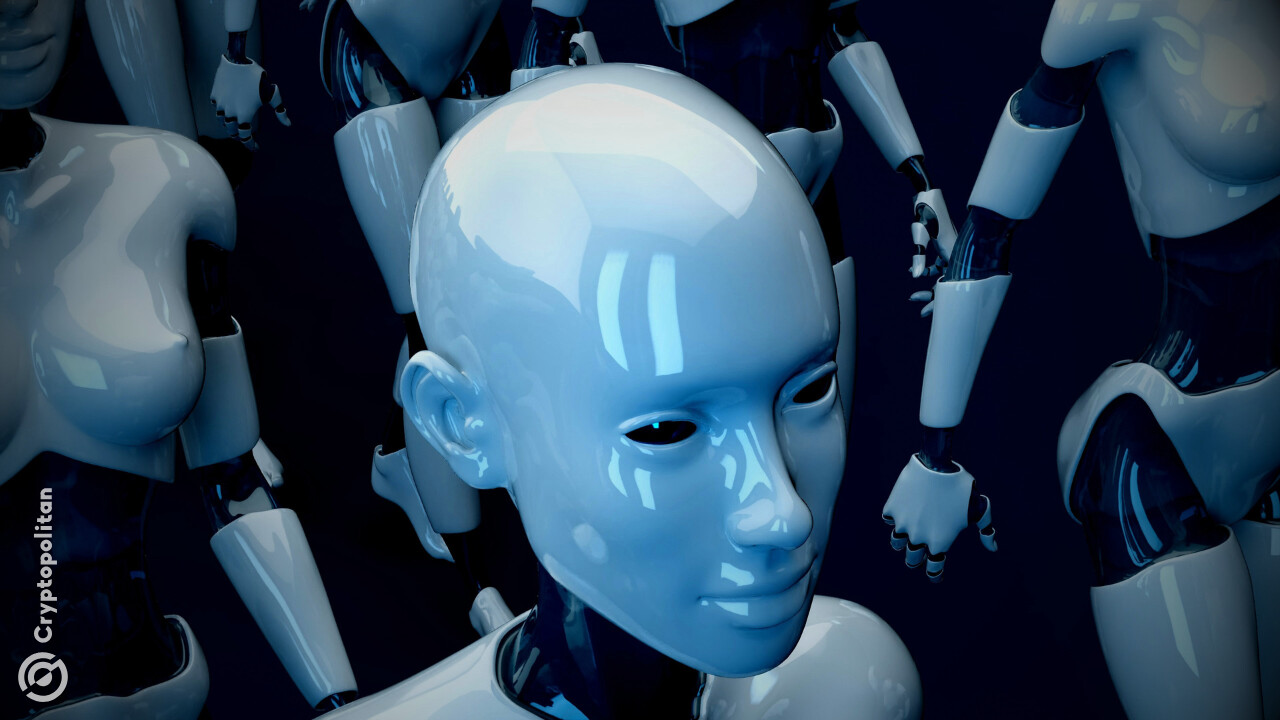
China has launched a vocational school in Hangzhou, in Zhejiang province, to train humanoid robots.
The first class has 30 machines. They are trained in practical skills and must pass certification exams before they are allowed to work in factories, services, security, and entertainment.
Robots drill four tracks and sit certification exams
The school curriculum teaches technical skills, nursing and care, arts, and sports.
Robots are evaluated on their physical capabilities. Then, they are taught lessons aligned with those capabilities. They practice tasks by hand, then take exams to achieve professional certification.
Developers want to change the current sales pitch, where buyers take home an experimental machine and hope it works. A standard path would be when a company buys a robot that has already been trained, tested, and certified for specific jobs.
The lessons are tailored to each robot’s hardware, such as its range of motion, grip strength, sensors, and how steady it is on its feet. The developers say the goal is smoother movement along with reasoning.
The machines run on AI that fuses vision, language, and action. That lets them read unfamiliar obstacles, parse complex instructions, and lay out a new plan.
The facility was established in conjunction with the Robotics Institute of Zhejiang University and other industry partners.
China puts 140 robots through 40 workplaces
The Hangzhou school is a portion of the National Pilot Base for Embodied AI Applications.
The base hosts 140+ robots training in over 40 different work settings, including smart kitchens, warehouses, farms, and a dark mock mine tunnel.
The base opened on May 16, and about 40 AI companies and over 10 universities were already working on site.
Creating one application scenario used to cost a company more than 10 million yuan, about $1.5 million, in training data alone, said Zhang Haiwei, founder of motion-capture firm Chingmu. Now those resources are shared among robotics firms on the base.
Logistics firm Transfar and robot manufacturer Unitree jointly run a warehouse where wheeled humanoids pick, scan, and haul goods. Smart forklifts stack cargo to 1-millimeter accuracy.
In June, China’s Ministry of Industry and Information Technology and its state-asset regulator rolled out a 2026 program to promote real-scenario training and regular deployment of humanoid robots.
The first local rule for the industry in the country went into effect on May 1 in Hangzhou. Hangzhou has over 700 robotics enterprises, and the embodied-AI cluster in the city produced 106.8 billion yuan of output in 2025.
In 2025, China shipped about 13,000 humanoid robots. Much of the fleet greets shoppers or attends official functions. Any humanoids that do make it to factories typically move boxes at about 30% to 40% of the speed of a human.
If you're reading this, you’re already ahead. Stay there with our newsletter.
0
0

 Manage all your crypto, NFT and DeFi from one place
Securely connect the portfolio you’re using to start.

0
0

0
0

0
0

0
0