
Iran attack may wipe out 25% of Qatar LNG supply in 2026, says Rystad

0
0
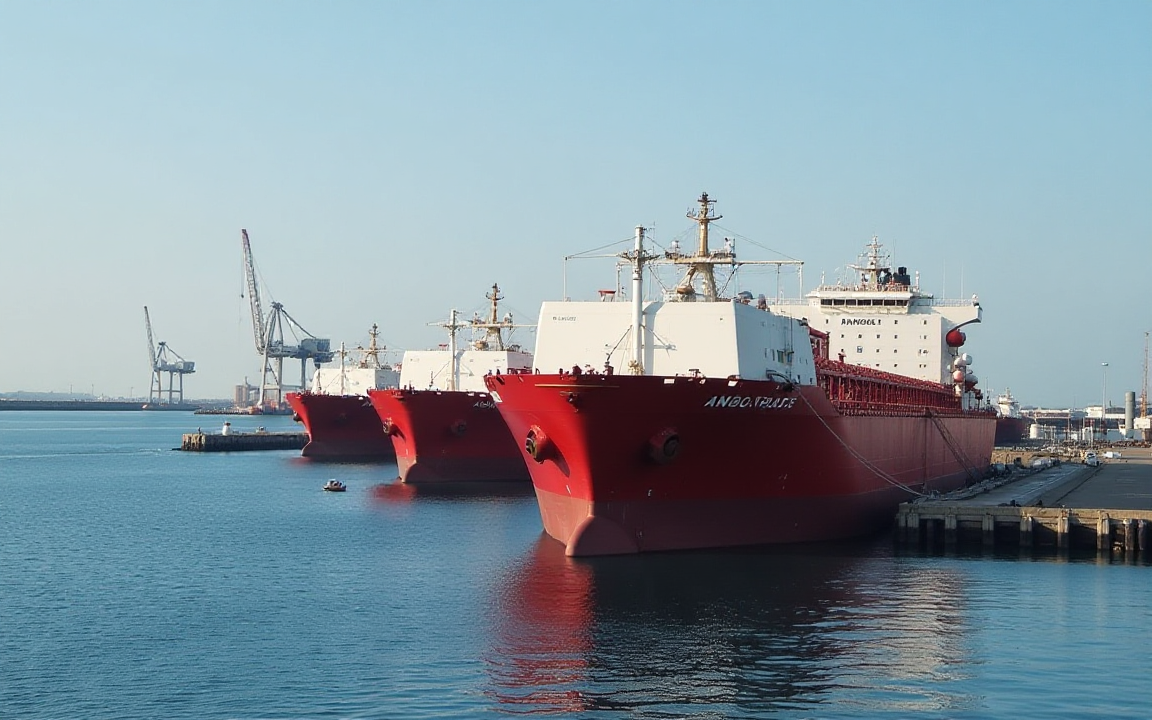
Iranian attacks on Qatar’s Ras Laffan Industrial City could wipe out 25% of the country’s projected liquefied natural gas (LNG) production for this year, according to a Rystad Energy analysis.
The recent attack on Qatar’s Ras Laffan Industrial City, occurring overnight on March 18-19, signifies a major escalation in the ongoing Middle East conflict, now in its 19th day.
This event ushers in a more unstable period for energy infrastructure across the region.
Market response was swift and dramatic: the European Title Transfer Facility (TTF) benchmark prices surged by over 30% overnight, and Brent oil prices have stayed high, above $107 per barrel.
“The events will not only impact LNG supply in the coming years, but conceivably delay Qatar's subsequent North Field expansion stages as it exerts more pressure on labor and material,” Jan-Eric Fahnrich, senior analyst, gas & LNG research at Rystad Energy said.
“What matters now is not only the volume lost, but the precedent set -- once critical Gulf energy infrastructure is seen as vulnerable, buyers will price that risk for longer than the initial outage itself.”
Strait of Hormuz disruption
The closure of the Strait has amplified existing supply chain issues, as this vital choke point accounts for the transit of about 20% of both global LNG and oil trade.
This disruption has affected approximately 10 billion cubic feet per day (Bcfpd) of Qatari LNG shipments.
Asian nations, especially China and India, which are heavily dependent on Qatari supply, have been most severely impacted by this reduction in volume.
Exports from the region are now severely constrained due to a dramatic reduction in tanker movements, according to reports.
Specifically, LNG tanker traffic has ceased entirely, and crude and product tanker traffic has dropped to only one or two vessels daily, Rystad Energy said.
This has been compounded by major insurers withdrawing war risk coverage for transits through Hormuz, leading to the designation of the entire area as a high-risk zone.
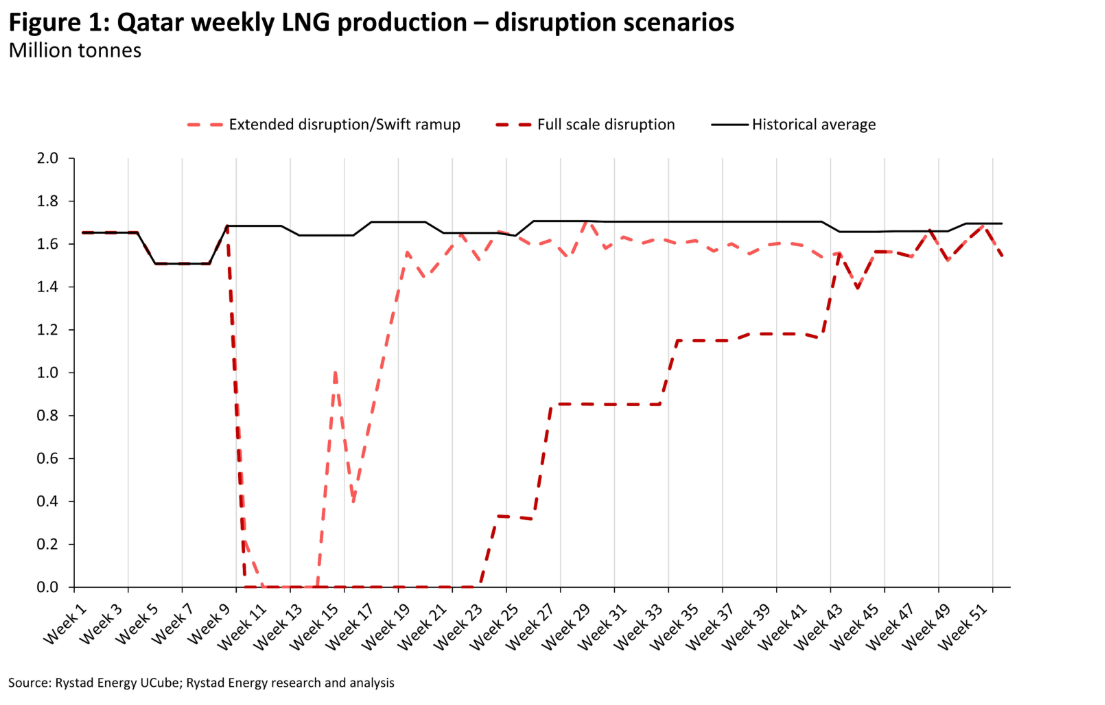
“While the extent of damage to specific LNG trains remains uncertain, early indications suggest substantial impact. Based on current assessments, we estimate that approximately 20 Mtpa or more than one-fourth of Qatar’s projected 2026 LNG production could be disrupted,” the Norway-based energy intelligence firm said.
The extensive nature of the damage, as described by QatarEnergy, suggests that several LNG trains will likely be out of operation for a prolonged duration.
This estimate is further supported by the ongoing instability in the Strait of Hormuz, the agency said.
Asia’s vulnerability
As the world's second-largest LNG producer, Qatar is a vital supplier to both Asian and European markets.
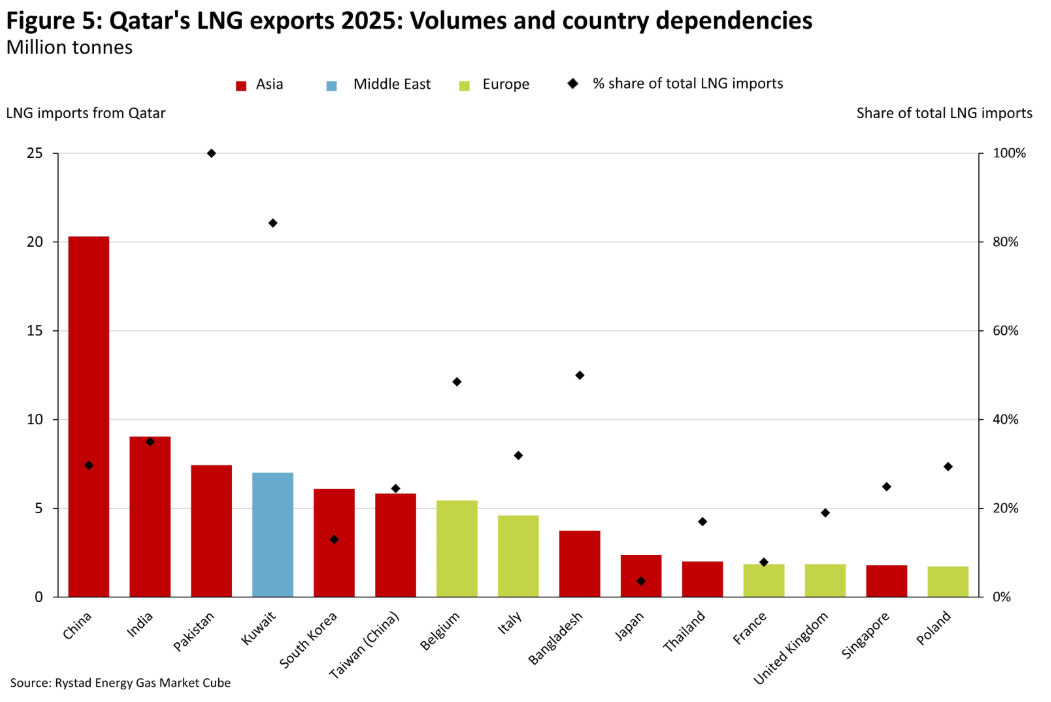
China is Qatar's biggest LNG customer, importing approximately one-quarter of its exports, which amounted to about 20 million tonnes per annum (Mtpa) last year, according to data from Rystad.
India is another significant buyer, importing roughly 9 Mtpa, representing 10% of Qatar’s total LNG exports, the data showed.
Notably, LNG meets nearly one-third of India's annual gas demand.
Kuwait and Pakistan are also heavily dependent on Qatari supply with combined imports of some 7 Mtpa, while South Korea and Thailand have relatively lower dependence.
Overall, the top four importers account for more than half of Qatar’s annual LNG exports, Rystad said.
Global majors’ reliance
Shell's involvement in Qatar extends beyond the Pearl GTL facility, encompassing stakes in major LNG infrastructure.
This includes the Qatargas 4 Train 7 LNG facility and the planned North Field East (NFE) project.
Amidst the current conflict, Shell has already invoked force majeure on Qatari-sourced cargoes.
Similarly, TotalEnergies has reported a production impact of roughly 2 million tonnes per annum (Mtpa).
“We estimate that any further escalation could lead additional operators to declare force majeure or implement similar measures, underscoring the sector’s high exposure to disruptions in Qatar,” Rystad said.
International players continue to rely heavily on Qatari LNG within their equity portfolios.
ExxonMobil's dependence is particularly high, with approximately two-thirds of its LNG equity volumes tied to Qatar.
Conversely, TotalEnergies has notably less exposure, with Qatar representing under 10% of its total LNG equity volumes.
This exposure profile is anticipated to change substantially toward the end of the decade, the agency added.
This evolution will be driven by new capacity coming online from North Field East (NFE) and North Field South (NFS), in which numerous international players hold equity stakes.
“Any delay in the completion of these projects due to the Middle East war could create a gap in the production portfolios of the companies partnered there.”
TotalEnergies and Eni are projected to experience the most significant rise in exposure to Qatari LNG, with their respective volumes expected to increase by around nine percentage points.
The post Iran attack may wipe out 25% of Qatar LNG supply in 2026, says Rystad appeared first on Invezz
0
0


 Manage all your crypto, NFT and DeFi from one place
Securely connect the portfolio you’re using to start.

0
0

0
0

0
0

0
0