
Top 5 Beginner-Friendly Self-Custody Wallets Worth Trying in 2026
0
0
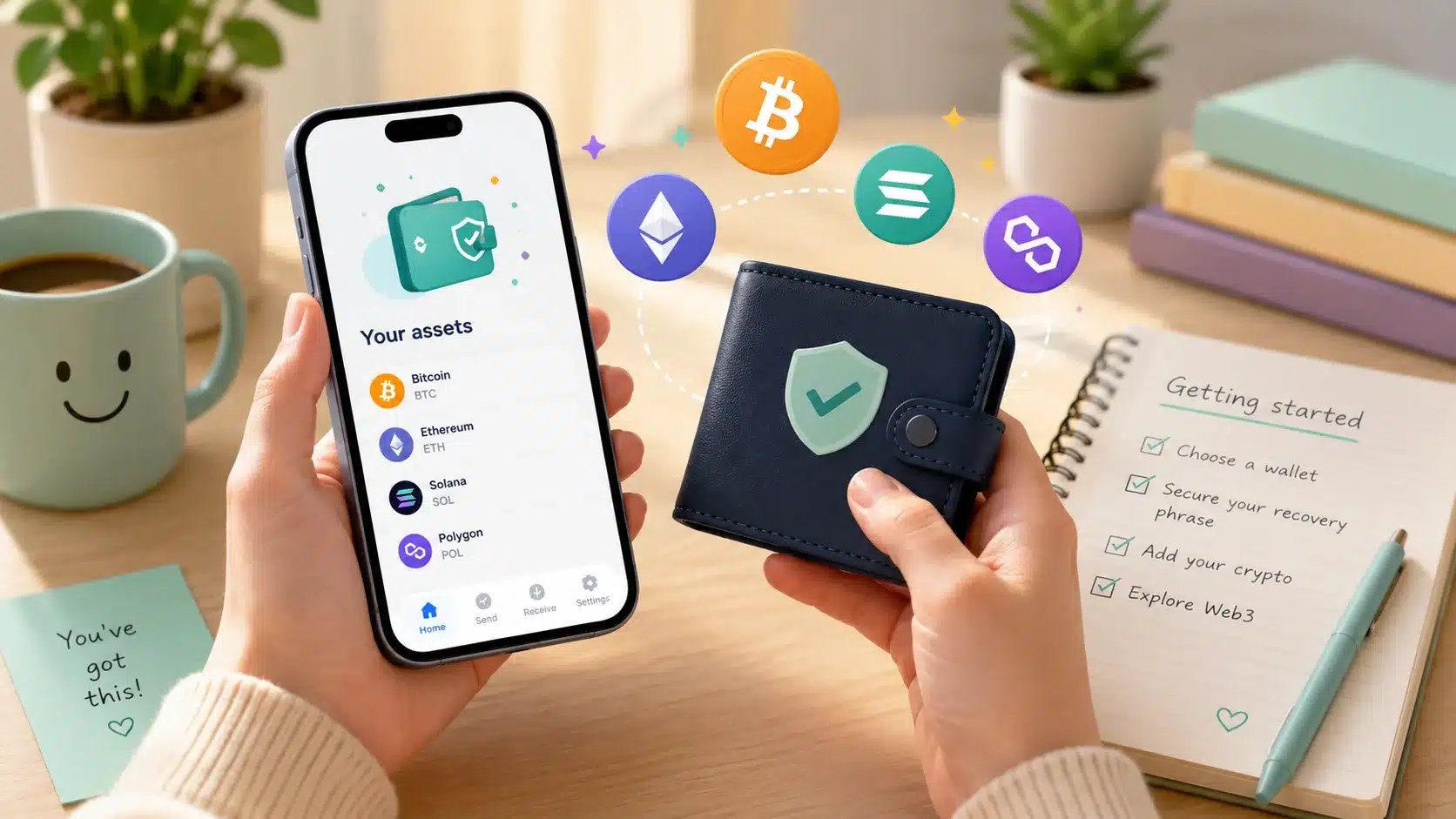
Self-custody has a reputation for being hard. Seed phrases, gas tokens, and the warning that one mistake means losing everything can make holding your own keys feel like a job for experts. In 2026, that reputation is mostly out of date.
A good beginner wallet hides the complexity without taking away control. The best self-custody wallet for beginners sets up in minutes, explains the recovery phrase in plain terms, and keeps the everyday actions simple.
Finding the easiest crypto wallet to use is less about features and more about how little it asks you to understand on day one.
The five wallets below all clear that bar, each in a slightly different way. Which beginner crypto wallet 2026 suits you depends on what you hold and how you like to manage it.
What Makes a Wallet Beginner-Friendly
A few traits separate an approachable wallet from an intimidating one. Knowing how to choose a beginner crypto wallet starts with these, because they decide whether a new user sticks with self-custody or retreats to an exchange.
The stakes are real on both sides. Crypto thefts reached $3.4 billion in 2025, hitting exchanges and personal wallets alike, which is why a beginner wallet should make safe habits easy instead of leaving security to chance.
Setup should be quick and clear, with the recovery phrase explained in plain terms, not dumped on screen. The interface should be clean enough to find send and receive without a manual, and the wallet should make costly mistakes hard to commit.
A simple non-custodial wallet also keeps daily use cheap and obvious. Low or predictable fees, clear network choices, and a mobile-first design all help a beginner build confidence before moving larger amounts.
Five Wallets That Make Self-Custody Approachable
Each wallet below earns its place for a specific kind of new user. The order reflects general beginner-friendliness, not a single winner, since the right fit depends on what you plan to hold.
1. Trust Wallet
Trust Wallet is the broadest simple mobile option, with more than 200 million users and support for over 100 blockchains. Its interface stays clean despite that range, and a built-in security scanner warns about risky transactions before they go through. Setup takes minutes with a biometric lock, and the wallet covers nearly any token a beginner is likely to buy. Best for a mobile-first user who wants one app for almost everything.
2. Exodus
Exodus built its reputation on design, and it shows in a portfolio view that makes holdings easy to read at a glance. It runs on desktop, mobile, and as a browser extension, syncing across all three, which suits someone who manages crypto from more than one device. The clean layout lowers the learning curve for anyone nervous about a cluttered interface. Best for a beginner who values a polished, visual experience.
3. IronWallet
IronWallet removes two friction points that trip up newcomers. It needs no email or ID to set up, and its gasless transfers on Tron and Ethereum let a user send USDT or USDC without first buying a separate gas token. It runs as a mobile-first, multi-chain wallet covering Bitcoin, Ethereum, Solana, and more, with keys on the device. Best for a user who wants a fast start as a no-KYC wallet for beginners, and mainly moves stablecoins.
4. Coinbase Wallet
Coinbase Wallet, now part of the Base App, is the natural next step for someone leaving an exchange for self-custody. It carries a clean mobile and browser experience, broad support across Ethereum and other networks, and a familiar feel for anyone who has used Coinbase. The move from custodial account to self-custody is about as gentle as it gets. Best for an exchange user taking their first step into holding their own keys.
5. Phantom
Phantom started on Solana and grew into a multi-chain wallet that now covers Ethereum, Polygon, and Bitcoin. Its interface is sleek and quick, with strong support for tokens and NFTs that makes it a favorite for users active in those areas. The experience stays approachable while opening the door to more advanced on-chain activity. Best for a beginner drawn to Solana or collecting NFTs.
A Seedless Alternative Worth Knowing
Some newcomers find the seed phrase itself the scariest part. For them, a wallet like Zengo takes a different route, using multi-party computation to split the key so there is no single recovery phrase to lose, with access restored through biometrics instead.
That convenience comes with tradeoffs worth naming. Zengo relies on its own servers for part of the setup, which is a step away from the fully independent model of the other wallets, and its full feature set sits behind a paid tier.
It remains a fair option for a self-custody wallet for new users who want to skip seed-phrase management, as long as the tradeoffs are clear.
How the Five Wallets Compare
The table sets the wallets against the points a new user weighs first.
| Wallet | Setup ease | Chains | Standout for beginners |
| Trust Wallet | Fast, mobile | 100+ | Broad support, scam scanner |
| Exodus | Fast, multi-device | Many | Polished visual interface |
| IronWallet | Fastest, no KYC | Multi-chain | No email setup, gasless transfers |
| Coinbase Wallet | Easy for Coinbase users | EVM plus Solana | Gentle exchange-to-wallet step |
| Phantom | Fast, mobile | Solana plus more | Sleek Solana and NFT support |
Reading across the rows shows that no single wallet wins outright; each fits a different starting point.
Picking the One That Fits You
The choice follows from how you already use crypto. A mobile-first user with a mix of coins leans toward Trust Wallet, while someone who values a clean interface across devices fits Exodus, and a Coinbase customer finds the smoothest path through the Base App.
A multi-chain wallet for beginners who mainly send stablecoins suits IronWallet, where the no-KYC setup and gasless transfers cut out early friction, and a Solana or NFT user is at home in Phantom.
Any of them works as a crypto wallet with easy setup, so whichever you pick, the first real task is the same: write down the recovery phrase and store it offline, because that backup is what self-custody rests on.
Conclusion
Self-custody in 2026 is far more approachable than its reputation suggests. Any of these five wallets gets a beginner started with control over their own keys, and the differences between them are about fit, not about one being clearly safer than the rest.
Start with the wallet that matches how you hold and move crypto, set it up carefully, and back up the recovery phrase before adding funds. Owning your keys is the point of crypto, and it no longer requires being an expert to do it safely.
FAQ
What is the easiest crypto wallet for a beginner to use?
There is no single easiest wallet, since it depends on the device and assets you use. Trust Wallet and Exodus are often called the simplest for general mobile and desktop use, while IronWallet offers an especially quick setup by skipping email and ID. The right choice is the one matching how you plan to hold and move crypto.
Do beginners need a seed phrase with every wallet?
Most self-custody wallets, including Trust Wallet, Exodus, IronWallet, and Phantom, give you a recovery phrase to back up. A few wallets like Zengo use multi-party computation instead, removing the seed phrase in favor of biometric recovery. Either way, securing your backup method is the single most important step a beginner takes.
Is a self-custody wallet safe for someone new to crypto?
Yes, when used carefully. A self-custody wallet means no company can freeze your funds, but it also means you are responsible for the recovery phrase. Beginners stay safe by backing up that phrase offline, testing with small amounts first, and avoiding sharing it with anyone, since no legitimate service will ever ask for it.
Can you use one wallet for multiple blockchains?
Yes. Multi-chain wallets like IronWallet, Trust Wallet, and Phantom hold assets across several blockchains in one app, so a beginner does not need a separate wallet for each network. This keeps things simpler, letting a user manage Bitcoin, Ethereum, Solana, and stablecoins from a single interface instead of juggling multiple apps.
Should a beginner choose a no-KYC wallet?
A no-KYC wallet skips identity verification, which makes setup faster and keeps personal data off a provider’s servers. This suits beginners who want a quick start and more privacy. Self-custody wallets are typically no-KYC by design, though anyone still needs to follow the tax and reporting rules that apply where they live.
Disclaimer: This article is provided for informational purposes only. It is not offered or intended to be used as legal, tax, investment, financial, or other advice.
Disclaimer: This content is a sponsored post and is intended for informational purposes only. It was not written by 36crypto, does not reflect the views of 36crypto and is not a financial advice. Please do your research before engaging with the products.
The post Top 5 Beginner-Friendly Self-Custody Wallets Worth Trying in 2026 appeared first on 36Crypto.
0
0


 Manage all your crypto, NFT and DeFi from one place
Securely connect the portfolio you’re using to start.

0
0

0
0

0
0

0
0