
Inside Tether's Q2 Reserves: $1.5B Profit, a $4.11B Buffer and 146 Tonnes of Gold

0
0
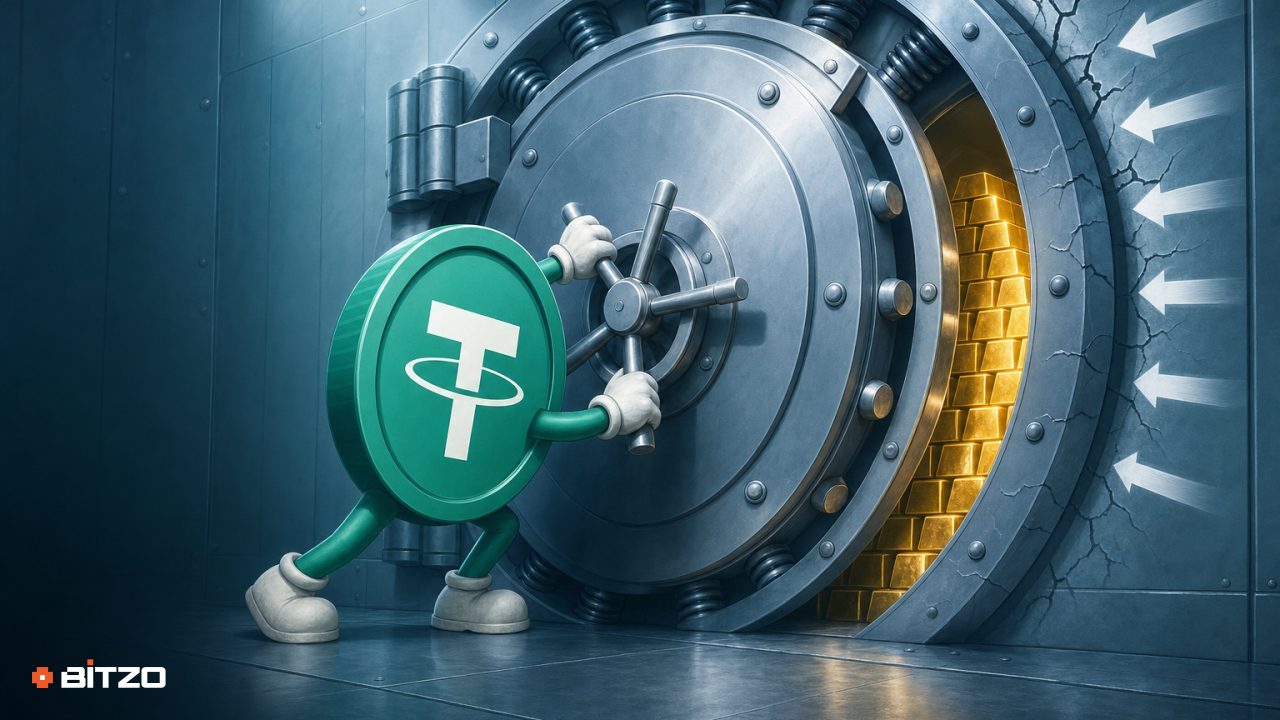
Tether dropped its Q2 2026 figures and there’s a lot to unpack. We’ve got a healthy profit number, a sizable cushion above liabilities, and a big block of gold sitting in reserves.
This piece breaks down the headline metrics, explains what they actually mean in practice, and points out where the risks still live. If you hold, trade, or settle in USDT, this matters right now.
Tether reported about $1.50 billion in net operating profit for Q2 2026, an excess-reserve buffer of roughly $4.11 billion, and LBMA-standard gold holdings valued at about $18.84 billion, which implies roughly 146 tonnes of gold. The total balance sheet showed about $187.75 billion in assets against $183.64 billion in liabilities at quarter end. These are point-in-time numbers from an external attestation, not a full audit.
- $1.50B net operating profit in Q2 2026 (Tether)
- Excess reserves of $4,109,529,196 above liabilities as of June 30, 2026 (BDO ISAE 3000R)
- Gold valued at $18,838,357,171 using $4,008.02/oz, implying ~146 tonnes (BDO report)
- Total assets $187,751,426,411; liabilities $183,641,897,215 at quarter end (BDO report)
What did Tether actually report for Q2 2026?
Let’s anchor on the numbers first. Tether’s own release says it generated roughly $1.50 billion in net operating profit for the quarter ended June 30, 2026 (Tether).
The BDO ISAE 3000R assurance report attached to that release lists total assets at $187,751,426,411 and total liabilities at $183,641,897,215 as of June 30, 2026. That gap is the excess-reserve buffer: $4,109,529,196 above liabilities (BDO report).
Gold is the eye-catcher. The report values precious metals at $18,838,357,171 using a gold price of $4,008.02/oz, which implies about 146 metric tonnes of LBMA-standard bars in custody (BDO report).
Metric Q2 2026 figure What it means Why it matters Net operating profit ~$1.50B Income after operating costs for the quarter Supports the cushion above liabilities and ongoing operations Total assets $187.75B Value of reserve holdings at quarter end Shows the size of the balance sheet backing USDT Total liabilities $183.64B Primarily outstanding tokens redeemable at par Benchmark for redemption obligations Excess-reserve buffer $4.11B Assets minus liabilities Absorbs shocks and operating variability Precious metals (gold) $18.84B (~146 t) LBMA-standard bars priced at $4,008.02/oz Diversifier, not the most liquid sleeve
Where did the $1.5B profit likely come from?
Tether does not publish a full profit-and-loss statement with line items in these attestations, so we have to speak in broad strokes. For large fiat-backed stablecoins, most operating profit usually comes from yield on reserve assets. Think short-dated government securities, repurchase agreements, and cash-like instruments that throw off interest while the peg mechanics keep the token at a dollar.
Rates have stayed relatively elevated through 2026, which means the carry on safe, short-duration assets is still meaningful. If you’re holding a giant pool of conservative instruments, a couple of percentage points add up fast. That’s typically how you get to a billion-plus quarterly profit without taking on obvious directional risk.
Important caveat: profit is not a promise. It’s path dependent and rate dependent. If rates slide or if the reserve mix changes, that number can move around a lot. The attestation gives you a snapshot, not a forward guarantee.
How strong is a $4.11B excess-reserve buffer during stress?
On paper, an excess buffer of about $4.11 billion is a decent shock absorber. It’s the gap between what Tether holds and what it owes at that point in time. During an ordinary week, that’s extra comfort. During a stress event, it buys time and optionality.
Remember what actually drains liquidity in stablecoins: fast redemptions and market fragmentation. If a wave of holders want out at once, the issuer needs to sell or repo assets quickly without taking big haircuts. Cash and short Treasuries are great for that. Gold and other non-cash sleeves are less ideal in a pinch.
The buffer helps in two ways. First, it can cover operating variability and small valuation swings without touching core reserve assets. Second, it signals financial headroom to market makers who keep on-exchange spreads tight. But it’s not a magic shield. Speed and liquidity of the underlying assets still decide how smooth a redemption cycle feels.
Why hold 146 tonnes of gold in a dollar-pegged stablecoin?
Gold in a dollar stablecoin looks odd until you think about diversification. Gold doesn’t move with cash rates. It can hedge certain tail scenarios and add a different return profile versus pure cash equivalents. Tether’s attestation says the precious metals sleeve is LBMA-standard bars valued at roughly $18.84 billion, which implies around 146 tonnes at quarter end (BDO report).
Trade-offs are real though. Gold is not a T+0 cash instrument. You have storage, transport, potential settlement frictions, and basis to manage if you need to monetize it fast. In a major redemption cycle, that sleeve is unlikely to be your first line of liquidity.
Warning: a gold allocation can diversify reserves, but it can also slow down liquidation speed during a crunch. Treat it as a stabilizer, not a faucet.
Bottom line, a gold sleeve can make sense from a portfolio perspective. Whether it makes sense for you as a USDT user comes down to your tolerance for the trade-off between diversification and instant liquidity.
How should traders and treasurers read the attestation?
The ISAE 3000R report is an assurance engagement, not a GAAP audit. It checks that the numbers are fairly stated as of a specific date based on the criteria and procedures described by the firm. That’s valuable, but it’s not the same as continuous transparency.
If you manage exchange risk, settlement risk, or corporate treasury, here’s a tight checklist to keep handy.
- Check the date. These are quarter-end snapshots. Conditions can change fast in between.
- Map assets to liquidity. Cash-like vs everything else. Ask yourself what sells first in stress.
- Track the excess buffer over time, not just the headline. Trend matters more than one print.
- Know your redemption rails. If you can redeem, how fast, from where, and with what limits or fees?
- Watch market microstructure. On-exchange USDT pairs, OTC quotes, and cross-stable spreads will tell you when stress is building.
- Custody risk is a thing. Even with strong reserves, counterparty and operational risks don’t disappear.
Pro tip: treat attestations like yearbook photos. They capture a moment, not the motion. Pair them with live signals like redemption flows, on-chain balances, and exchange spreads.
And one more thing. Don’t anchor on narratives alone, good or bad. Anchor on the mechanics: what backs the token, how fast those assets can be turned into dollars, and whether the issuer has breathing room. The Q2 figures suggest there is breathing room right now, including the $4.11B cushion (BDO report).
What are the open questions and risks still on the table?
Even with strong headline numbers, some questions always hang over fiat-backed stablecoins. Attestations are by design limited in scope and frequency. You get comfort on the reported date and the methods used, not a full real-time feed.
Liquidity layering is another topic. It’s one thing to show large reserves. It’s another to convert them to dollars quickly without friction when redemptions spike. Cash and short government paper are built for that. Precious metals and other non-cash sleeves typically are not.
Finally, there’s the broader environment. Regulation shifts, banking counterparties change appetite, and market structure evolves. None of that is unique to Tether, but it affects how any stablecoin operates day to day. Keep your operational playbook flexible.
Common Mistakes
- Reading the attestation as a guarantee. It’s a snapshot, not a promise. Always pair it with live market signals.
- Ignoring liquidity tiers. Not all reserves are equal when you need dollars tomorrow morning.
- Chasing narratives over numbers. Headlines can be loud. The balance sheet and redemption mechanics matter more.
- Assuming gold equals instant safety. It’s a diversifier, not a near-cash instrument.
- Skipping redemption tests. If you have access, do a small live redemption before you need a big one.
- Underestimating counterparty risk. Even strong reserves won’t protect you from a weak operational setup on your side.
Frequently Asked Questions
How is the 146 tonnes figure for gold actually calculated?
The report lists precious metals valued at $18,838,357,171 and uses a price of $4,008.02 per ounce. Divide value by price to get ounces, then convert to metric tonnes. That math lands around 146 tonnes, give or take rounding and custody timing (BDO report).
Does the $4.11B excess-reserve buffer mean all redemptions are risk-free?
No. It’s a helpful cushion, not a guarantee. Redemption quality still depends on how fast the issuer can turn reserve assets into cash and on market conditions during stress.
How quickly could gold be liquidated if needed?
Gold markets are deep, but physical bars involve logistics and settlement steps that cash and T-bills don’t. In stress, issuers will typically lean on the most liquid sleeves first and leave metal for later unless they use hedges or financing against it.
Is the attestation the same as a full audit?
No. ISAE 3000R is a type of assurance engagement. It provides comfort on the fairness of the stated figures at a point in time under defined procedures. A full financial audit is broader in scope and depth.
What does net operating profit do for me as a USDT user?
Indirectly, higher profit can support a larger cushion above liabilities, which is good for confidence. It doesn’t change the peg mechanics for you day to day and isn’t a promise of future returns.
How often does Tether publish these figures?
Tether publishes regular reserve attestations and released this Q2 2026 report on July 31, 2026. The cadence has been periodic, with details provided in each release (Tether).
Are there smart contract risks with USDT?
USDT exists on multiple chains, each with its own contract and operational surface area. That’s separate from reserve risk. If you move size, test routes and understand chain-specific pause, blacklist, or upgrade mechanics where applicable.
Disclaimer: This article is provided for informational purposes only. It is not offered or intended to be used as legal, tax, investment, financial, or other advice.
0
0

 Manage all your crypto, NFT and DeFi from one place
Securely connect the portfolio you’re using to start.


0
0

0
0

0
0