
Aave Stares Down a Plummet to $60 as KelpDAO Hack Fallout Lingers

0
0

Aave plummeted over the weekend, shedding more than 22% in two days. It returned to last Monday’s opening following the downturn.
During this period, Aave drew attention as many focused on its TVL and other metrics amid the decline. On Sunday, Darkfost labeled Aave as being in crisis, noting pressure after key contributors departed.
However, this was not the main issue. Over the weekend, malicious actors increased activity in the crypto market. KelpDAO was central to the incident, as hackers drained 116,500 units valued at $292 million.
According to the official report, the DAO issues rsETH, and to move them, the protocol relies on a bridge mechanism that locks tokens on one chain and issues the equivalent on another.
Attackers exploited the bridge mechanism by forging a valid-looking transfer message, so tokens were issued without locking the equivalent on the sending chain. Rather than selling the asset openly, they used it as collateral to borrow about $190 million in ETH on Aave.
The implication: Aave now holds collateral lacking backing. It now faces two options that rely solely on KelpDAO. First, the DAO spreads the losses across all rsETH holders, resulting in the token trading 15% below ETH. For the lenders, it would mean a $124 million bad debt.
The second option is to keep the losses isolated. If this happens, Arbitrum and Mantle face a $230 million bad debt.
Following the exploit, crypto projects affected by the hack have taken steps to prevent the hackers from laundering the funds. Arbitrum announced it froze 30,766 ETH, but new reports indicate that the attackers are not idle. They have since moved to bridge from ETH to BTC.
Aave Holders Panicked
The reaction to the exploit has been more pronounced on Aave. After realizing their involvement, investors panicked and withdrew funds, causing a sharp decline in TVL. Total value locked fell from $26.4 billion to $16.6 billion—a loss of almost $10 billion in three days.
Data from Santiment shows that whales joined the frenzy, with transactions exceeding $100k spiking to 43 in 90 minutes after the attack. Exchange inflow also rose from $38k to a high of $8.5 million within hours.
Aside from Aave, other projects like LayerZero, Lido, and Compound still bled due to their exposure to rsETH. However, the biggest blow for the lender is the psychological impact on investors.
The fear of further consequences from the hack persists, given that there is no clear solution for recovering the funds. It means that the possibility of a $190 million debt still hangs. Some users are now calling such a phenomenon something that could break Aave.
A recent post from DeFi Warhol noted that all of the project’s core markets have hit 100% utilization. It means that there is no liquidity for withdrawals, and $5 billion in USDT and USDC are currently stuck. The broader implication is that when prices move, the protocol has no way to protect itself against further bad debt.
With fear and uncertainty still there, Aave is not out of danger. It saw slight gains on Monday but shed them.
Aave Plummet to Level Seen in 2024
Focusing on price action, prices plummeted 11% following the hack on Saturday. It broke below $100 the next day, reaching a low of $88.
It saw a notable loss on Monday, dipping to a low of $86. Traders were still grappling with the event, leading to the decline. However, this was the second time the altcoin had hit this level. It first slipped below $92 two weeks ago.
Zooming out, throughout 2025, the lowest the altcoin traded was $113. The last time it dropped below $92 was in August 2024.
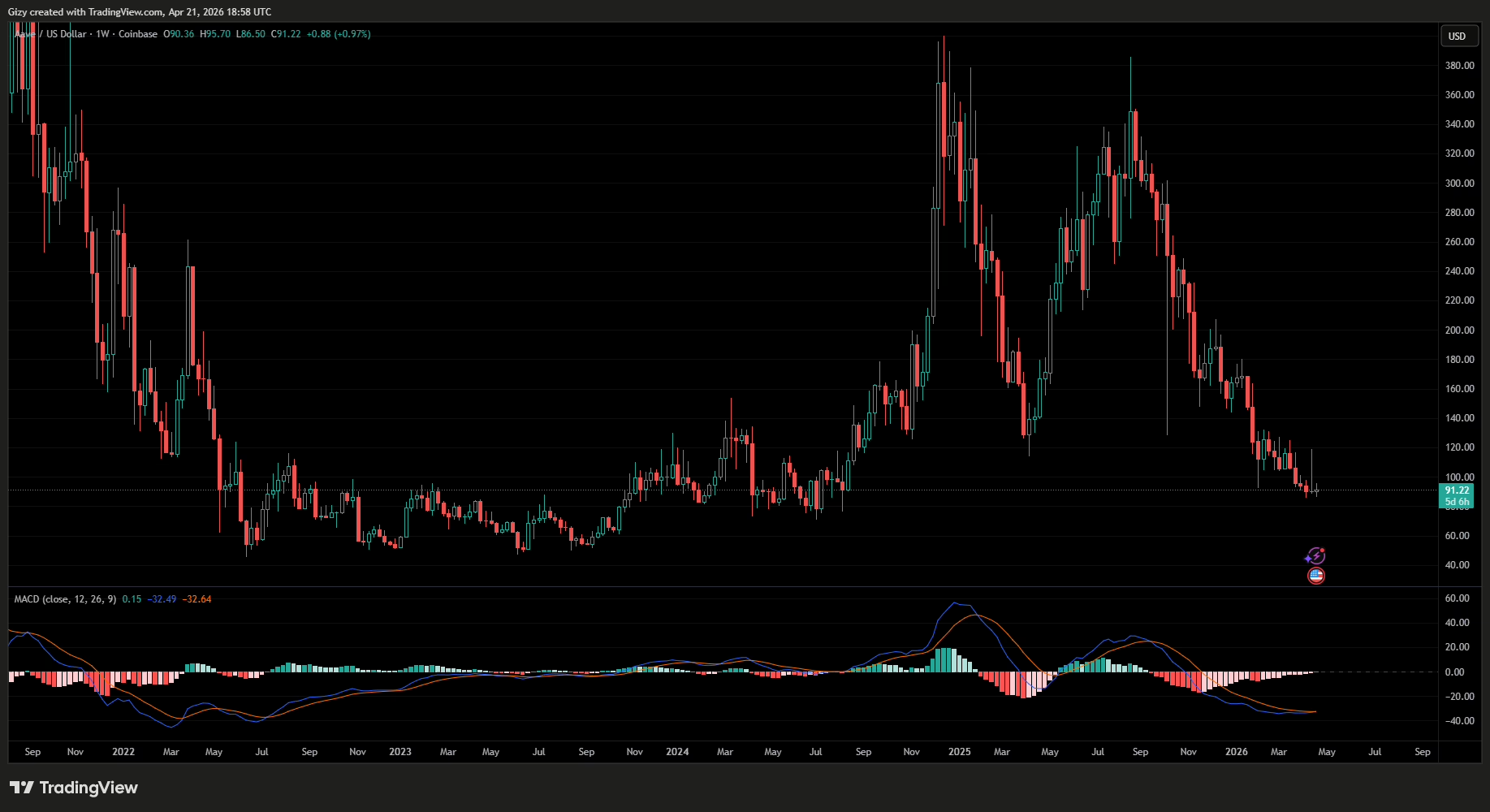
Focusing on price actions during this period may provide insight into what will happen in the coming days. The 1-week chart shows that the price has rebounded around $86 three times since 2024. However, in the last two instances, it flipped the mark weeks later.
The trend may repeat in the coming days as Aave tests the barrier again, just two weeks after the previous one. With fundamentals and other pressures mounting on the asset, the likelihood of such a slip increases.
The next question to answer is how low it will drop. Events in 2024 suggest that a decline to $78 may follow. However, if the bulls fail to defend this mark, a drop to $60 may follow.
Nonetheless, indicators suggest that the altcoin is due for an uptrend. For example, the moving average convergence divergence had a positive crossover last week. Prices have not responded accordingly.
Meanwhile, the MACD readings do not invalidate predictions of further decline. This means that any uptrend before a slip to highlighted barriers will be short-lived.
Market Awaits Next Big Fundamentals
In February, Aave created a fair-value gap of $8, ranging from $100 to $92. It filled this gap a few weeks ago and has maintained the $92 support for an extended period. Based on this structure, the asset is due for a significant uptrend.
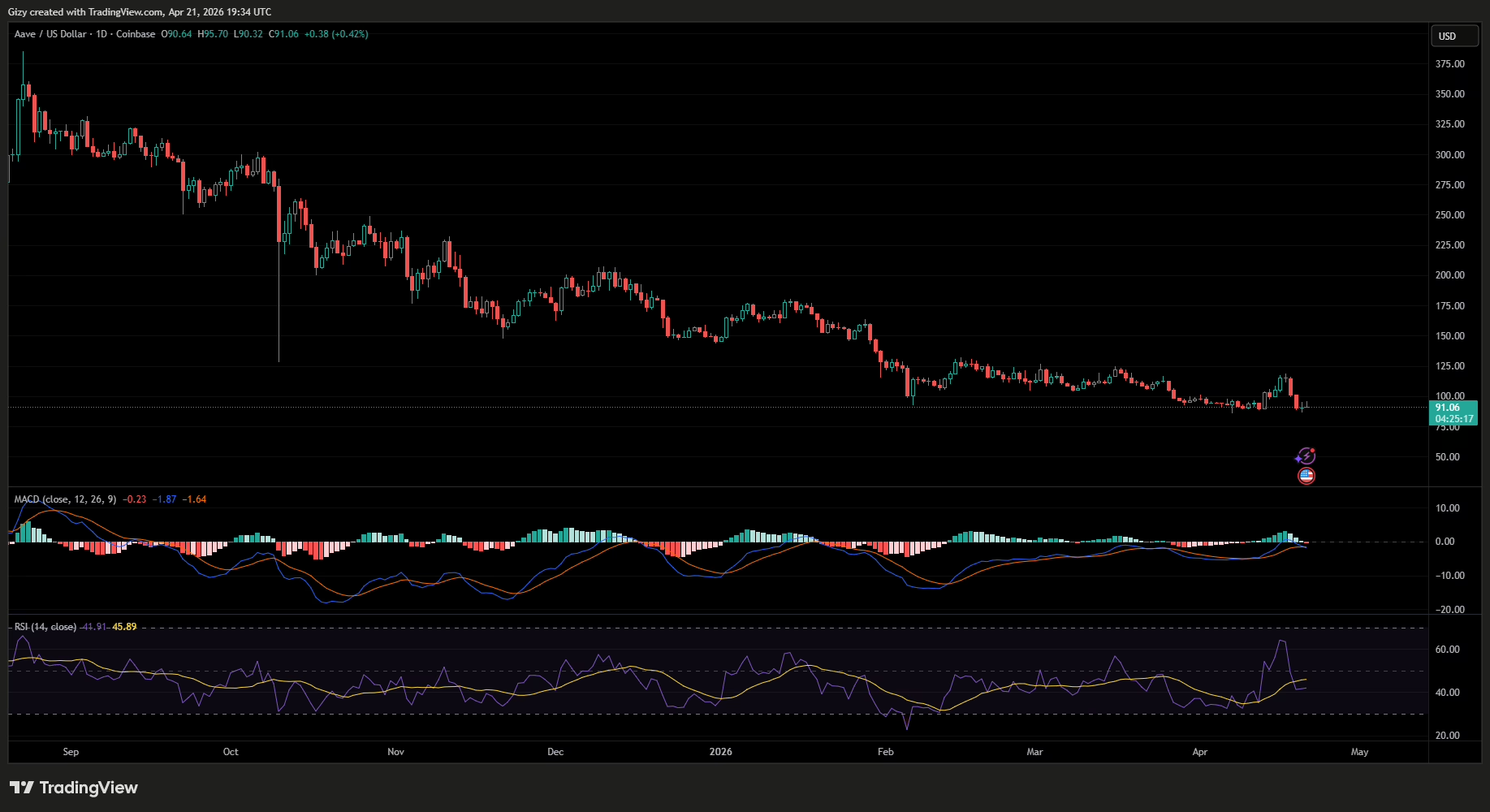
Previous price movement suggests an attempt at $130. However, prices stalled at $118. The probability of a surge to the high becomes less likely by the day, given their recent development, but it is not zero. Investors are currently waiting for the next big news.
Depending on how KelpDAO handles the recent incident, the price may spike or dip. Aside from the cyberattack, the tension in the Middle East is another source of concern.
In the event that both come in negative, the MACD on the 1-day chart warns that the scenario outlined in the large time frame may play out. It recently displayed a negative crossover.
The post Aave Stares Down a Plummet to $60 as KelpDAO Hack Fallout Lingers appeared first on CoinTab News.
0
0


 Manage all your crypto, NFT and DeFi from one place
Securely connect the portfolio you’re using to start.

0
0

0
0

0
0

0
0