
Why Morgan Stanley is doubling down on memory stocks amid AI boom?

0
0
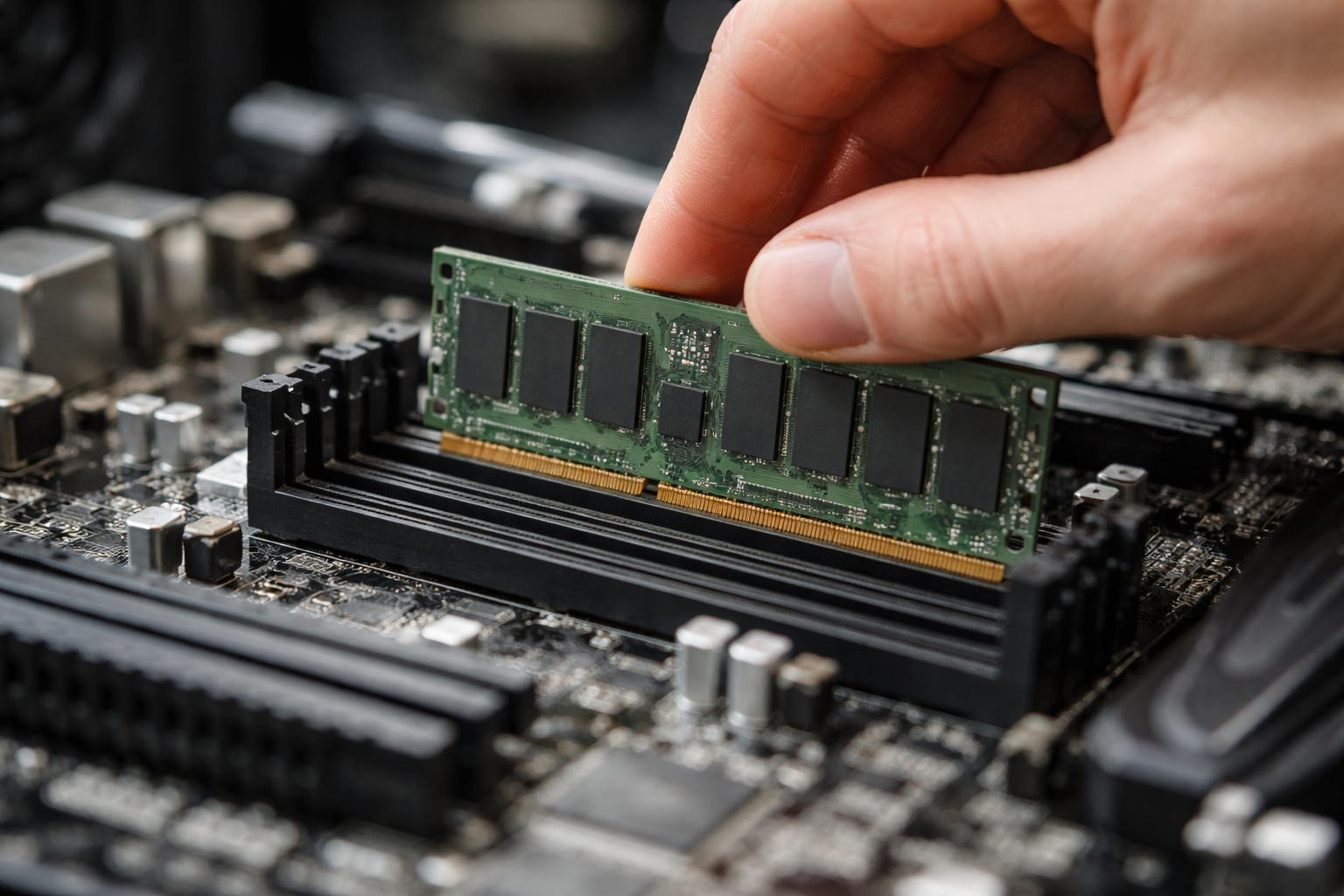
Wall Street’s AI trade is broadening again, and Morgan Stanley wants investors to look beyond the chips that have dominated the first leg of the rally.
In a note on April 20, the bank said increasingly autonomous, so-called agentic AI could lift demand for CPUs and memory.
The development could reshape data-center buildouts and widen the investable opportunity set beyond graphics processors.
Morgan Stanley estimated that agentic AI could add $32.5 billion to $60 billion to a data-center CPU market already above $100 billion by 2030.
The shift matters because it suggests the AI story is moving from pure model training toward more persistent inference and orchestration workloads.
AI bottleneck is moving
The first phase of the AI boom was straightforward: buy the companies that made the brains of the system, especially Nvidia-style accelerators.
Morgan Stanley’s latest view argues that the next phase is more layered.
Agentic AI systems, which can plan tasks and take actions with less human prompting, need more coordination and more general-purpose compute.
The bank sees CPUs increasingly acting as the control layer for these multistep workloads.
That is why the note is important beyond semiconductors.
If AI data centers need more CPU throughput and more memory bandwidth, the capital-spending cycle widens from a single-chip narrative into a full-stack infrastructure trade.
Morgan Stanley said memory demand is set to rise sharply, creating pricing power for parts of the ecosystem that remain supply-constrained.
Why memory looks like the new choke point
This is not the first time Morgan Stanley has pushed the memory thesis.
On March 26, the bank said memory had become the key bottleneck for AI and next-generation CPU builds.
The same note argued that the strength in memory was more durable than investors expected.
Micron stock fell after the company lifted capital spending to more than $25 billion for fiscal 2026 and said spending would rise further in 2027.
The development underscored the tension in the sector as demand is hot, but the supply response is expensive and slow.
Why Micron and SanDisk are the names to watch
Morgan Stanley’s preferred expression of the theme is clear.
The bank named Micron and SanDisk as its preferred way to play CPU strength and kept both at Overweight.
The analysts said their “favorite way” to play CPU strength is through memory stocks, arguing that tight data-center supply conditions could persist through at least 2027.
That makes the call more selective than a broad semiconductor endorsement.
Morgan Stanley still sees upside in AI-adjacent compute names such as Nvidia, AMD, Intel and Arm, but its highest-conviction trade is memory.
The bank believes risk-reward looks better because supply is constrained and demand is increasingly structural rather than purely cyclical.
The post Why Morgan Stanley is doubling down on memory stocks amid AI boom? appeared first on Invezz
0
0


 Manage all your crypto, NFT and DeFi from one place
Securely connect the portfolio you’re using to start.

0
0

0
0

