
Tether’s $1B USDT Mint on Ethereum Signals Potential Stablecoin Q2 Growth

0
0
This article was first published on The Bit Journal.
Tether recently minted another $1 billion USDT on Ethereum, and the liquidity rotation across major blockchains is drawing renewed attention.
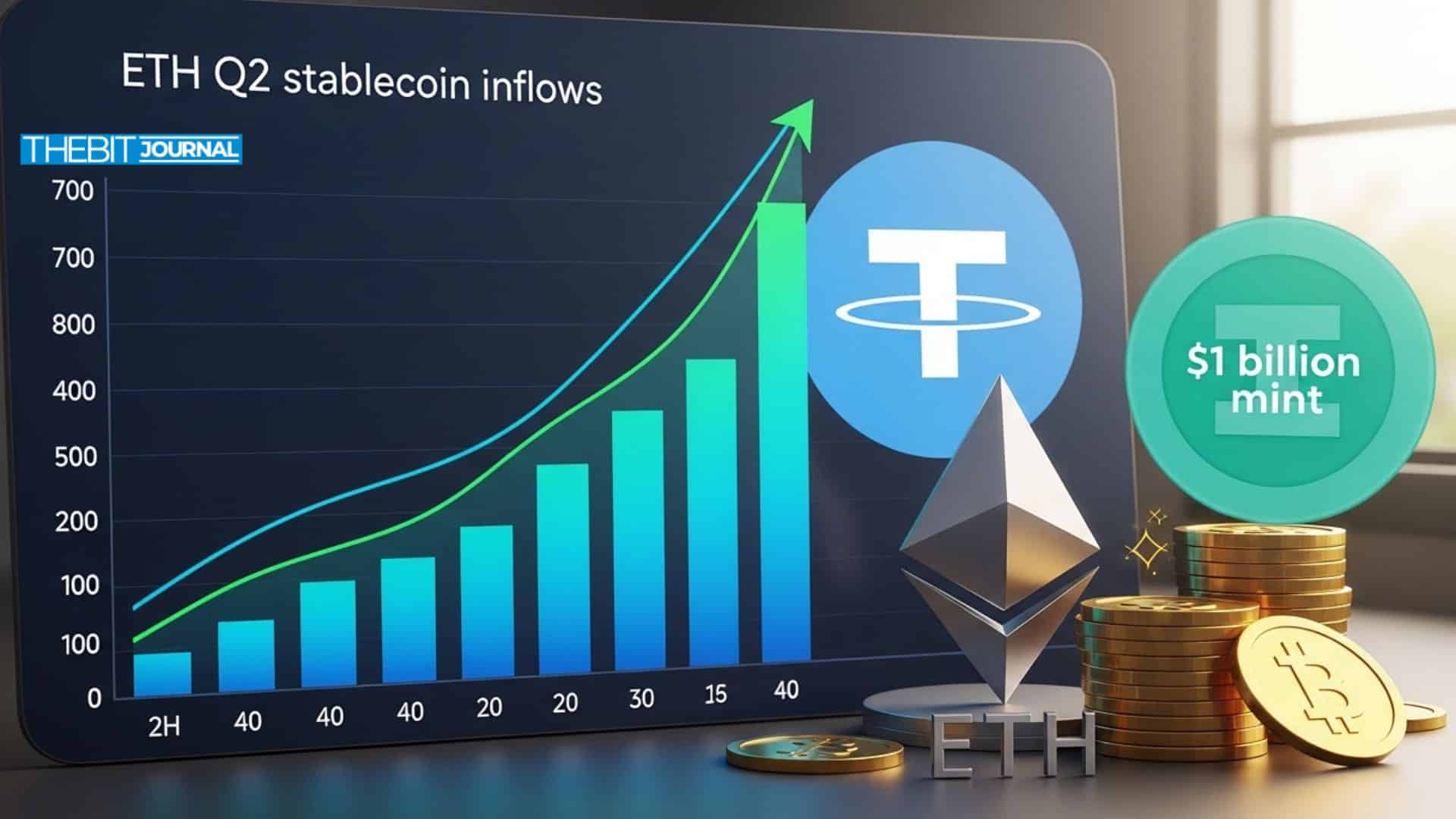
What that means as far as stablecoin supply distribution goes, is just how tight the market has become. According to recent market analysis, the USDT supply between Ethereum and TRON is now almost evenly split, with Ethereum stablecoin inflows holding 44.34% and Tron 45.57%.
Huge USDT issuances are not random. In past cycles, they behave like liquidity injection, often preceding increased trading activity, tighter spreads, and capital rotation into major assets like Bitcoin and ETH.
Ethereum Surges as Stablecoin Growth Patterns Emerge
Ethereum is not only gaining liquidity but also grows at a faster pace.
According to data, the monthly growth rate of USDT supply on Tron is only 0.44%, while Ethereum’s figure has grown 3.19%.
Increased stablecoin activity strengthens Ethereum’s position as stablecoin usage on Ethereum hits record highs
Network level supply has also increased rapidly, with stablecoin value totals hovering around $180B stressing its role as the leading settlement layer
Ethereum continues to grow around liquidity and competition from chains that are both cheaper and faster.
On-Chain Activity Confirms Liquidity Is Being Deployed
Liquidity only matters if it converts to usage and that is what this recent data shows us.
Despite recent price drops, Ethereum had its most active quarter ever with over 200m transactions during the Q1.
Even more significantly, almost 35% of that activity was concentrated in March alone which coincided with a spike in stablecoins entering the market.
This is where the connection becomes evident. Stablecoin inflows give way to Increased on-chain activity which in turn translates to stronger network demand.
This can already be seen in the utilization on Ethereum’s network
Stablecoins act as fuel for DeFi, trading, and settlement. When supply increases, activity tends to follow.
Liquidity Flows Are Already Impacting ETH vs Bitcoin Performance
The most interesting development is not just within Ethereum itself but how it compares to Bitcoin. March provided a clear example.
Ethereum delivered a 6.97% monthly return, outperforming Bitcoin by nearly 3.8x during the same period.
Also, the ETH/BTC ratio surged 5.15% for its highest monthly gain since August 2025.
That change is important because it breaks the previous trend.
Ethereum had underperformed Bitcoin for two consecutive months before that reversal. The change aligned directly with rising stablecoin inflows.
In other words, liquidity not only boosted activity but it also translated into relative strength.
Macro Conditions Add Another Layer to Ethereum’s Setup
Liquidity is also being influenced by the overall market environment.
Geopolitical tension associated with U.S.-Iran events have kept markets on edge, leaving a partial risk-off stance across world assets.
All that notwithstanding, Ethereum remained a magnet for strong inflows.
That indicates that the demand from stablecoins is not entirely speculation. Capital continues to flow into Ethereum-based activity, even in uncertain conditions.
This creates a different setup compared to previous cycles, where liquidity was more reactive to macro sentiment.
Conclusion
The latest $1 billion USDT mint is not just another issuance event but a testament to how liquidity is moving across crypto markets.
Ethereum is giving out three signals at once and they are: faster stablecoin supply expansion than rival chains; rising on-chain activity directly connected to inflows; Improving performance relative to Bitcoin.
As long as stablecoin inflows continue at the same pace, Ethereum’s role as a settlement layer strengthens further and with it, its ability to outperform in relative terms.
Liquidity must continue to flow, and it must continue to be deployed. If that happens, Q2 could look very different from Q1.
Glossary
Stablecoin: A cryptocurrency legged to a stable asset.
USDT: Tether’s dollar-backed stablecoin
ETH/BTC: Ethereum to Bitcoin price ratio
On-Chain Activity: On-chain activity is all the transactions and interactions going on, directly on a blockchain.
Liquidity: Capital availability for trading and investing
Frequently Asked Questions About Ethereum Stablecoin Inflows
What are Ethereum stablecoin inflows?
It refers to the transfer of stablecoins such as USDT and USDC into Ethereum, which increases available liquidity.
Why does it matter that Tether mints $1B?
It indicates more liquidity incoming that could enhance trading, DeFi activities and lead to price momentum.
How do stablecoin inflows affect ETH price?
They increase demand for on-chain activity, generally supporting higher prices and market positions.
Why is Ethereum competing with Tron?
These two networks capture 90% of stablecoin settlement, and drive many crypto-ecosystems.
Will this trend continue into Q2?
Yes, if stablecoin inflows focus continues and is put to work in the markets.
References
Read More: Tether’s $1B USDT Mint on Ethereum Signals Potential Stablecoin Q2 Growth">Tether’s $1B USDT Mint on Ethereum Signals Potential Stablecoin Q2 Growth
0
0


 Manage all your crypto, NFT and DeFi from one place
Securely connect the portfolio you’re using to start.

0
0


0
0

0
0