
South Korea’s $550B bet on memory chips and AI data centers aims to cement global dominance

0
0
BitcoinWorld
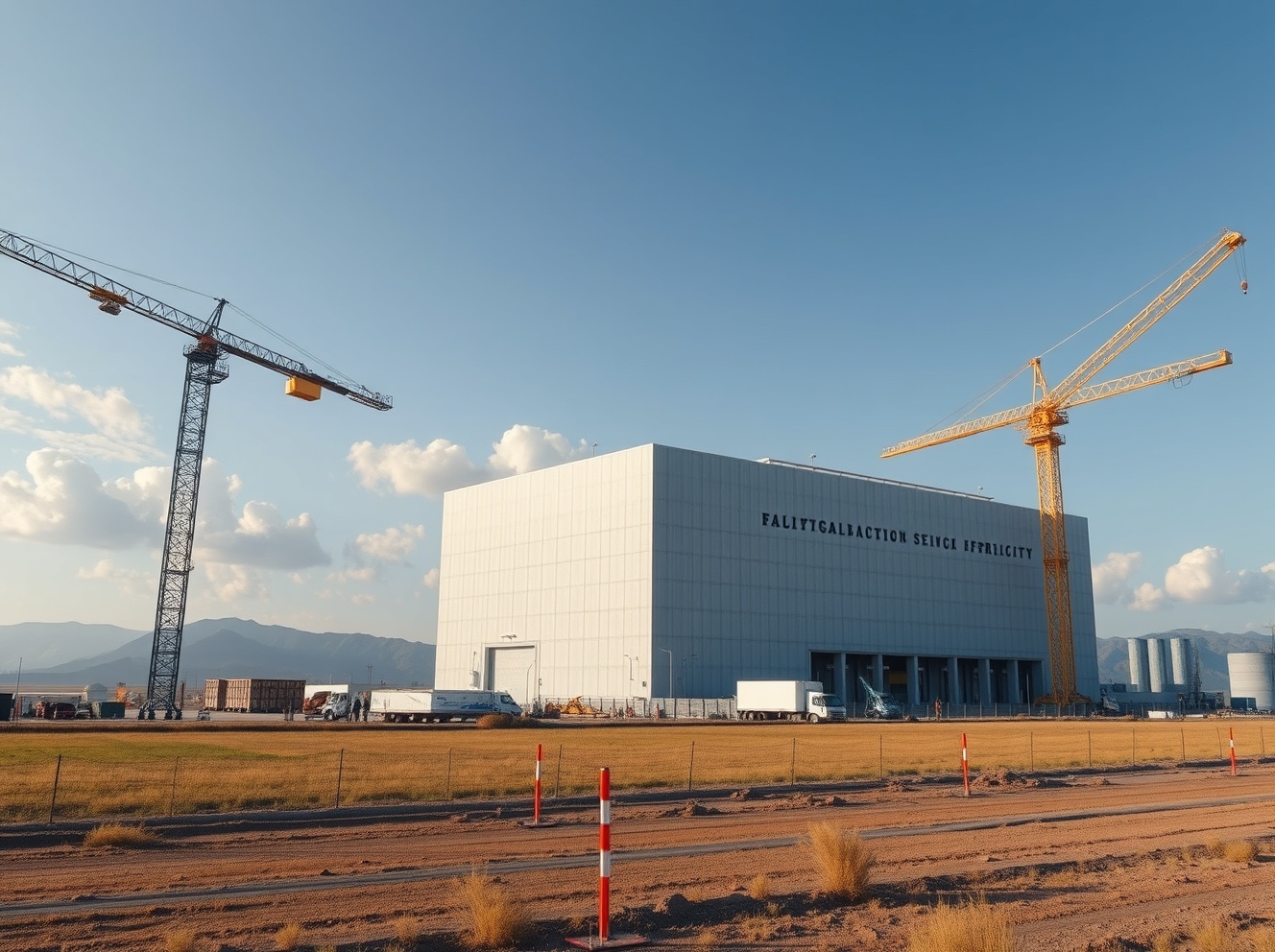
South Korea’s $550B bet on memory chips and AI data centers aims to cement global dominance
South Korea’s two largest memory chip makers, Samsung and SK Hynix, have committed over $550 billion to build four new fabrication plants in the country’s underdeveloped southwestern region, part of a broader national push to solidify the nation’s role in the global AI supply chain. The announcement, made during a presidential briefing on Monday, also includes $356 billion for AI data centers to be built by conglomerates such as SK, GS, and Naver through 2035. Combined, the investments exceed $900 billion, reflecting an unprecedented mobilization of capital aimed at addressing the worldwide shortage of memory chips — a phenomenon industry observers have dubbed “RAMageddon.”
A triple-axis strategy for industrial transformation
President Jae Myung Lee framed the initiative as a three-pronged strategy encompassing semiconductors, physical AI, and AI data centers, calling 2026 the year South Korea must establish itself as an “irreplaceable” industrial power. In a televised address, Lee noted that existing chip facilities in Yongin and Pyeongtaek, the traditional heart of the nation’s semiconductor belt just south of Seoul, have “already reached their limits.” He urged companies to accelerate investment in the southwest, aiming to distribute economic benefits beyond the capital region. “We must secure overwhelming production capacity in advance,” he said.
The breakdown of the memory chip bucket includes $518 billion for four new fabs in the southwest and an additional $52 billion for a high-bandwidth memory (HBM) packaging hub in the central region. HBM chips are critical components for AI accelerators, and SK Hynix has been a dominant supplier to companies like Nvidia. The investments are designed to lock in production capacity for the next decade as demand for AI training and inference hardware continues to surge.
Company-level commitments and regional incentives
Samsung separately published a press release outlining plans to invest 2,655 trillion won (~$1.7 trillion) over the next decade, with 425 trillion won earmarked for the Honam region — the southwestern corner of the Korean peninsula. The company cited expected incentives around power, water, workforce, and living conditions as key factors in selecting Gwangju, roughly 300 kilometers south of Seoul, for a new semiconductor fab, alongside an AI data center in Haenam at the southern tip of the peninsula.
SK Group announced a 2,100 trillion won (~$1.4 trillion) medium-to-long-term roadmap, with 1,100 trillion won dedicated to expanding semiconductor production capacity and 1,000 trillion won for AI data centers nationwide. SK Hynix will lead the chip expansion, while SK Telecom is tasked with building 15 gigawatts of AI data center capacity across the country. President Lee pushed back against media reports that the government had pressured companies into these commitments, stating that the decisions reflected the companies’ own judgment. “The government’s role is to invest its capabilities so that companies can invest without losses and with better prospects,” he was quoted as saying.
Comparing the scale to U.S. tech giants
The scale of South Korea’s planned spending is notable even when measured against the largest U.S. technology companies. Alphabet, Amazon, Meta, and Microsoft are expected to collectively spend $650 billion on AI infrastructure this year alone, according to Reuters. South Korea’s $900 billion commitment, spread over a longer timeframe, signals that the country intends to compete not just in chip manufacturing but across the entire AI value chain, from raw silicon to data center operations.
Execution risks and market realities
Whether the ambition translates into execution is another question. Deep tech industries like semiconductors and AI do not move on political or even customer demand timelines. Fabrication plants take years to build and bring online. The risk is that by the time the new capacity is ready, the demand that triggered the investment may have softened, leaving companies with oversupply and crashing prices. The memory chip industry has historically been cyclical, with boom-and-bust cycles driven by shifts in supply and demand. The current “RAMageddon” — driven by AI’s insatiable appetite for HBM and DDR5 memory — may not last indefinitely.
For now, the world’s AI chip supply chain, particularly companies hungry for memory, will be watching closely to see if South Korea can pull off this massive buildout. The success of the plan hinges not only on construction timelines but also on continued demand from hyperscalers and AI startups alike, as well as the ability of Samsung and SK Hynix to maintain technological leadership in an increasingly competitive field.
Conclusion
South Korea’s coordinated investment of over $900 billion in memory chips and AI data centers represents one of the most ambitious national industrial strategies in recent memory. By spreading production capacity to the southwest and building out nationwide data center infrastructure, the country aims to reduce its reliance on the Seoul metropolitan area and secure its position as an irreplaceable link in the global AI supply chain. However, the long lead times inherent in semiconductor manufacturing mean that the payoff — or the risk — will not be fully known for years. For now, the announcement underscores the lengths to which governments and companies are willing to go to capture a piece of the AI economy.
FAQs
Q1: What is “RAMageddon”?
RAMageddon is a term used to describe the global shortage of memory chips, particularly high-bandwidth memory (HBM) and DDR5, driven by surging demand from AI data centers and training infrastructure. The shortage has pushed prices higher and created supply constraints for companies building AI systems.
Q2: Why is South Korea investing in the southwestern region for chip fabs?
The traditional semiconductor manufacturing belt near Seoul — in cities like Yongin and Pyeongtaek — has reached capacity limits. The government is promoting the southwest (Honam region) as a new hub, offering incentives for power, water, workforce, and living conditions to attract investment and spread economic development beyond the capital.
Q3: How does South Korea’s investment compare to U.S. tech companies?
South Korean companies have committed over $900 billion combined for memory chips and AI data centers through 2035. For context, U.S. tech giants Alphabet, Amazon, Meta, and Microsoft are expected to spend $650 billion on AI infrastructure in 2025 alone, according to Reuters. South Korea’s plan is longer-term and more focused on manufacturing capacity.
This post South Korea’s $550B bet on memory chips and AI data centers aims to cement global dominance first appeared on BitcoinWorld.
0
0

 Manage all your crypto, NFT and DeFi from one place
Securely connect the portfolio you’re using to start.

0
0


0
0

0
0