
Two Cities Control More Than Half of Solana’s Blocks — A Decentralization Question Emerges

0
0


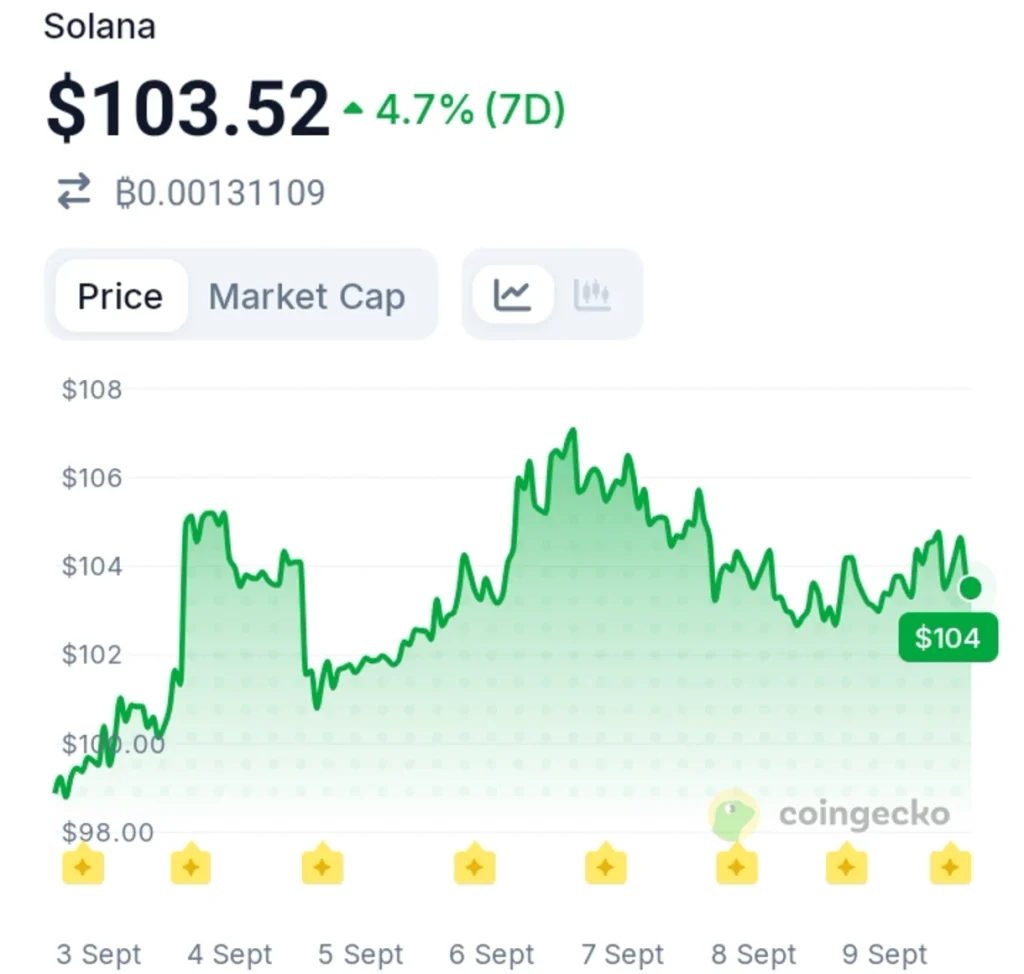
Solana is trading at $103.52, up 4.7% over the past seven days, but beneath the steady price action lies a striking infrastructure concentration.
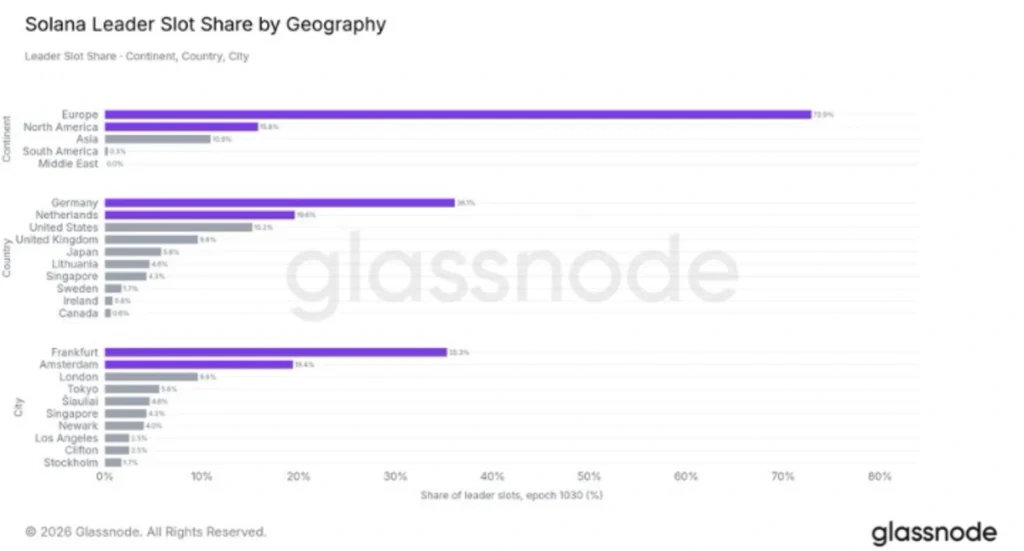
According to Glassnode’s Solana Latency data, Frankfurt and Amsterdam together account for more than half of the network’s block production.
Frankfurt and Amsterdam Dominate
Frankfurt produces roughly 33% of Solana blocks, while Amsterdam contributes another 19%. Together, the two cities account for approximately 52% of block production.
The concentration is also visible in the validator distribution. Around 310 of Solana’s 675 validators are located in the two cities, representing about 46% of validators and 53% of the network’s stake.
The figures highlight the importance of physical infrastructure in a network where fast communication between validators is critical to performance.
Why the Concentration Matters
Geographic diversity is an important part of network resilience. When a large portion of validators and stake is concentrated within a small number of infrastructure hubs, regional outages, connectivity problems, or regulatory disruptions could have an outsized effect.
That does not mean Solana is centralized in terms of governance or that the network faces an immediate failure risk.
Rather, the data exposes a different form of concentration: where the infrastructure securing the network is physically located.
This is particularly relevant as Solana’s validator ecosystem continues to evolve. Earlier coverage examined a decline in validator participation and voting activity, highlighting broader questions around network participation. An earlier analysis looked at changes in Solana’s validator network.
Price Holds Steady Amid the Discussion
SOL has remained relatively resilient despite the renewed discussion around validator geography.
The token recovered from below $100 before moving into a tighter range around $103, suggesting that the infrastructure data has not created immediate selling pressure.
Solana’s validator economics have also remained an active area of development, with proposed changes to fees and network incentives potentially influencing how infrastructure operators participate.
What to Look Forward To
The concentration of block production in Frankfurt and Amsterdam is an important reminder that decentralization extends beyond validator count.
Physical location, stake distribution, data centers, and network connectivity can all influence how distributed a blockchain actually is.
As Solana expands, greater geographic diversification could strengthen its resilience.
For now, the latest data puts a significant decentralization question on the table: how distributed is a network when more than half of its blocks are produced from just two cities?V
The post Two Cities Control More Than Half of Solana’s Blocks — A Decentralization Question Emerges appeared first on TechGaged.com.
0
0

 Manage all your crypto, NFT and DeFi from one place
Securely connect the portfolio you’re using to start.


