
Critical Warning: ECB’s Rehn Urges Caution Against Over-Optimism on Iran Conflict Duration

0
0
BitcoinWorld

Critical Warning: ECB’s Rehn Urges Caution Against Over-Optimism on Iran Conflict Duration
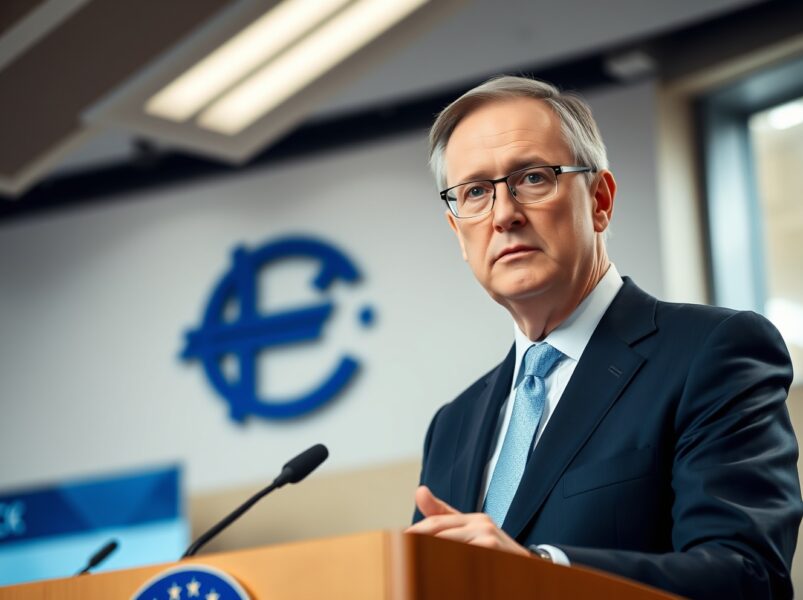
FRANKFURT, Germany – European Central Bank Governing Council member Olli Rehn issued a critical warning today, urging policymakers and markets to avoid excessive optimism about the potential duration of the Iran conflict and its economic ramifications. The Bank of Finland governor emphasized that premature assumptions about conflict resolution could dangerously misguide monetary policy decisions across the Eurozone.
ECB’s Rehn Delivers Sober Assessment on Iran Conflict Timeline
During a press conference at the ECB headquarters, Olli Rehn presented a detailed analysis of the Middle Eastern geopolitical landscape. Furthermore, he highlighted historical precedents suggesting prolonged regional conflicts often defy initial optimistic projections. Specifically, Rehn referenced conflict duration data from similar geopolitical crises over the past two decades. Consequently, his remarks immediately influenced European bond markets and currency valuations.
The ECB official systematically outlined three primary risk factors:
- Energy market volatility: Potential disruptions to Strait of Hormuz shipping routes
- Inflationary pressures: Secondary effects on European consumer prices
- Financial stability concerns: Contagion risks to European banking sectors
Market analysts quickly noted that Rehn’s cautionary stance reflects growing concern within the ECB’s governing council. Additionally, his comments arrived alongside newly released economic projections showing revised inflation forecasts for 2025.
Historical Context of Middle Eastern Conflicts and Economic Impact
Rehn’s warning draws upon substantial historical evidence from previous Middle Eastern conflicts. For instance, the 2003 Iraq conflict initially projected a six-month stabilization period. However, the actual economic disruption persisted for years. Similarly, the 2011 Arab Spring uprisings generated longer-than-anticipated market volatility. Therefore, Rehn argues that current assessments must incorporate these historical lessons.
The table below illustrates conflict duration versus initial projections:
| Conflict | Initial Projection | Actual Duration of Major Economic Impact |
|---|---|---|
| Iraq War (2003) | 6-12 months | 3+ years |
| Syrian Civil War | 1-2 years | 5+ years |
| Yemen Conflict | 6 months | 4+ years |
Rehn specifically emphasized that energy market disruptions often outlast active combat phases. Moreover, he noted that supply chain reconfiguration requires substantial time even after conflict resolution.
Monetary Policy Implications for the Eurozone
The Bank of Finland governor detailed specific transmission mechanisms through which prolonged conflict could affect ECB policy. First, energy price shocks directly influence headline inflation figures. Second, uncertainty dampens business investment across manufacturing sectors. Third, refugee flows potentially strain public finances in peripheral EU nations.
Rehn explained, “Our models must account for nonlinear effects that emerge during extended geopolitical crises.” He further referenced the ECB’s internal stress testing frameworks. These frameworks now incorporate multiple conflict duration scenarios ranging from six months to three years.
Several European financial institutions have already adjusted their risk assessments. For example, Deutsche Bank analysts revised their oil price forecasts upward by 15% following Rehn’s comments. Similarly, BNP Paribas economists incorporated longer conflict assumptions into their European growth projections.
Global Central Bank Coordination on Geopolitical Risks
Rehn revealed ongoing discussions among major central banks regarding coordinated responses. The Federal Reserve, Bank of England, and Bank of Japan reportedly share similar concerns about conflict duration miscalculation. Consequently, these institutions are developing communication strategies to manage market expectations.
The ECB official highlighted several key coordination areas:
- Information sharing: Intelligence assessment exchanges between central bank research departments
- Liquidity provisions: Contingency plans for dollar funding markets during disruptions
- Policy signaling: Aligned messaging to prevent contradictory market interpretations
This coordination reflects lessons learned during previous geopolitical crises. Specifically, the 2014 Crimea annexation demonstrated the value of preemptive central bank communication.
Energy Market Vulnerabilities and European Preparedness
Europe’s energy infrastructure faces particular exposure to prolonged Middle Eastern instability. Currently, approximately 20% of EU oil imports transit the Strait of Hormuz. Additionally, liquefied natural gas shipments from Qatar represent crucial winter supply sources.
Rehn acknowledged significant improvements since the 2022 energy crisis. European gas storage now exceeds 90% capacity. Furthermore, diversified supply sources include increased Norwegian pipeline gas and American LNG. However, he cautioned that extended conflict could still strain these alternative arrangements.
The ECB’s economic models suggest specific vulnerability thresholds. For instance, oil prices sustaining above $100 per barrel for over six months would likely trigger recessionary scenarios. Similarly, natural gas prices exceeding €50/MWh would significantly impact industrial production.
Financial Market Reactions and Risk Pricing
Following Rehn’s remarks, European markets demonstrated immediate sensitivity to conflict duration assumptions. Credit default swap spreads on Middle Eastern sovereign debt widened by 10-15 basis points. Meanwhile, Euro Stoxx 50 volatility indices increased by approximately 8% during afternoon trading.
Currency markets particularly reflected the cautious tone. The euro initially weakened against the Swiss franc, traditionally a safe-haven currency during geopolitical stress. However, it stabilized against the dollar as traders assessed relative central bank positions.
Several asset managers announced portfolio adjustments. BlackRock’s European division indicated increased hedging through gold and Treasury positions. Similarly, Amundi reduced exposure to European automotive and aviation sectors most vulnerable to oil price shocks.
Conclusion
ECB Governing Council member Olli Rehn’s warning about excessive optimism regarding Iran conflict duration represents a significant development in central bank communication. His analysis emphasizes the economic dangers of underestimating geopolitical crisis timelines. Moreover, it signals heightened ECB attention to conflict-related inflationary risks. The European Central Bank’s cautious stance on the Iran conflict duration will likely influence monetary policy discussions throughout 2025. Financial markets must now incorporate more conservative assumptions about Middle Eastern stability into their pricing models.
FAQs
Q1: What specifically did ECB’s Rehn say about the Iran conflict?
Olli Rehn warned against being overly optimistic about how quickly the Iran conflict might resolve, emphasizing that premature assumptions could lead to misguided economic policies and market miscalculations.
Q2: Why does the Iran conflict duration matter for European monetary policy?
Prolonged conflict affects energy prices, supply chains, and inflation—all crucial factors in ECB interest rate decisions and quantitative tightening policies.
Q3: How have financial markets reacted to Rehn’s comments?
Markets showed increased volatility with widening credit spreads, higher oil price forecasts, and adjustments to European growth projections by major financial institutions.
Q4: What historical conflicts did Rehn reference in his analysis?
He cited the Iraq War, Syrian Civil War, and Yemen Conflict as examples where economic impacts lasted significantly longer than initial optimistic projections suggested.
Q5: How prepared is Europe for extended Middle Eastern energy disruptions?
While European gas storage is high and supply sources have diversified since 2022, Rehn noted that sustained high energy prices would still significantly impact the economy.
This post Critical Warning: ECB’s Rehn Urges Caution Against Over-Optimism on Iran Conflict Duration first appeared on BitcoinWorld.
0
0

 Управляйте всей своей криптовалютой, NFT и DeFi из одного места
Безопасно подключите используемый вами портфель для начала.

0
0

0
0

0
0

0
0