
Decart launches Oasis 3: a photorealistic world model for autonomous driving — with notable limitations

0
0
BitcoinWorld
Decart launches Oasis 3: a photorealistic world model for autonomous driving — with notable limitations
AI startup Decart has released Oasis 3, an interactive world model capable of generating photorealistic driving environments in real time, available via API. The company is targeting autonomous vehicle developers who need to simulate rare or dangerous driving scenarios at scale, with plans to expand into robotics and physical AI applications. The model, which Decart claims is the first usable world model that developers can program on top of, represents a significant step in the evolution of generative AI for physical environments.
What Oasis 3 offers and how it works
Oasis 3 generates physically accurate, multi-camera environments — one front-facing and two side-facing — designed for training and testing autonomous systems. Unlike limited research previews from competitors, Decart allows developers to generate scenarios infinitely, a feature particularly valuable for edge-case testing. The model is priced at $0.02 per second of simulation, with enterprise pricing depending on use case. Decart says it has a community of over 100,000 developers already building on its real-time video model Lucy, and expects Oasis 3 to attract a similar ecosystem.
The startup’s efficiency edge comes from its DOS (Decart Optimization Stack) software, which optimizes models to run on Nvidia, Amazon, and Google hardware, making inference far cheaper than competitors. Decart claims its models are more than an order of magnitude cheaper to run than any other in the industry, and that it has burned through drastically less than $100 million in its lifetime.
Performance and limitations in testing
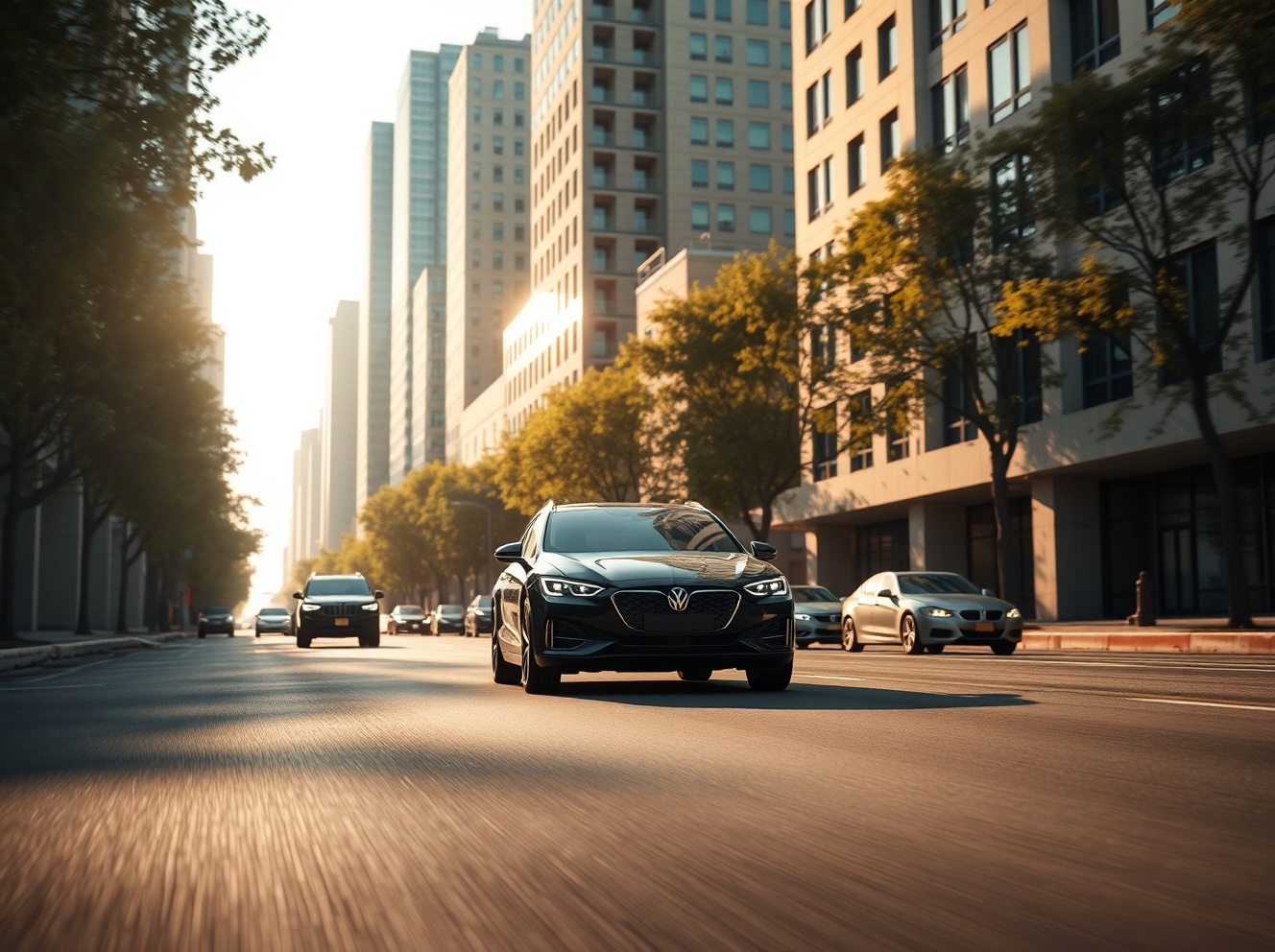
In hands-on testing, Oasis 3 produced impressive initial scenes from a single text prompt — a New York City street in the morning, for example, appeared photorealistic and detailed. However, the model’s coherence degraded rapidly as the simulation continued. Driving along, the environment lost its specific identity, becoming a generic urban scene. Attempting to return to the starting point revealed that the world had been replaced entirely, highlighting a lack of persistent spatial memory.
The controls were also unresponsive at times, and the car would drive through other vehicles, indicating that the model does not yet simulate physics accurately. Dean Leitersdorf, co-founder and CEO of Decart, described this as a major research problem, attributing it to a data imbalance — there is far more data on good driving than on accidents. The model is auto-regressive, generating one frame at a time and looking back at previous frames, which fills its context window quickly. The team is working on extending memory to maintain consistency over longer simulations.
Industry context and competition
Decart enters a crowded field. Google released Genie 3 in research preview last year, Fei-Fei Li’s World Labs launched Marble for commercial use, and video generation startups like Luma and Runway are translating their physics-aware video models into world models. Oasis 3’s advantage lies in its photorealism and infinite generation capability, but it shares common limitations with its rivals, including inconsistent long-term coherence and lack of object awareness.
The release comes weeks after Decart raised $300 million at a valuation of nearly $4 billion, with strategic investors including Toyota, Adobe, eBay, and Nvidia. These investors are also potential customers, particularly for autonomous vehicle and robotics applications.
Why this matters
World models are a critical frontier in AI, with the potential to revolutionize how machines learn to interact with physical environments. For autonomous vehicle companies, the ability to simulate rare edge cases at scale could accelerate development and improve safety. Decart’s decision to offer API access from day one mirrors OpenAI’s early strategy with language models, aiming to build a developer ecosystem that discovers and builds novel applications. If successful, Oasis 3 could become a foundational platform for physical AI, much like GPT-3 was for language tasks.
Conclusion
Decart’s Oasis 3 represents a meaningful advance in photorealistic world modeling, offering unmatched efficiency and infinite generation for autonomous driving simulations. However, significant limitations in long-term coherence, physics simulation, and object awareness remain. The field is still early, and the true test will be whether the developer community can turn these capabilities into practical, reliable applications. Decart expects to address consistency issues in the next version, which will allow users to seed worlds from video rather than a single image.
FAQs
Q1: What is Oasis 3 and who is it for?
Oasis 3 is an interactive world model from AI startup Decart that generates photorealistic driving environments in real time. It is designed for autonomous vehicle developers who need to simulate rare driving scenarios at scale, and is available via API.
Q2: How does Oasis 3 compare to other world models like Google’s Genie 3?
Oasis 3 offers superior photorealism and infinite generation capability, but shares common limitations with competitors, including degradation of scene coherence over time and lack of physics accuracy for object interactions.
Q3: What are the main limitations of Oasis 3?
The model struggles with long-term consistency — environments lose specificity after extended use — and does not simulate physics accurately, causing vehicles to pass through each other. Controls can also be unresponsive.
This post Decart launches Oasis 3: a photorealistic world model for autonomous driving — with notable limitations first appeared on BitcoinWorld.
0
0


 Manage all your crypto, NFT and DeFi from one place
Securely connect the portfolio you’re using to start.


0
0

0
0

0
0