
Elon Musk Wants To Bring Millions Of Indians

0
0
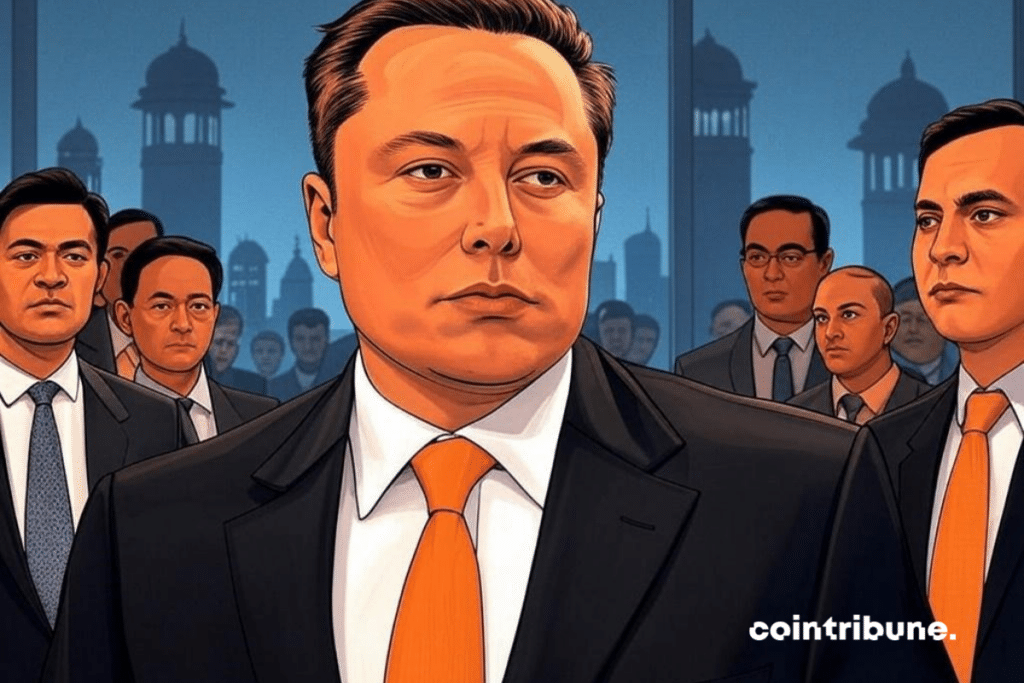
Elon Musk has just changed his tune on the subject of immigration. He has recently engaged in a public battle to defend H1-B visas. The billionaire, once a leading figure of the conservative movement, now vehemently asserts that these visas are “essential for America to continue winning.”
Musk’s Turnaround on Immigration
This position has triggered a real civil war within the conservative movement. In the face of criticism, Musk reacted with vehemence, even declaring that he “would go to war on this issue in a way you cannot understand”. To justify his position, he reminds that his own presence in the United States, as well as that of many key talents from SpaceX and Tesla, is due to the H1-B program.
Donald Trump himself seems to align with this position, declaring to the New York Post that he is a “strong supporter of H1-B visas” which he extensively utilizes in his own businesses. This unexpected support from two major figures of the MAGA movement has incited anger from traditional conservatives like Steve Bannon, who accuses Musk of betraying American workers.
This controversy perfectly illustrates Curtis Yarvin‘s analysis (an American tech thinker) on the real motivations behind skilled immigration: an alliance between the interests of big corporations and a certain technocratic vision of excellence.
The Right Divides Following Musk’s Positions
His reflection occurs in a tense context, as the American right is tearing itself apart over the issue of Indian visas and the threat posed by artificial intelligence to the job market.
The recent electoral victory of the American “New Right” was not enough to maintain the unity of the movement. The debate over Indian visas digs a deep divide between the rationalists and traditionalists of the movement. For Yarvin, this division illustrates the limits of the traditional liberal framework in which both camps remain locked.
“Liberalism as we know it is only 250 years old”, he reminds, “a shorter lifespan than some Chinese dynasties”.
The State as a Sovereign Enterprise
Yarvin proposes a radically different vision of the modern state. For him, the government should be viewed as a sovereign enterprise, owning its territory and population. This approach contrasts with the traditional liberal vision where the state exists to serve its citizens.
“The state owns its subjects”, he asserts bluntly, acknowledging the shocking nature of this position for modern thought. He believes this vision is closer to that of Plato than to current liberalism. For him, the nation is the people, and the state is the legitimate owner of land, structures, and people.
This ownership implies exclusive dominance. While certain branches of the state may sometimes protect the subject from other branches, the state as a whole can do whatever it wants with any of its subjects. This is, according to Yarvin, the very definition of sovereignty.
Should the State Care for Its National Human Capital?
For Yarvin, the purpose of a state should not be to maximize GDP, but to optimize the value of its human capital. He compares the current situation of the United States to “a rental car whose oil no one changes.”
This vision implies that the state must protect and develop its human capital. It is responsible for its appreciation or depreciation. Indeed, work, particularly complex and stimulating work that pushes the limits of a trade or skill, is what makes human beings more valuable.
A Critique of Skilled Immigration
Yarvin’s position on skilled immigration stands in stark opposition to that of his friend Elon Musk. He believes that the H1-B visa program is a “band-aid” that masks American incapacity to develop its own human capital.
“We are sucking all the appreciation energy into these H1-Bs, which are human assets of another government, while our own human capital is rotting on the couch”, he denounces. This approach, he claims, harms American workers who find themselves underemployed while companies import foreign talent.
He also highlights the absurdity of the situation where a third-world country loses its most precious talents while it needs them far more than the United States does.
The Motivations Behind Immigration
Yarvin identifies two main motivations behind migratory policy: corporate profits and political ambition. At best, it’s a way for companies to save money by using cheaper foreign labor. At worst, it’s a project aimed at empowering a small “meritocratic” oligarchy over society as a whole.
He suggests that companies should realize they can still win by being the best, as long as their competitors must also utilize domestic labor. As for the oligarchy, his provocative suggestion is that they “should be deported to Mars.”
AI: An Extraterrestrial Immigration
Yarvin concludes with a warning about artificial intelligence, which he compares to an “extraterrestrial immigration.” In five to ten years, he warns, AI could render a large part of the workforce obsolete, including skilled workers.
“It is a greater destroyer of labor demand than the loom and the steam engine combined”, he asserts. AI will destroy the demand for human beings in the developed world, the developing world, and probably even on Mars.
Faced with this challenge, he proposes a radical solution: deliberately restricting technology to maintain the demand for quality human labor.
Towards an Anti-Tech Revolution?
The alternative to this technological restriction would, according to Yarvin, be a “luxurious fully automated communism” where total meaninglessness would cause a moral and then political collapse of humanity.
This political collapse could lead to a civilizational suicide, “subjugation by the barbarians, and a return to pre-industrial technological levels.”
Yarvin’s reflection sheds light on the major challenges faced by modern societies: how to manage human capital in a globalized world where machines are replacing humans in all high-value-added activities.
0
0



 Manage all your crypto, NFT and DeFi from one place
Securely connect the portfolio you’re using to start.


