
Tether USDT Freeze Case: Can Issuers Lock $42.4M Without a Warrant?

0
0
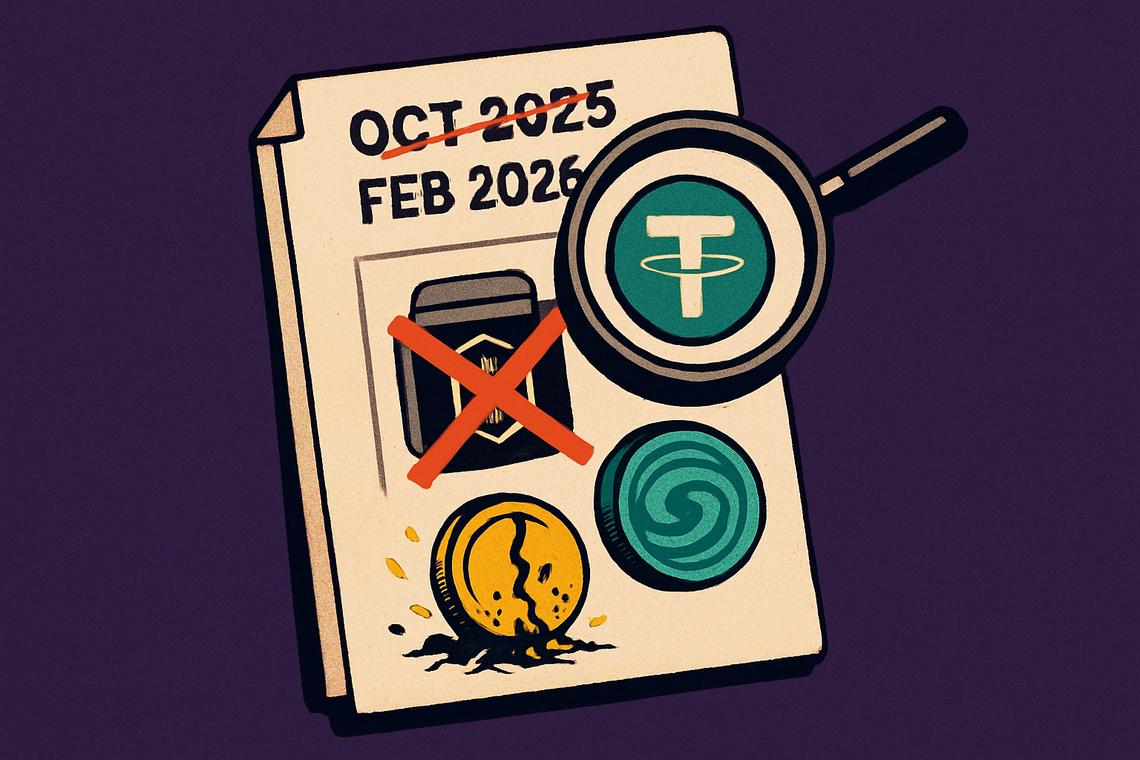
A New York federal courtroom is about to become the stage for a fight that could reshape how stablecoin issuers respond to law enforcement. Two Thai businessmen have filed suit against Tether, arguing the company had no legal right to freeze $42.4 million in USDT months before any judge signed off on the move. The Tether USDT freeze case, filed August 31 in the U.S. District Court for the Southern District of New York, puts a spotlight on a practice that stablecoin issuers rarely have to explain in public: freezing tokens on nothing more than an informal tip from investigators.
Key takeaways
- Nutthawat Rukthammachalern and Natthawat Kasamvilas are suing Tether over a freeze on 42,417,785.62 USDT spread across ten Ethereum addresses.
- Tether blacklisted the wallets on October 30, 2025, after an informal request from a Homeland Security Investigations agent — with no warrant in hand at the time.
- A formal seizure warrant did not arrive until February 19, 2026, issued by a magistrate judge in the Eastern District of North Carolina.
- The warrant, numbered 5:26-MJ-1267-JG, directs Tether to burn the frozen tokens and reissue an equivalent amount to a government-controlled wallet.
- Plaintiffs are seeking declaratory judgment, an injunction, damages, and punitive damages, arguing Tether kept earning reserve yield while their funds sat frozen.
The $42.4 Million Freeze and the Lawsuit Behind It
At the center of the complaint is a simple but pointed question: can a stablecoin issuer lock up tens of millions of dollars in tokens simply because a federal agent asked, without a warrant or court order backing that request? According to the filing, Tether blacklisted ten Ethereum addresses holding a precise 42,417,785.62 USDT on October 30, 2025. No subpoena, no seizure order, and no advance notice accompanied that action, the plaintiffs say.
Kasamvilas reportedly discovered the restriction only after trying to move funds and running into a wall. When he reached out to Tether, the company allegedly pointed him toward the email address of an Homeland Security Investigations agent instead of laying out any legal basis for the freeze. The plaintiffs say they acquired the tokens through ordinary secondary-market business dealings and never had a direct customer relationship with Tether — a distinction their lawyers argue matters a great deal when it comes to who actually has legal authority over the coins.
The complaint points to two functions built into Tether’s Ethereum smart contract: addBlackList, which stops tokens at flagged addresses from moving, and destroyBlackFunds, which lets Tether burn blacklisted tokens outright. Having the technical keys to freeze and destroy tokens, the plaintiffs argue, is not the same thing as having the legal right to use them against third parties who were never Tether’s direct clients.
A Seizure Warrant Arrives Months Later
The formal paperwork authorities eventually produced came nearly four months after Tether had already frozen the funds. A magistrate judge in the Eastern District of North Carolina signed off on seizure warrant 5:26-MJ-1267-JG on February 19, 2026 — long after the blacklisting had already taken effect, according to the New York complaint.
Attorney Ariel Givner, who represents the plaintiffs, has described the underlying investigation as originating from a Raleigh-based HSI office acting on a victim’s tip involving alleged romance and investment fraud run through a fake trading platform — a scheme commonly known as pig-butchering. Funds were allegedly moved through a chain of wallets designed to obscure their origin, a pattern Givner summed up as “accumulate, layer, integrate.” One address, holding roughly $26.1 million in USDT, had reportedly already been mapped by investigators as a consolidation point well before any court paper existed.
Burn and Reissue: What the Warrant Demands
The North Carolina warrant doesn’t just ask Tether to keep the tokens frozen. It instructs the company to burn the USDT sitting in the flagged addresses, mint an equivalent amount, and transfer the replacement tokens into a wallet controlled by the government. Five days after that warrant was issued, federal prosecutors in EDNC announced the seizure of more than $61 million in USDT tied to wallets they say received proceeds from cryptocurrency investment scams. Crucially, though, the plaintiffs’ specific $42.4 million had not yet been burned when their lawsuit was filed — which is exactly the outcome their case is trying to stop.
Tether’s Authority Under Fire
The lawsuit is careful not to challenge the underlying criminal allegations tied to the pig-butchering investigation. What it does challenge is the sequence of events: Tether locking down secondary-market wallets first and only receiving court backing for that action months later. Givner put it bluntly, writing that Tether “locked secondary-market holders first” and “kept earning Treasury yield” the entire time the funds sat frozen and untouchable.
That framing raises a question with implications well beyond this one case: if an informal request from an investigator is enough to freeze tens of millions of dollars in stablecoins, what protections exist for holders who bought those tokens legitimately on the open market, with no direct relationship to the issuer at all? The plaintiffs argue that Tether’s technical ability to blacklist addresses shouldn’t translate automatically into legal authority over assets belonging to people who never agreed to Tether’s terms of service in the first place.
What the Plaintiffs Want
The complaint lays out several counts: a declaratory judgment against both the freeze and the planned burn, conversion, trespass to chattels, and unjust enrichment tied to the reserve yield Tether allegedly continued collecting on the frozen assets. The plaintiffs are also asking for an injunction to strip the wallets off Tether’s blacklist, along with damages — and punitive damages — should the tokens end up destroyed before the case is resolved. Givner framed the core dispute as whether a stablecoin issuer can lock $42 million in assets “on an informal government ask” while still pocketing interest on the frozen reserves.
Why This Case Could Set a Precedent
This dispute lands at a genuinely uncomfortable intersection for the stablecoin industry: the same freeze powers that let issuers cooperate quickly with fraud investigations are the ones now being challenged as potentially unlawful when used before a warrant exists. Tether has publicly touted its cooperation with the Justice Department on the related $61 million seizure, framing itself as an active partner in fighting crypto fraud. But the New York lawsuit suggests that speed and formal legal process don’t always move at the same pace — and when they diverge, it’s ordinary secondary-market holders who can get caught in the gap.
If the court finds that Tether overstepped by freezing assets on an informal request alone, the ruling could push stablecoin issuers toward requiring formal court orders before blacklisting wallets, even in urgent fraud cases. That would slow down law enforcement’s ability to act fast, but it would also give holders of frozen tokens firmer legal ground to challenge freezes they consider improper. For now, the case remains at the complaint stage — Tether had not filed a public response as of early September — and the $42.4 million in question is still sitting frozen, neither burned nor returned.
FAQ
Why are the Thai businessmen suing Tether?
They allege Tether froze $42.4 million USDT in their Ethereum wallets without a warrant, based only on an informal Homeland Security Investigations request made in October 2025.
When was the formal seizure warrant issued for the frozen USDT?
The formal seizure warrant was issued on February 19, 2026, by a magistrate judge in the Eastern District of North Carolina.
What does the seizure warrant require Tether to do with the frozen tokens?
The warrant directs Tether to burn the frozen USDT and reissue an equivalent amount of tokens to a government-controlled wallet.
What legal relief are the plaintiffs seeking against Tether?
They are seeking declaratory judgment, an injunction against the freeze, damages, and punitive damages tied to the freeze and the planned token burning.
Article produced with the assistance of artificial intelligence and reviewed by the editorial team.
0
0

 Manage all your crypto, NFT and DeFi from one place
Securely connect the portfolio you’re using to start.


