
To Hold or Not? A Deep Dive Into Hastra’s PRIME Token on Solana

0
0

The decentralized finance ecosystem has always had one core problem. Most yield isn’t tied to real economic activity. Instead, it often comes from token incentives, liquidity programs, or pure speculation.
Hastra Fi, a blockchain project focused on real-world assets (RWAs), takes a different path. Built on the Solana blockchain, the project connects DeFi to RWAs by giving users access to regulated lending markets.
At the center of this system is the PRIME token. It works like a liquid staking token, but instead of relying on crypto-native activity, it gives exposure to U.S. home equity loans. These loans are originated by Figure Technologies, so the yield comes from actual borrower interest payments, not token emissions.
Put simply, Hastra builds the infrastructure, and PRIME delivers the product. Together, they show how real-world income can move on-chain in a way that is transparent, accessible, and tradable.
What Is PRIME?
PRIME represents exposure to real-world home equity loans, commonly known as HELOCs. These loans are backed by U.S. residential properties and serve as the collateral behind the system.
Holding PRIME is different from holding a typical cryptocurrency. Instead of relying on market speculation, it gives you access to a pool of real loans, where value is tied to how borrowers repay over time.
As borrowers make interest payments, that income flows back into the system. Over time, this strengthens the underlying asset base and is reflected in the value of the token.
How PRIME Works
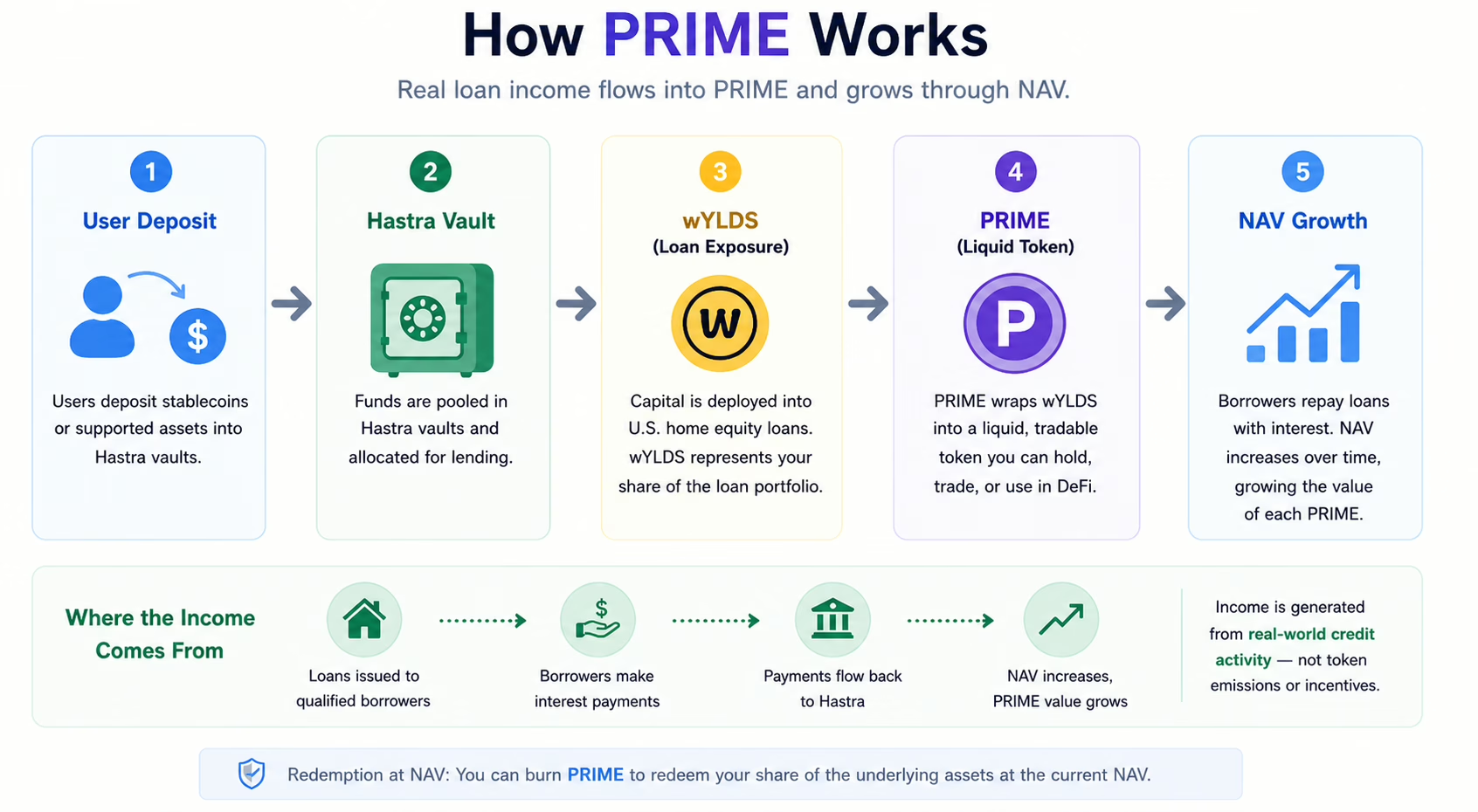
The process starts when users deposit funds into Hastra vaults. Those deposits are converted into yield-bearing positions such as wYLDS, which represent claims on the underlying home equity loan exposure.
These funds are then deployed into home equity lending markets, where loans are issued to qualified borrowers. As borrowers repay over time, their interest payments flow back into the system, creating a steady stream of real income tied to actual credit activity.
That income is reflected through Net Asset Value, or NAV. NAV tracks the value of the underlying loan portfolio and gradually moves upward as interest accrues.
PRIME acts as the liquid wrapper around these underlying wYLDS positions. Instead of holding the base asset directly, users hold PRIME, which packages that exposure into a tradable token.
Right now, PRIME reflects an estimated annual yield of about 7.3%. The yield is built directly into NAV, meaning value accumulates within the token rather than being distributed separately.
For example, if NAV starts at $1.00 and rises to $1.033, each PRIME you hold now represents $1.033 in underlying loan value. This increase reflects real borrower repayments rather than token emissions.
PRIME and Home Equity Loans
PRIME is built on U.S. home equity lending markets. These loans are backed by residential property, which provides real estate-based collateral.
The borrowers are usually high-credit individuals with strong repayment histories. In many cases, the loans are also over-collateralized, adding an extra layer that helps reduce default risk.
This structure connects PRIME directly to real-world credit conditions. Its value moves with borrower repayments, not shifts in crypto market sentiment.
PRIME Pricing Model
PRIME uses a dual pricing structure, which means it has two different price references at the same time.
One is the NAV, which reflects the real value of the underlying loan portfolio, and it gradually rises as interest is earned from borrowers.
The other is the market price, which is set by supply and demand on decentralized exchanges like Raydium. This price can move up or down depending on liquidity and broader market conditions.
Since both pricing systems operate independently, gaps can appear between them. At times, the token may trade below NAV during selling pressure, or above NAV when demand is stronger.
Why Pricing Matters
The split between NAV and market price adds both flexibility and a bit of complexity to the system.
NAV keeps things grounded in real value by reflecting the underlying loan portfolio. The market price, on the other hand, allows the token to stay liquid and actively traded.
To keep things stable across DeFi integrations, NAV is often used as the reference point for pricing. This helps reduce the impact of short-term market swings and keeps valuation closer to the actual asset base.
DeFi Integration: Kamino
In lending protocols like Kamino Finance, pricing accuracy matters a lot. Since PRIME blends real-world assets with DeFi markets, the system needs safeguards to keep things stable.
Kamino uses a layered oracle setup. NAV acts as the main reference for pricing, while market price feeds are used to track how far the token moves away from that baseline.
When the gap between NAV and market price gets too wide, protective mechanisms like circuit breakers can kick in. This helps ensure lending decisions stay aligned with the real value of the underlying assets.
Minting and Redeeming PRIME
PRIME is a liquid staking token that represents exposure to staked wYLDS within Hastra’s system.
Minting PRIME
Users begin by depositing USDC or an equivalent asset into Hastra vaults. This deposit mints wYLDS on a 1:1 basis. After that, users stake wYLDS on the Hastra platform through a single-click process to receive PRIME.
The amount of PRIME issued depends on the current exchange rate. This rate is determined by Chainlink oracle data and reflects the net asset value (NAV) of the underlying pool.
Users can also obtain PRIME directly from decentralized exchanges such as Raydium or Jupiter. Both direct purchase and minting routes give exposure to the same underlying HELOC lending pools.
Yield Accrual
Once PRIME is held, yield from the underlying home equity lending activity flows automatically to holders. This comes through the Figure’s Democratized Prime structure.
The value of PRIME increases over time through the NAV expansion of the underlying assets. Users do not need to manually claim rewards, as accrual happens at the token level.
Redeeming PRIME
To exit, users unstake PRIME through the Hastra platform. When PRIME is burned, it converts back into wYLDS based on the current oracle-driven NAV rate.
Some vault configurations may include a short unbonding period before full redemption is completed.
After receiving wYLDS, users can redeem it for USDC through Hastra or swap it on supported decentralized exchanges.
Key Metrics and Market Position
PRIME is one of the larger real-world asset systems on Solana, giving users exposure to tokenized home equity lending markets.
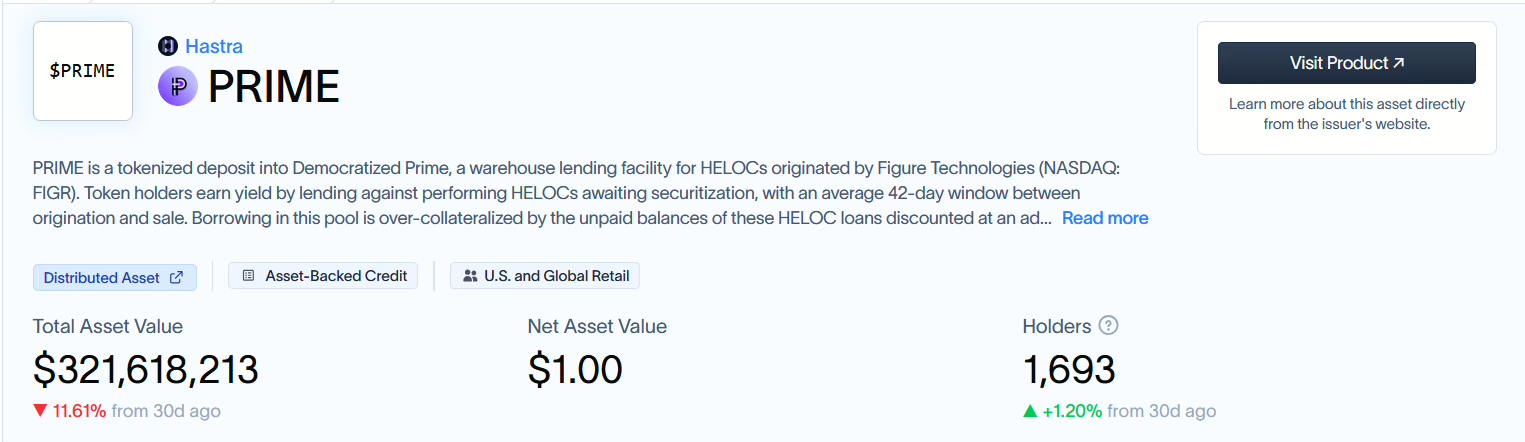
According to data from rwa.xyz, the total underlying asset value is about $321.6 million at the time of writing. This represents the real loan portfolio backing the system, with nearly 1,700 holders participating.
On the protocol side, DefiLlama reports Hastra’s total value locked between $325 million and $327 million. This includes both vaulted positions and assets that are still unredeemed within the system.
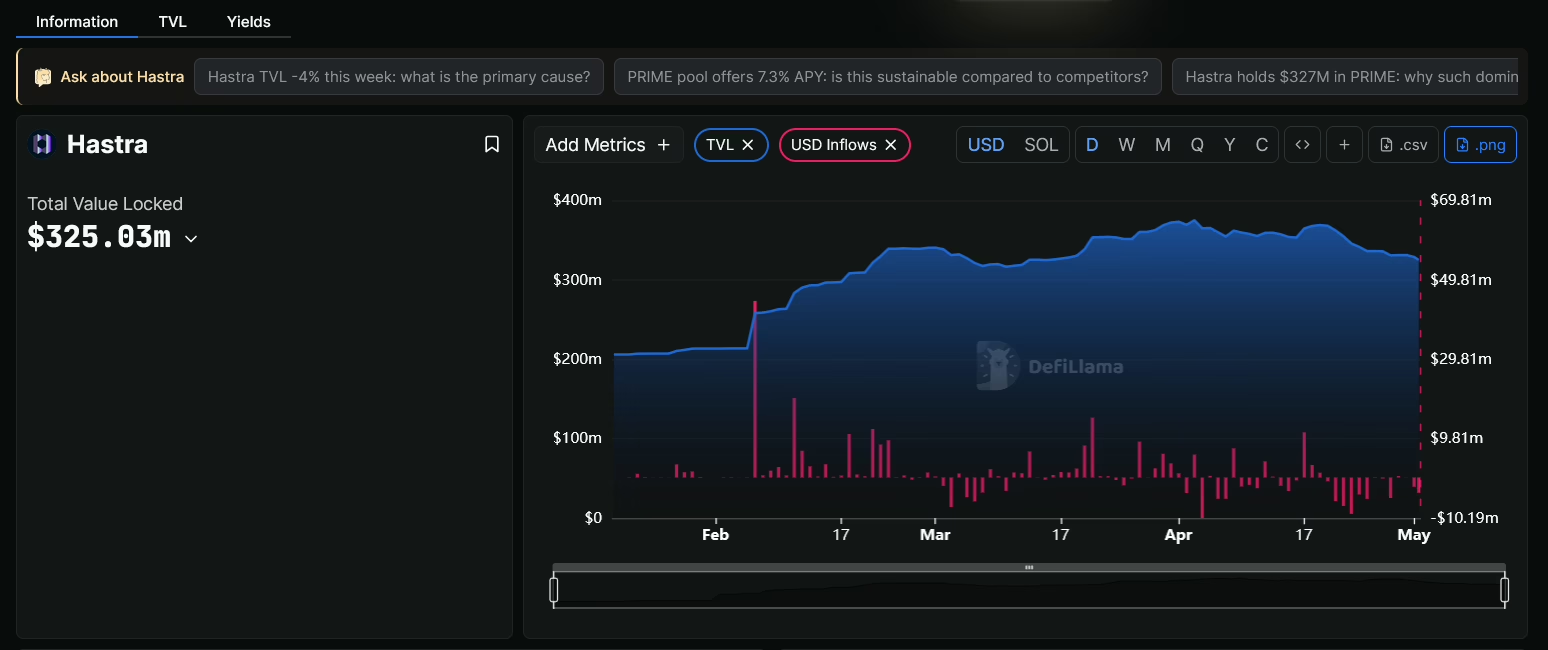
PRIME’s market capitalization is also close to $327 million, which stays closely aligned with NAV. That tight alignment suggests there is very little gap between the token’s market price and the value of its underlying collateral.
Why PRIME Is Different
Most DeFi yield systems rely on token emissions or liquidity incentives. In many cases, participation is sustained through ongoing reward distribution rather than real economic activity.
PRIME takes a different approach, with yield derived directly from borrower interest payments in real-world lending markets.
That shift matters because the income is generated outside the system, not created within it. At the same time, PRIME still stays liquid, so it can be used across different DeFi applications without losing that real-world backing.
Why Consider PRIME in a Portfolio
- Diversification: Exposure to U.S. housing credit introduces a return stream that is less correlated with major crypto assets like Bitcoin.
- Income profile: PRIME reflects an estimated yield of around 7% annually, derived from real-world loan repayments rather than token incentives.
- DeFi composability: Users can deploy it in protocols such as Kamino Finance to improve capital efficiency, depending on strategy and risk tolerance.
- RWA exposure: Real-world assets are becoming a key focus in DeFi, linking traditional finance with on-chain systems. PRIME provides early exposure to this segment across networks like Solana blockchain and Ethereum blockchain.
- Accessibility: PRIME follows a simple structure. Users can buy, hold, and track value through NAV, with redemption mechanisms providing a direct link to underlying assets.
Key Risks to Consider
- Market price fluctuations: PRIME may trade below its Net Asset Value during periods of low liquidity or selling pressure, although redemption mechanisms provide a link to underlying value.
- Real-world credit risk: Performance depends on borrower repayments. Factors such as loan defaults or housing market slowdowns can affect returns, even if current conditions remain stable.
- Smart contract risk: As with all DeFi systems, vulnerabilities can exist despite audits. Users should interact only through official platforms like Hastra and Kamino Finance.
- Return profile expectations: PRIME is designed for steady, yield-based performance rather than high-volatility, speculative upside.
Verdict
PRIME fits a medium risk profile, with outcomes influenced by both real-world credit performance and market liquidity conditions. Risk tolerance varies by user.
Conclusion
PRIME sits at the intersection of decentralized finance and real-world credit markets. It connects home equity lending with on-chain liquidity in a way that keeps both sides linked.
This setup allows value to come from actual borrower repayments while still staying accessible within crypto markets. It brings together traditional credit exposure and DeFi’s flexibility in one structure.
For beginners, the simplest way to think about PRIME is as tokenized access to real loan income. Its value changes over time as interest payments come in, while remaining tradable on-chain.
The post To Hold or Not? A Deep Dive Into Hastra’s PRIME Token on Solana appeared first on CoinTab News.
0
0


 Tüm kripto, NFT ve DeFi varlıklarınızı tek bir yerden yönetin
Kullanmaya başlamak için portföyünüzü güvenli bir şekilde bağlayın.


0
0
