
USD/CHF Strengthens on US-Iran Tensions, but Bearish Technicals Persist

0
0
BitcoinWorld
USD/CHF Strengthens on US-Iran Tensions, but Bearish Technicals Persist
The USD/CHF pair edged higher during Tuesday’s trading session, buoyed by renewed geopolitical tensions between the United States and Iran. The safe-haven appeal of the US dollar briefly outweighed the traditional haven status of the Swiss franc, pushing the pair above the 0.8840 level. However, the broader technical outlook remains tilted to the downside, as key resistance levels hold and momentum indicators continue to signal weakness.
Geopolitical catalyst drives short-term dollar demand
Reports of heightened rhetoric and military posturing between Washington and Tehran triggered a modest risk-off move in early European trading. The US dollar index (DXY) climbed 0.2% as investors rotated into dollar-denominated assets. This temporary shift provided a lift for USD/CHF, which had been trading near its lowest levels in three weeks. The Swiss franc, often sought during European or Middle Eastern crises, saw only limited gains as the dollar absorbed most safe-haven flows.
Analysts note that the geopolitical catalyst may be short-lived unless further escalation materializes. The market is also watching for comments from the Swiss National Bank (SNB), which has historically intervened to prevent excessive franc appreciation. Any dovish signals from the SNB could further support the pair in the near term.
Technical resistance caps upside potential
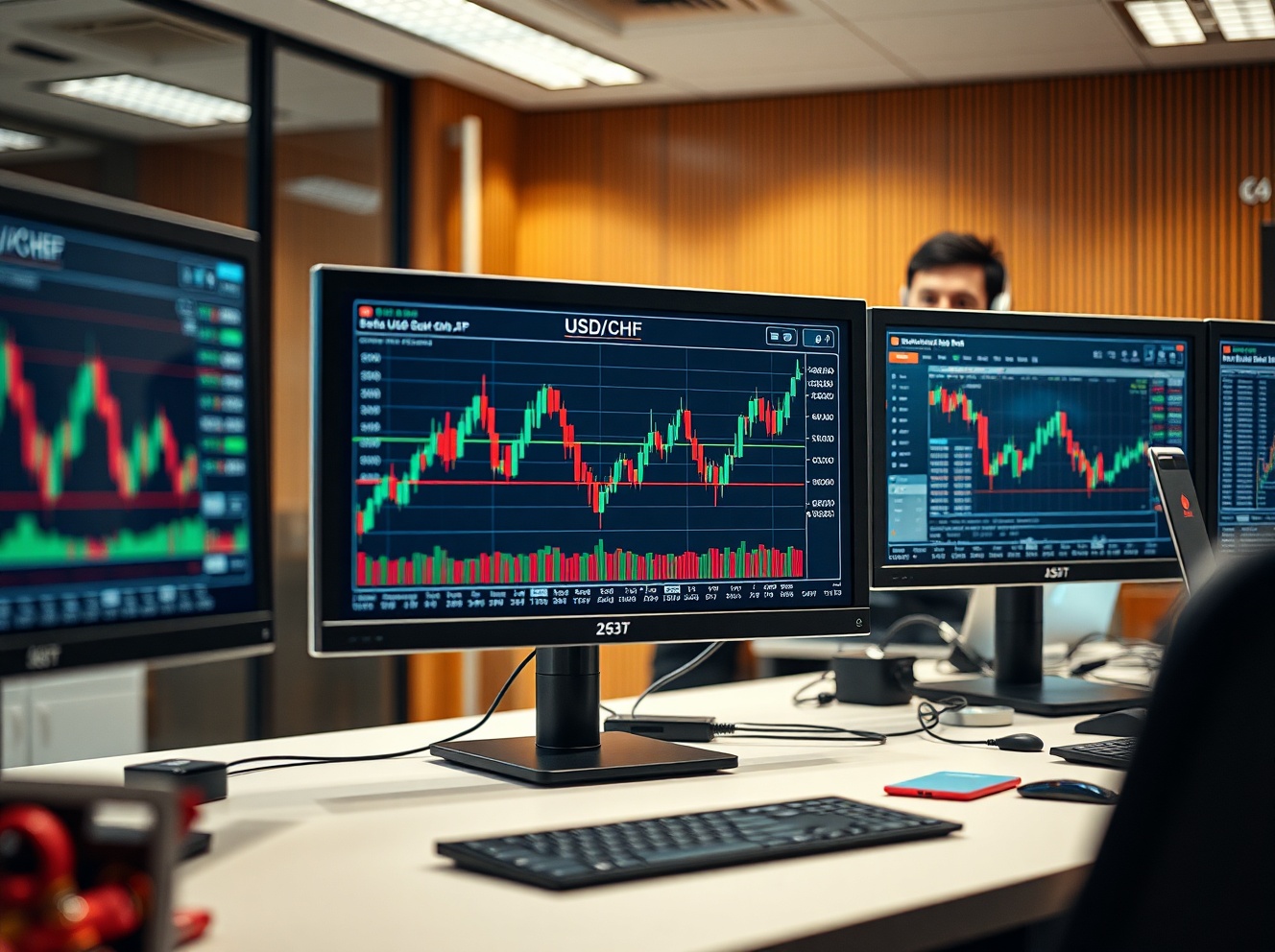
Despite the intraday strength, the USD/CHF chart remains bearish from a technical perspective. The pair is trading below its 50-day and 200-day moving averages, a classic signal of sustained downward momentum. The 0.8850–0.8860 zone represents a confluence of resistance, including the 38.2% Fibonacci retracement of the recent decline and a prior swing low turned resistance.
On the downside, immediate support is located at 0.8800, followed by the psychological 0.8750 level. A break below 0.8800 could accelerate selling pressure, potentially targeting the 2024 low near 0.8700. The Relative Strength Index (RSI) remains below 50, confirming bearish momentum, while the MACD line is trending lower below the signal line.
What this means for traders and investors
For forex traders, the current setup suggests that any rallies toward 0.8850 may offer selling opportunities rather than buying signals. The geopolitical boost appears insufficient to reverse the dominant bearish trend without a fundamental catalyst, such as a shift in Federal Reserve policy or a sustained risk-off episode that bypasses the dollar.
Long-term investors holding Swiss franc positions should monitor SNB communications closely. Any hints of currency intervention could introduce volatility. Meanwhile, the US-Iran situation remains fluid, and traders should be prepared for sudden price swings if headlines shift.
Conclusion
The USD/CHF pair is experiencing a short-term lift from US-Iran tensions, but the technical picture remains bearish. Resistance near 0.8850 is likely to cap gains, and a break below 0.8800 could open the door to further losses. Traders should weigh geopolitical risks against clear technical signals before taking directional positions.
FAQs
Q1: Why did USD/CHF strengthen despite the Swiss franc being a safe haven?
The US dollar also acts as a safe-haven currency, and during the latest US-Iran tensions, dollar demand rose more sharply than franc demand. This relative strength pushed USD/CHF higher.
Q2: What are the key technical levels to watch in USD/CHF?
Resistance is at 0.8850–0.8860, with support at 0.8800 and 0.8750. A break below 0.8800 could signal further downside toward the 0.8700 area.
Q3: How could the Swiss National Bank affect USD/CHF?
The SNB may intervene to weaken the franc if it appreciates too rapidly. Dovish SNB statements or actual intervention could provide support for USD/CHF by limiting franc strength.
This post USD/CHF Strengthens on US-Iran Tensions, but Bearish Technicals Persist first appeared on BitcoinWorld.
0
0

 Manage all your crypto, NFT and DeFi from one place
Securely connect the portfolio you’re using to start.

0
0

0
0

0
0

0
0