
Space Tourism Companies in 2026: What a Seat Actually Costs and Who Has Actually Flown

0
0
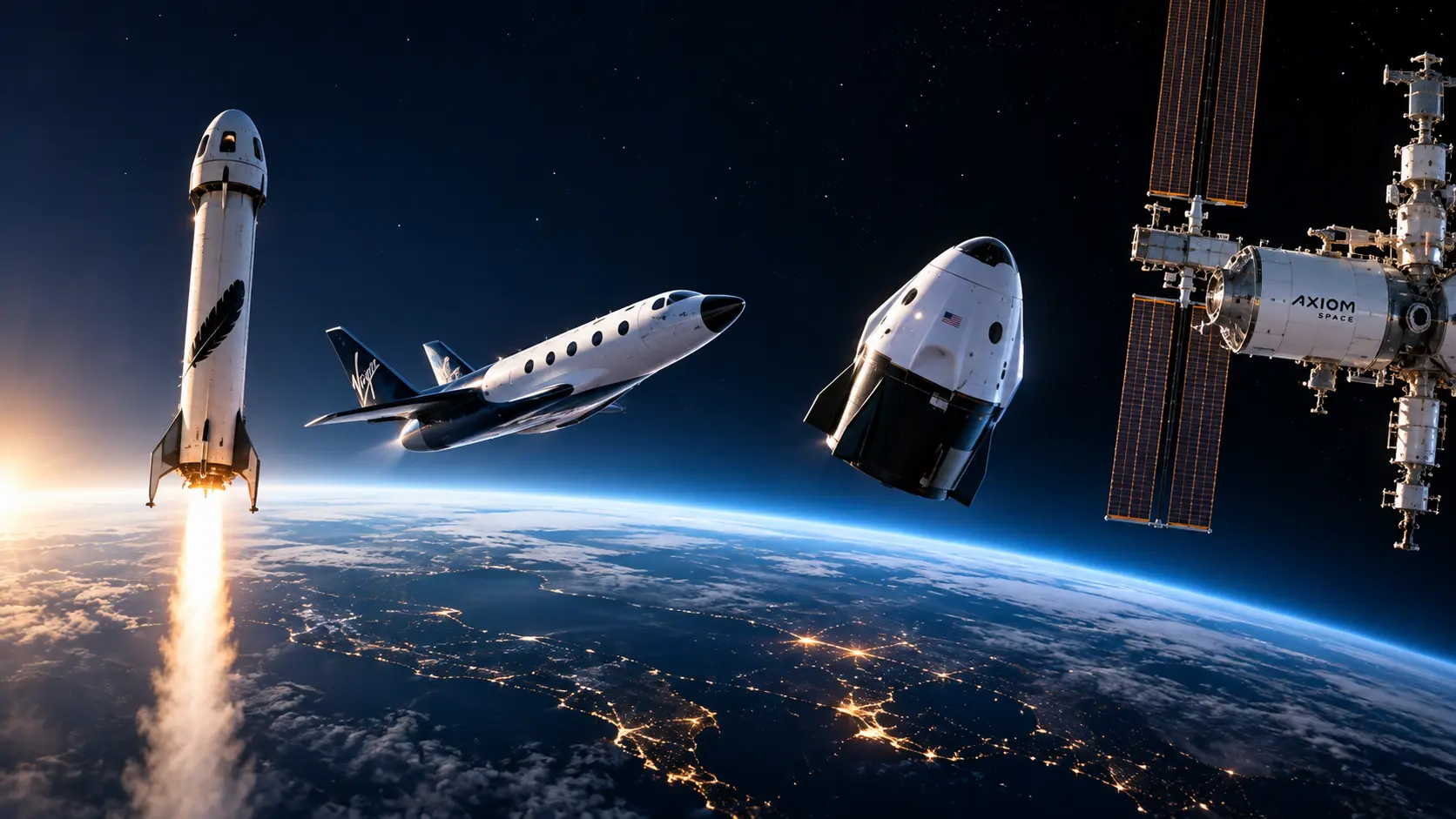
A cryptocurrency founder made a trip to space in August 2025. Justin Sun, founder of the Tron blockchain, flew aboard Blue Origin’s New Shepard NS-34 mission on August 3, 2025 – the company’s 14th human spaceflight – four years after winning the auction to pay for his ride on the maiden voyage of the rocket for $28 million.
Sun was initially going to make the flight along with the founder of the company, Jeff Bezos, in 2021, but had to postpone it for scheduling issues; he finally managed to get on the manifest. The 10-minute suborbital spaceflight was launched from Blue Origin’s spaceport in West Texas and landed back on Earth with the help of a parachute less than nine minutes later.
This is not a scenario; this is a real event with a real participant and a real spacecraft, and it involves a person from an industry that follows this website. Hence, a discussion about the actual cost of seats to space and actual passengers becomes relevant rather than theoretical.
And the truth is a little bit more complicated than the information provided on most pricing pages. Presently, there are four unique services available under space tourism: a 30-second float in a parabolic flight, a 6-hour balloon journey up to the top of the stratosphere, a suborbital rocket ride, and an 18-day orbital tour on the International Space Station – all available for prices varying from below $4,000 to $55 million. Comparing them to one another makes no sense; a parabolic flight and an orbital mission are not rivals in the same market. The only thing that unites them is a lack of credibility; there are a number of companies offering seats on a spacecraft that has never taken a paying customer into space, and most price lists available online are outdated. And here’s the actual information, tier by tier, as of August 2026.
Quick Comparison
| Operator | Flight profile | Price (dated) | Flown paying passengers? | Time weightless/at altitude | Status |
| Zero-G | Parabolic | ~6,700–8,850/seat (varies by year/package) | Yes, since 2004 | ~30 seconds per parabola, 15 parabolas/flight | Temporarily paused for maintenance |
| Space Perspective | Stratospheric balloon | $125,000/seat (last publicly listed) | No | 2 hrs at ~100,000 ft (part of a 6-hr flight) | Acquired by Eos X Space (2025); no crewed flights yet |
| Blue Origin (New Shepard) | Suborbital | Reported ~150,000–450,000/seat; some estimates run into the millions | Yes, 98 people across 38 flights | A few minutes above the Kármán line (100 km) | Paused since Jan 30, 2026, “no less than two years” |
| Virgin Galactic | Suborbital | $750,000/seat (reopened April 2026) | Yes, commercial flights 2023–2024 | A few minutes above ~86 km | Paused; commercial return targeted Feb 2027 (operator claim) |
| Axiom Space | Orbital (ISS) | ~$55 million/seat | Yes, Ax-1 through Ax-4 (2022–2025) | 8–18 days in orbit | Ax-5 targeted no earlier than Jan 2027 (operator claim) |
| SpaceX private missions | Orbital | Undisclosed; Inspiration4 self-funded, Polaris Dawn self-funded | Yes, Inspiration4 (2021), Polaris Dawn (2024) | 3–5 days in orbit | Not currently selling public seats; by arrangement only |
| Celestis | Memorial spaceflight | 3,495–24,995 depending on destination | Yes, 24 missions since 1997 | N/A (cremated remains, not passengers) | Actively selling; Mars300 mission targeted no earlier than 2030 |
What You’re Actually Buying
The four flight profiles
Parabolic flights never leave the atmosphere. The aircraft follows parabolic curves through the air, and at the top of each curve, passengers experience 20-30 seconds of actual weightlessness before gravity pulls them down again. One flight will include 12-15 parabolas, providing 5-8 minutes of weightlessness. It is the only level where you aren’t actually going anywhere close to space, just a fun physics illusion done in commercial airspace.
Stratospheric balloon flights transport the capsule to the height of 100,000 feet (about 30 km), which is far from the Kármán line, the international definition of the edge of space, 100 km above Earth, through an hours-long ascent and descent process. No weightlessness in this case, but the idea is a peaceful ride with views of the curvature of the Earth.
In suborbital space travel, the Kármán line (or the vicinity of it for Virgin Galactic) is breached on a rocket plane to provide several minutes of true microgravity experience before coming back down. The total duration of the trip from launch to touchdown takes 10 to 15 minutes. Earlier, Cryptopolitan reported that Space ETFs have gained attention in 2026 after the SpaceX IPO.
Orbit trips take passengers to orbit the Earth for several days, either by themselves or by docking the craft with the International Space Station. This category alone provides true astronaut training, extended space flights, and NASA-level prices.
Flown vs. announced — the distinction that matters most
The one absolute thing you need to know about the operators listed below before accepting their pricing is whether the company has actually taken passengers up into space or if they are selling deposits based on a yet-to-be-built space vehicle. Both are viable business models, but they are completely different products, and confusing “announced” and “flown” is why almost all comparisons of space tourism get it wrong. Flown vs. announced status is noted for each company listed below and must be part of your own comparison.
What a “booking” actually means
Very few of these space tourism companies are offering actual booked seats with set flight dates. Blue Origin requires $150,000 in refundable deposits just to initiate the booking process. Virgin Galactic currently has more than 675 customers in its reservation system who put down deposits long ago at lower prices with no specific flight date. Space Perspective sold out its first few batches of seats years before the underlying company ran into trouble. Look carefully at the “booking” terms.
Tier 1 — Parabolic Flights
Zero-G (Zero Gravity Corporation)
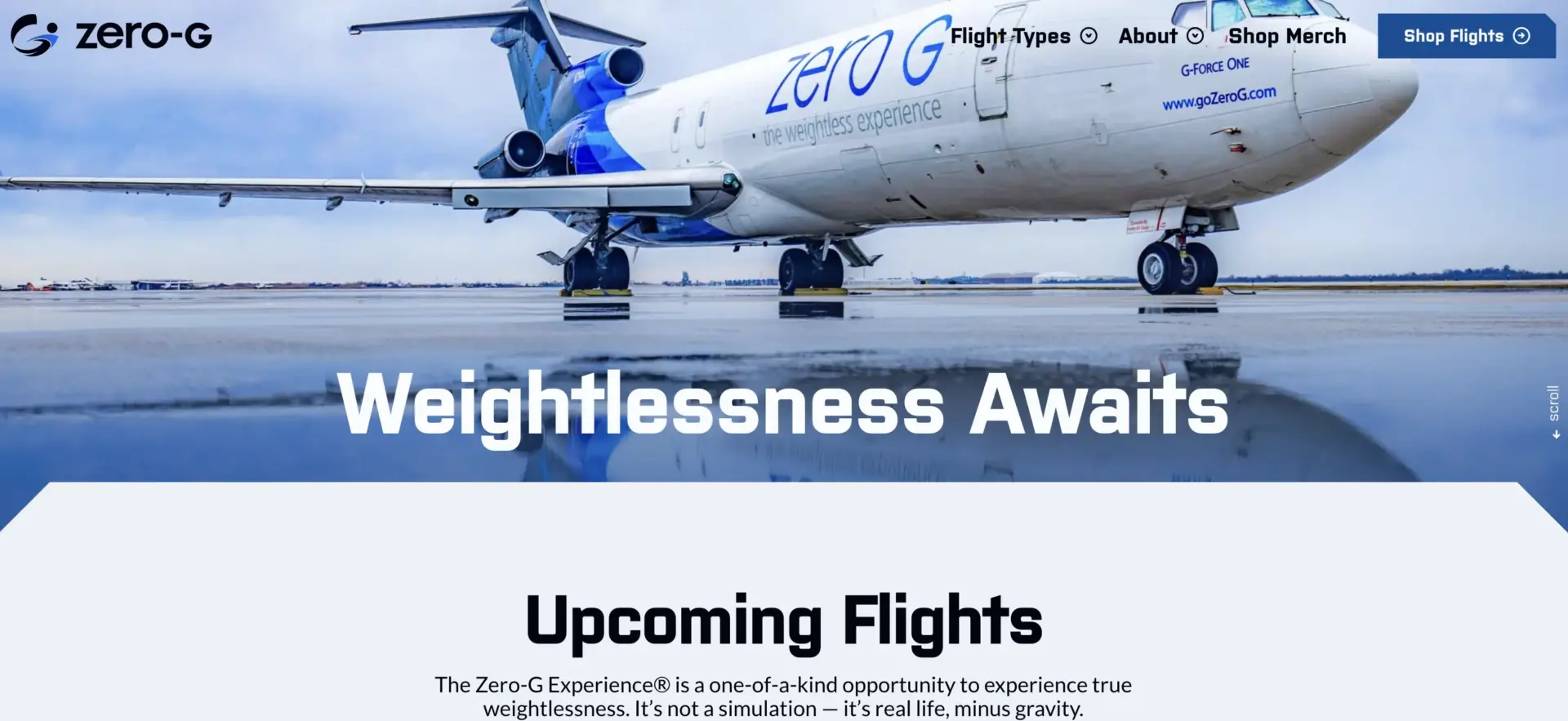
Flown paying passengers? Yes – Zero-G has been conducting flights for the general public since 2004 and is currently the only FAA-certified operator of parabolic flights for the general public in the United States. Also serves as the only domestic provider of such flights for NASA.
Price: Listed prices have varied through time – roughly $4,950 per passenger seat in the early 2010s, then $6,700 by 2020; recent packages have cost around 6,700-8,850 depending on the specific seat chosen. Exact price at gozerog.com; this is the only entry in this article that changes more often than not.
What’s included: A specially configured Boeing 727 (“G-Force One”) flies 15 parabolas from an altitude of about 32,000 feet, creating about 30 seconds of weightlessness per parabola (for several minutes total); no special training is required other than a safety briefing.
Status: Checking Zero-G’s website, we found that their flights were on hold due to maintenance. In the past, they have operated flights out of Las Vegas, Washington, D.C., and Cape Canaveral, among other cities.
Best for: People who would like the experience of physical weightlessness without the training and medical examination required for an altitude flight.
Tier 2 — Stratospheric Balloon Flights
Space Perspective
Paid commercial flights? Not yet. The highest flight test by Space Perspective so far — which was conducted without a crew on the complete Spaceship Neptune-Excelsior capsule — achieved a height of around 100,000 feet in September 2024 but has not yet flown anyone in it.
Pricing: Until further notice, take the previously listed price of $125,000 per ticket, along with the 1,800 reservations that the company claimed, as purely historical information, considering the company’s current troubles (see below).
What happened: Following numerous delays of its projected launch dates, Space Perspective was ejected from its rented premises at Space Coast Regional Airport in Titusville, Florida, due to outstanding rent in early 2025 and seemed to have ceased its operations entirely. Mid-2025 saw the company being acquired by Eos X Space, a European (Spanish) space tourism company.
Status: Announced, never flown. This is the clearest example of the “flown vs announced” discrepancy in this article – an actual company making engineering progress and doing an actual flight test without having any passengers pay for their tickets and coming very close to bankruptcy.
Best for: No one, at least at the moment – it’s here just to illustrate what “still under development” really means behind the glossy pricing page. Might be reconsidered once Eos X Space announces a crewed flight schedule.
Tier 3 — Suborbital Spaceflight
Blue Origin (New Shepard)

Commercial paying customers? Yes, numerous times — New Shepard has made 38 trips and flown 98 people (92 different passengers) past the Karman line, which include Jeff Bezos, William Shatner (who, at 90 years old, was the oldest space traveler), 18-year-old Oliver Daemen, and Katy Perry, the first all-women team of April 2025.
Price: Blue Origin has never released a set price for a ticket. It varies from $150,000 to $450,000, according to many trackers; however, Ars Technica’s senior space editor Eric Berger stated he thinks that it is actually much more than that — closer to $1 million or even $2–4 million per passenger. There is only one known price, which is the $28 million paid by Justin Sun at an auction for the first-ever passenger seat — a special one-time donation, not a typical price. At least a $150,000 refundable deposit is needed to start the booking procedure.
Status: Halted. Blue Origin’s last commercial flight on New Shepard took place on January 22, 2026, during NS-38. Blue Origin stated that starting from January 30, 2026, New Shepard’s operations would be halted “for at least two years” so that engineering efforts could be focused on development of Blue Moon lunar lander, as part of NASA’s Artemis program. There is “a multi-year backlog of customers” wanting to join the flight once they resume – but no date is set yet, so do not consider any other New Shepard flight date to be true.
Best for: Those comfortable joining a long, currently suspended queue of the most used suborbital spaceflight in the industry.
Virgin Galactic
Flown paying passengers? Yes. Virgin Galactic operated six passenger flights on board SpaceShipTwo (VSS Unity) between 2023 and 2024 from Spaceport America in New Mexico, reaching an altitude of about 86 kilometers — slightly below the internationally accepted 100 km line.
Price: In April 2026, Virgin Galactic opened sales of tickets for spaceflights at $750,000 each, down from $600,000 in 2023 and $450,000 in 2021, and offering a limited number of 50 tickets. There are reportedly more than 675 people on the waiting list as of the reopening of sales, with some customers owning tickets bought years ago at prices of up to $200,000. The CEO, Michael Colglazier, says that another increase is on its way for the next batch.
Status: Paused. VSS Unity retired from commercial service in 2024 to pave the way for a new-generation Delta-class spaceplane. As of Q2 2026 quarterly results of Virgin Galactic (as of mid-August 2026), the company moved its first Delta-class flight from Q4 2026 to February 2027 because of delays in avionics and systems installation, without pointing to the root cause of these delays. Treat February 2027 as the operator’s stated target, not a confirmed date — this program has slipped multiple times before.
A safety note, stated factually: In 2014, a test model built by Scaled Composites under the brand name of Virgin Galactic exploded in the air during the test flight, resulting in the death of the co-pilot Michael Alsbury.
Suitable for: Buyers who wish to be on the shorter of the two suborbital waitlists and are willing to pay the highest suborbital price in the market.
Tier 4 — Orbital and Station Missions
Axiom Space
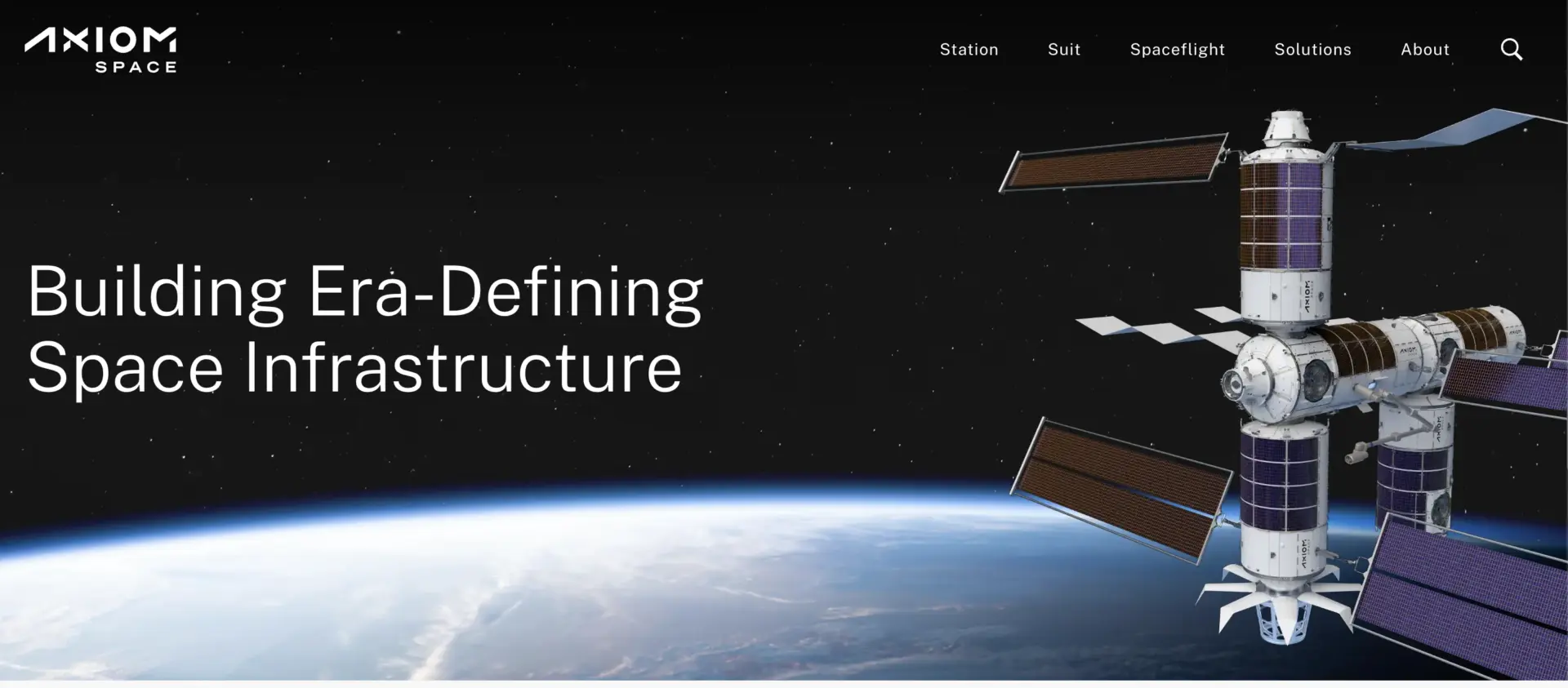
Paid-passenger flights? Yes. Axiom has sent private astronauts on four missions to the International Space Station (Ax-1 in April 2022 through Ax-4 in June-July 2025, an 18-day flight, which is the longest to date), flying a combination of private astronauts and those representing governments of such nations as Saudi Arabia, Turkey, India, Hungary, and Poland.
Price: Stated at approximately $55 million per seat, consistent since the announcement of the first Axiom mission in 2021, and reconfirmed during the crew reveal for the upcoming Ax-1 flight.
Status: The Ax-5 mission has been awarded by NASA, with a target launch no sooner than January 2027 for a mission up to 14 days long (this is the operator’s/NASA target, not a launch date). In February 2026, NASA announced another private astronaut mission (PAM-6) awarded to a separate company (Vast) — this will be interesting to follow, to see if the ISS private-flights market is going to diversify from the single-source Axiom supply.
Ideal for: The only buyer category in this article truly shopping in the “real astronaut mission” space.
SpaceX private missions
Flown paying passengers? Two missions, but neither was a commercial flight. Inspiration4 (September 2021) was a privately funded, all-civilian flight to free-flying orbit at an altitude of 585 km, organized and funded by the entrepreneur Jared Isaacman. Polaris Dawn (September 2024) will reach an altitude of about 1,400 km, the highest altitude reached by any crewed orbital spacecraft since the Apollo program, and will include the first commercial spacewalk.
Price: Not disclosed for either mission; both were privately funded by Isaacman, not purchased as individual tickets.
Availability: At this time, SpaceX does not offer seat sales from a fixed price menu. The Crew Dragon spacecraft is used both for SpaceX’s privately organized missions and to carry Axiom’s crew to the International Space Station. Anyone interested in a SpaceX crewed flight at this point would need to make a mission inquiry.
Best for: This is not really a consumer product at this stage – we list SpaceX crewed flights simply because they’ve been the most prominent example of orbital space tourism thus far and Axiom’s missions (listed above) launch aboard SpaceX hardware.
Memorial Spaceflight — the Tier Nobody Lists
Celestis
Paying passengers sent aloft? Indeed – Celestis has launched 24 memorial space flights since its inaugural launch in 1997, more than any other operator discussed here and is the only company selected by NASA to remember one of its scientists in this way.
What it really does: Celestis doesn’t send a body or an entire urn full of ashes – Celestis sends a small and symbolic amount of cremated remains or a DNA sample, contained within a flight-qualified capsule, as a part of the payload of a commercial or scientific satellite.
Price (dated, per Celestis’ own site): Earth Rise, a suborbital flight with subsequent return of the remains to the families, costs from $3,495. Earth Orbit – orbital flight with return of the capsule and burning during re-entry into the atmosphere – costs from $4,995. Luna or Voyager – flight to lunar orbit/surface or deep space – costs from $12,995. Recently announced Mars300, which would put the capsule into Mars orbit – costs from $24,995 with a 10% deposit and launch not before 2030 – an announced but not yet flown mission, clearly stated on their website.
Status: Currently active in sales and flight operations, with an actual track record, being the most operated company in this article, despite not always being mentioned in the “space tourism” listings.
Best for: Families that want a really unique memorial service in a price range far below any passenger-carrying level above it.
The Safety Question Nobody Wants to Ask
Each operator mentioned above with an operational history has one incident that is noteworthy, to be explicit rather than vague.
The Virgin Galactic crash test flight of 2014, which claimed the life of its co-pilot Michael Alsbury, took place during a developmental test flight operated by Scaled Composites and not a commercial flight or one using the vehicle design that eventually carried paying passengers.
The Blue Origin New Shepard program has had an otherwise clean record in its 38 crewed flights, except for one uncrewed cargo mission – NS-23 – whose booster malfunctioned soon after takeoff in September 2022; as a result, the abort mechanism activated properly and the payload parachuted back down successfully with no casualties, as there were no passengers on board.
Apart from individual accidents, it is worth highlighting the fact that each and every suborbital and orbital operator above requires some form of pre-flight medical evaluation, and none of these companies make publicly available safety statistics like the commercial aviation industry does because their total flight hours number in the dozens and not in the millions.
The Crypto Connection: Who From This Industry Has Actually Flown
The August 2025 flight for Justin Sun represents the most concrete and tangible connection to the industry of spaceflight in its current state, with a real flight paid for years in advance. The case of Justin Sun is also an interesting example showing how the process takes place, as the amount of $28 million that he paid in 2021 was not used to pay off the standard ticket price but was rather donated to Blue Origin’s Club for the Future charity of Blue Origin, and it took him four years to go from the auction winner to an actual flight.
Final Verdict: What Each Tier Is Really For
There’s no single best space tourism operator, since the four categories of companies are not competing products. If you need the true experience of weightlessness without special training and for $100,000 per flight, Zero-G is your only option in the USA when it starts operating again. For the case of a high-altitude flight and a comfortable flight without any weightlessness experience and a company that has gone through bankruptcy, Space Perspective is worth waiting rather than booking it today.
In case of flying into space on board a rocket, with an indefinite wait list, then Blue Origin and Virgin Galactic have suspended their flights at the moment, with Virgin Galactic being a more expensive but less dated company according to its (unverified) target date. Finally, in case of a true astronaut experience of flying into space and spending a few days there, Axiom is your only choice at the moment. And in case you’re interested in a ticket for yourself, Celestis has secretly completed more space missions than any other company on this list and is much cheaper than all others.
0
0


 Manage all your crypto, NFT and DeFi from one place
Securely connect the portfolio you’re using to start.


