
What Is Ethereum Gas Fee? How It Works and Why Gas Prices Spike

0
0
Ethereum Gas Fees Explained: Why They Rise and How They Work
Send a transaction on Ethereum, and there's always a number attached to it before it goes through. That number is the gas fee, and it rarely stays the same for long.
New users often get thrown off by this. One day a swap costs pennies; the next day the same swap costs several dollars. Nothing about the transaction changed the network around it did.
This piece walks through what an Ethereum gas fee actually is, how it gets calculated, and why it spikes so sharply whenever the network gets busy.
Interestingly, the concept isn't an afterthought; it goes back to Ethereum's original whitepaper , where Vitalik Buterin laid out gas as a way to price computation so no single transaction could hog the network for free.
What is Ethereum?
Ethereum is a decentralized open-source blockchain platform that lets people run programs called smart contracts without needing a central authority to manage them. It was proposed by Vitalik Buterin in a 2013 whitepaper and launched in 2015.
What Is an Ethereum Gas Fee?
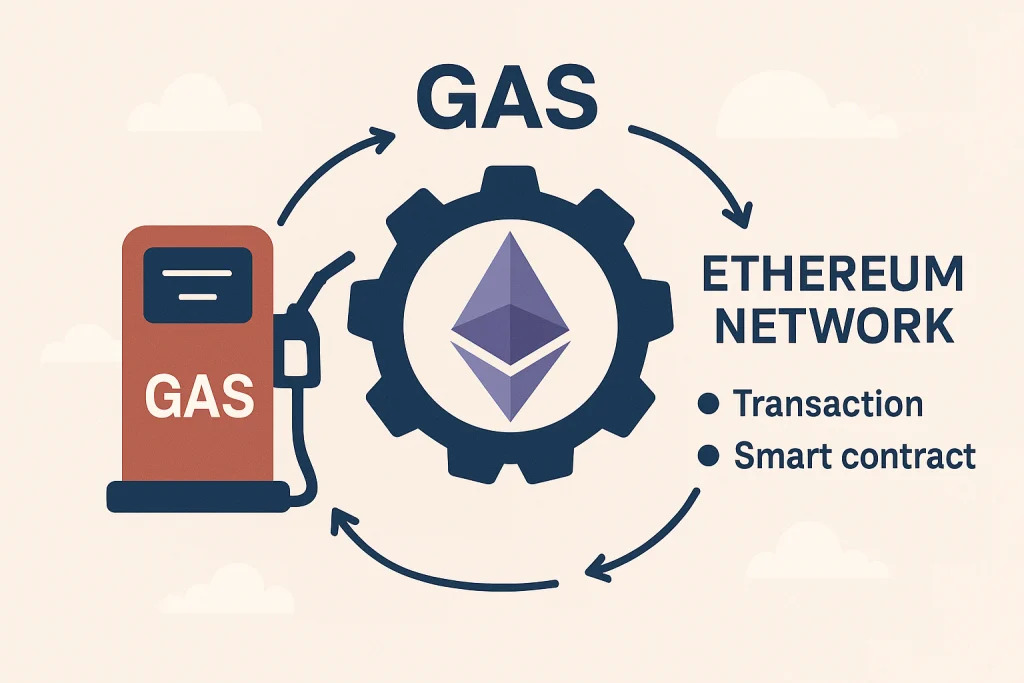
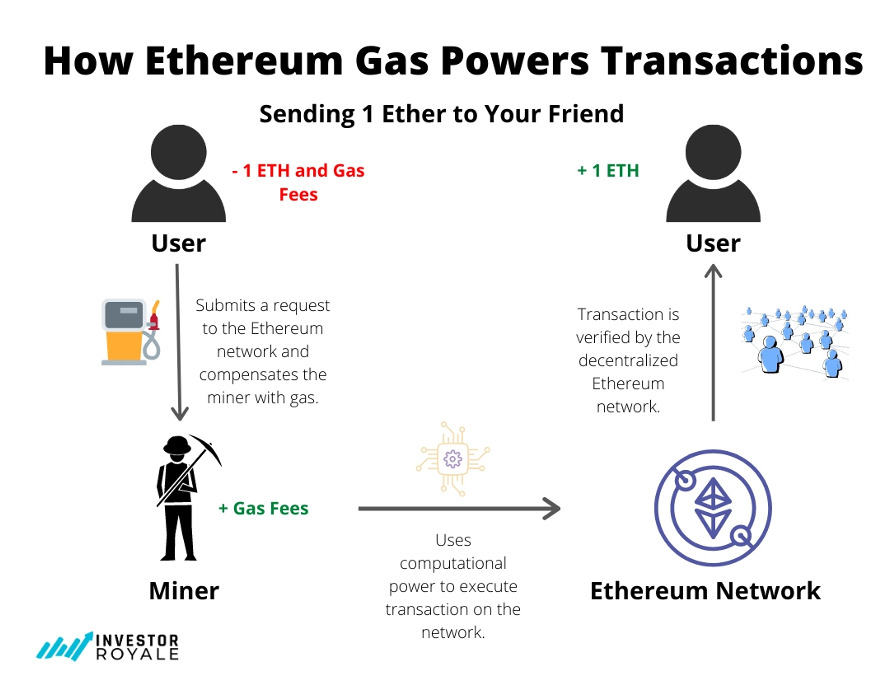
At its core, an Ethereum gas fee is payment for computational work. Every transfer, swap, or smart contract call asks validators to do something, and that something costs resources.
Validators aren't doing this for free, obviously. They dedicate hardware and bandwidth to keep the network running, so the fee is what compensates them for processing and confirming activity.
Gas is priced in Gwei, a tiny unit of ETH. How much gas a transaction needs depends on its complexity; a plain transfer uses far less than a multi-step DeFi interaction.
Breaking Down How the Fee Gets Calculated
Two pieces make up the final Ethereum gas fee. There's the base fee, which the protocol adjusts on its own depending on how full recent blocks have been.
Then there's the priority fee, basically a tip. Users add this voluntarily when they want their transaction picked up faster than the ones sitting in the queue behind it.
Multiply the total gas used by the combined base and tip, and that's roughly what gets charged. Simple sends stay cheap. Anything involving contracts tends to cost more, sometimes a lot more.
Why Does Gas Spike During Congestion?
Congestion is really just too many people trying to use the same limited space at once. Each Ethereum block can only hold so much gas, full stop.
When demand outpaces that capacity, people start bidding higher tips to jump the queue. That bidding war is exactly what drives the Ethereum gas fee up, sometimes within a matter of minutes.
Think about a hyped NFT drop or a token launch everyone's watching. Thousands of wallets try to act at the same second, and fees climb almost in real time as a result.
It's Not Just Congestion: Demand Matters Too
Short-term spikes are one thing, but broader market conditions shape the Ethereum gas fee over longer stretches as well. When crypto markets heat up, more wallets become active.
More activity means more transactions competing for the same blocks, day after day. Even a routine transfer can get pricier simply because overall usage on the network has climbed.
Nothing about this is fixed or predictable in the way a subscription fee might be. It moves with real supply and demand for what is, ultimately, a scarce resource block space.
How This Actually Affects People Using Ethereum
For everyday users, this volatility can make small transactions feel pointless during busy periods. Paying more in fees than the transfer itself is worth is genuinely frustrating, and it happens more than people expect.
Developers feel it too, just differently. Anyone building on Ethereum has to design around fee unpredictability, because a bad gas spike at the wrong moment can wreck the user experience for an entire app.
That's part of why so many projects now offer fee estimators, or batch transactions together, just to soften the blow of an unexpected Ethereum gas fee jump.
Quick Comparison: Quiet Network vs Busy Network
Factor | Low-Demand Period | High-Demand Period |
Typical Gas Fee | Just a few cents | Can reach several dollars |
Confirmation Time | Fast, even with a small tip | Slow unless the tip is raised. |
Pending Transactions | Low backlog | Large backlog |
Best For | Small, non-urgent transfers | Time-sensitive or high-value moves |
Timing really does matter here. Users who check network conditions before hitting confirm can often save a noticeable amount on gas.
What People Do to Manage the Cost
A few habits have become fairly common. Transacting late at night or on weekends, when major markets are quieter, tends to bring gas costs down noticeably.
Layer-2 networks have also picked up serious traction for this exact reason. They process transactions off the main chain, then settle in batches, which cuts the effective Ethereum gas fee per user by a wide margin.
Gas trackers and wallet estimators help too, but
Nothing fancy, just a real-time snapshot of network conditions so people can decide whether to wait it out or go ahead anyway.
Risks Worth Keeping in Mind
A transaction can fail outright if the gas limit set is too low for sudden congestion.
Panicking and overpaying priority fees doesn't always speed things up meaningfully.
Wallet fee estimates can be off during extreme volatility, leading to surprise costs.
Layer-2 solutions come with their own bridging risks that deserve separate research.
Bots sometimes exploit fee spikes, crowding out ordinary users trying to transact.
Where Ethereum's Roadmap Fits Into All This
None of this exists in a vacuum. Ethereum has a long-term roadmap aimed squarely at making the network cheaper and faster, and it's worth understanding how that ties back to the Ethereum gas fee.
The surge is the phase most relevant to gas fees. It's focused on scaling through rollups and something called danksharding, which is meant to give Layer-2 networks far more cheap space to post their data on the main chain.
The Verge comes next, aiming to make it lighter for regular computers to verify the chain using a cryptographic method called Verkle trees. A leaner verification process indirectly helps keep long-term costs in check.
The Purge is about trimming historical data and technical debt that has piled up over the years, so nodes don't need to store as much just to stay in sync. The Splurge is more of a catch-all for smaller fixes and optimizations that don't fit neatly elsewhere.
Taken together, this roadmap is Ethereum's answer to the exact problem this blog has been describing: a way to gradually shrink the Ethereum gas fee without giving up on decentralization along the way.
Wrapping Up
The Ethereum gas fee gets a lot of attention, and honestly, it deserves it. It's not an arbitrary charge; it reflects genuine competition for space that simply doesn't expand on demand.
Once the mechanics behind base fees, tips, and congestion make sense, the swings feel a lot less random. As Ethereum's scaling tools mature further, this volatility is expected to ease, though probably not overnight.
Until then, keeping half an eye on network activity before confirming anything remains one of the easiest ways to avoid overpaying.
Disclaimer
This content is for informational purposes only and should not be treated as financial or investment advice. Gas fees, network conditions, and blockchain technology can change quickly. Readers should do their own research before making any decisions related to Ethereum or cryptocurrency transactions.
0
0


 Manage all your crypto, NFT and DeFi from one place
Securely connect the portfolio you’re using to start.


