
Tether Drives Institutional Real Estate Tokenization in Saudi Arabia’s Vision 2030

0
0
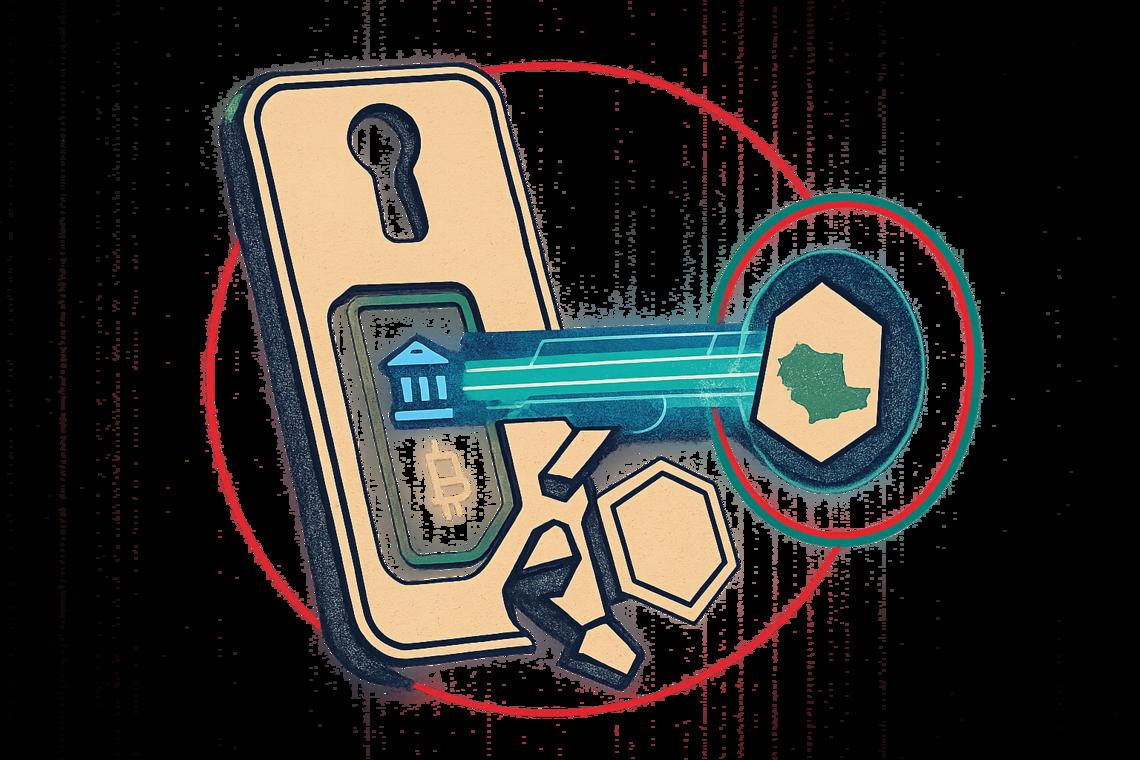
Tether is pushing deeper into the Gulf’s digital finance ambitions with a new venture aimed squarely at one of the world’s most talked-about but slow-moving trends: institutional real estate tokenization. On 6 August 2026, the company behind the world’s largest stablecoin announced a strategic collaboration with First Advanced Data for Artificial Intelligence LLC, known as First Data, and BKN301, a move designed to bring institutional-grade property assets in Saudi Arabia onto the blockchain.
Key takeaways
- Tether, First Data, and BKN301 announced a strategic collaboration on 6 August 2026 to tokenize institutional-grade real estate in Saudi Arabia.
- Hadron by Tether will serve as the core technology platform for issuing and managing the tokenized assets.
- First Data will act as commercial lead, issuer, and primary market operator, while BKN301 handles integration, banking connectivity, and operational support.
- The initiative is framed as supporting Saudi Arabia’s Vision 2030 economic modernization goals and a broader shift toward Sharia-compliant digital finance.
- Organizers say the project could later expand into tokenizing energy and infrastructure finance assets.
Tether Forms Strategic Collaboration for Real Estate Tokenization in Saudi Arabia
The partnership brings together a stablecoin giant, a Saudi technology and financial services provider, and a banking-infrastructure specialist, all pointed at the same target: unlocking capital trapped in illiquid property holdings. Tether describes itself as the largest company in the digital asset industry, and this deal marks one of its most concrete pushes yet into real-world asset tokenization within a specific national economy rather than a global, borderless market.
At the center of the arrangement sits Hadron by Tether, the company’s asset-tokenization platform. According to the announcement, Hadron will function as the core infrastructure layer for converting institutional-grade real estate holdings in Saudi Arabia into digital tokens, drawing on technology and know-how Tether says it has built over the past decade.
Key Partners and Roles
Each partner has a distinct job in this arrangement, which is worth spelling out because it clarifies who actually touches the money and who touches the code. First Data, a technology and financial services provider focused on secure and scalable digital infrastructure across Saudi Arabia, will act as the commercial lead, issuer, and primary market operator for the tokenized real estate assets. That means First Data effectively owns the go-to-market side: issuing tokens, managing capital market operations, and administering the lifecycle of each tokenized property asset.
BKN301, meanwhile, is positioned as the connective tissue. The company will support First Data by handling integration, orchestration, front-end delivery, banking connectivity, and operational support needed to embed Hadron by Tether into First Data’s existing operating framework. In plain terms, BKN301 makes sure the tokenization technology actually talks to the banking systems that institutional investors already use.
Hadron by Tether Platform Overview
Hadron by Tether is built to simplify how a wide range of assets, including stocks, bonds, commodities, funds, and reward points, get converted into digital tokens. The platform offers issuance and burning tools, KYC compliance features, blockchain reporting, capital market management, and regulatory guidance, all aimed at giving institutions a single, modular environment for managing tokenized assets across their full life cycle.
For this Saudi deployment, the emphasis is on security, reliability, and regulatory compliance rather than experimental features. That framing matters because institutional investors typically demand proven infrastructure before committing capital to a new asset class, and property is about as far from a speculative token as you can get.
Driving Economic Modernization Under Saudi Vision 2030
This deal is not happening in a vacuum. It slots directly into Saudi Arabia’s Vision 2030 program, the kingdom’s long-running effort to diversify its economy away from oil dependence and build out modern financial infrastructure. Tether frames the collaboration as a way to foster institutional use cases for real-world assets, starting with property, while contributing to the broader economic modernization goals the kingdom has set for itself.
Aligning Tokenization with Vision 2030
Paolo Ardoino, CEO of Tether, tied the announcement directly to that national strategy. “At Tether, we believe real-world asset tokenization will redefine the financial industry, making global assets more liquid, accessible, secure, and scalable,” Ardoino said. “With Vision 2030, Saudi Arabia stands out as an ideal market for demonstrating the transformative impact of platforms like Hadron by Tether.” He added that Tether is “proud to support the Kingdom’s ambitions by expanding participation, unlocking new investment opportunities, and working alongside First Data and BKN301 to build a more inclusive financial ecosystem that supports this vision.”
Nabil Al-Nuaim, Chairman of First Data, offered a similar read on the opportunity. “Saudi Arabia is one of the most compelling markets globally for the convergence of technology, capital markets, and real-world asset tokenization,” he said, adding that combining First Data’s local market expertise with Hadron’s tokenization infrastructure aims “to create new opportunities for asset owners, investors, and institutions while supporting the Kingdom’s long-term economic vision.”
Unlocking Liquidity in Illiquid Real Estate Markets
Why does any of this matter beyond the press release language? Real estate has always been one of the hardest asset classes to trade quickly. Selling a building or a commercial property typically takes months, involves layers of paperwork, and locks capital in place until a buyer shows up. Institutional real estate tokenization is meant to change that math by splitting large assets into digital tokens that can, in theory, change hands far faster than a traditional deed transfer.
The companies describe this Saudi push as the starting point for a wider transformation, beginning with institutional-grade property because it represents a historically illiquid asset class with real appetite for broader participation in ownership and investment. If it works as intended, both local and international investors would gain a more direct path into a market segment that has traditionally required deep pockets and patient capital.
Building a Scalable and Compliant Tokenized Asset Ecosystem
The stated goal is not a one-off pilot but a repeatable operating model. Tether, First Data, and BKN301 describe the arrangement as designed to unite blockchain infrastructure, digital asset technology, compliance frameworks, and regulated financial services into a single scalable system, with the explicit intent of positioning Saudi Arabia as a leading jurisdiction for institutional asset tokenization.
Integration, Compliance, and Financial Infrastructure
Stiven Muccioli, CEO of BKN301 Group, framed his company’s contribution around plumbing rather than headlines. “BKN301’s role in this initiative is to ensure that Hadron by Tether’s tokenization capabilities are seamlessly connected to the banking, payments, and compliance infrastructure required for institutional deployment,” Muccioli said, adding that BKN301 looks forward to “supporting First Data and Tether in building a robust tokenized asset ecosystem in the Kingdom.”
This is a point worth pausing on. Tokenization projects tend to succeed or fail not on the flashiness of the blockchain layer but on whether the everyday banking rails, KYC checks, and settlement processes actually work with the new digital tokens. By putting BKN301 in charge of that connective work, the collaboration is betting that institutional adoption depends more on boring reliability than on cutting-edge blockchain features.
Future Expansion Opportunities
Saudi Arabia is described as rapidly moving toward a blockchain-based, Sharia-compliant digital financial infrastructure as part of its Vision 2030 agenda, a shift meant to unlock liquidity in traditionally illiquid sectors, encourage foreign direct investment, and build a secure, asset-backed digital settlement layer. Against that backdrop, the real estate collaboration is presented as well timed, with the partners already flagging future expansion into other digital asset classes such as energy and infrastructure project finance.
That points to a bigger ambition than a single real estate deal. If Hadron’s deployment through First Data and BKN301 proves it can handle institutional-grade property tokens reliably, the same infrastructure could, in principle, be extended to other strategic sectors the kingdom wants to modernize, giving Tether a template it could look to replicate in other markets pursuing similar digital finance overhauls.
FAQ
What is the primary objective of the collaboration between Tether, First Data, and BKN301?
The collaboration aims to deploy Hadron by Tether to tokenize institutional-grade real estate assets in Saudi Arabia, enhancing liquidity and investment accessibility for a historically illiquid asset class.
What roles do First Data and BKN301 play in this initiative?
First Data acts as commercial lead, issuer, and primary market operator for the tokenized real estate assets, while BKN301 provides integration, orchestration, banking connectivity, and operational support for embedding Hadron by Tether into First Data’s infrastructure.
How does this initiative align with Saudi Arabia’s Vision 2030?
It supports Vision 2030 by advancing economic modernization through institutional asset tokenization, unlocking liquidity in real estate, and contributing to the kingdom’s broader shift toward a Sharia-compliant digital financial infrastructure.
What capabilities does the Hadron by Tether platform offer?
Hadron enables the conversion of various assets, including real estate, stocks, bonds, commodities, and funds, into digital tokens, with tools for issuance, KYC compliance, blockchain reporting, capital market management, and lifecycle administration.
Article produced with the assistance of artificial intelligence and reviewed by the editorial team.
0
0


 Manage all your crypto, NFT and DeFi from one place
Securely connect the portfolio you’re using to start.

0
0

0
0

0
0
