
Russia expands mining ban to Moscow, pressuring global Bitcoin hash rate

0
0
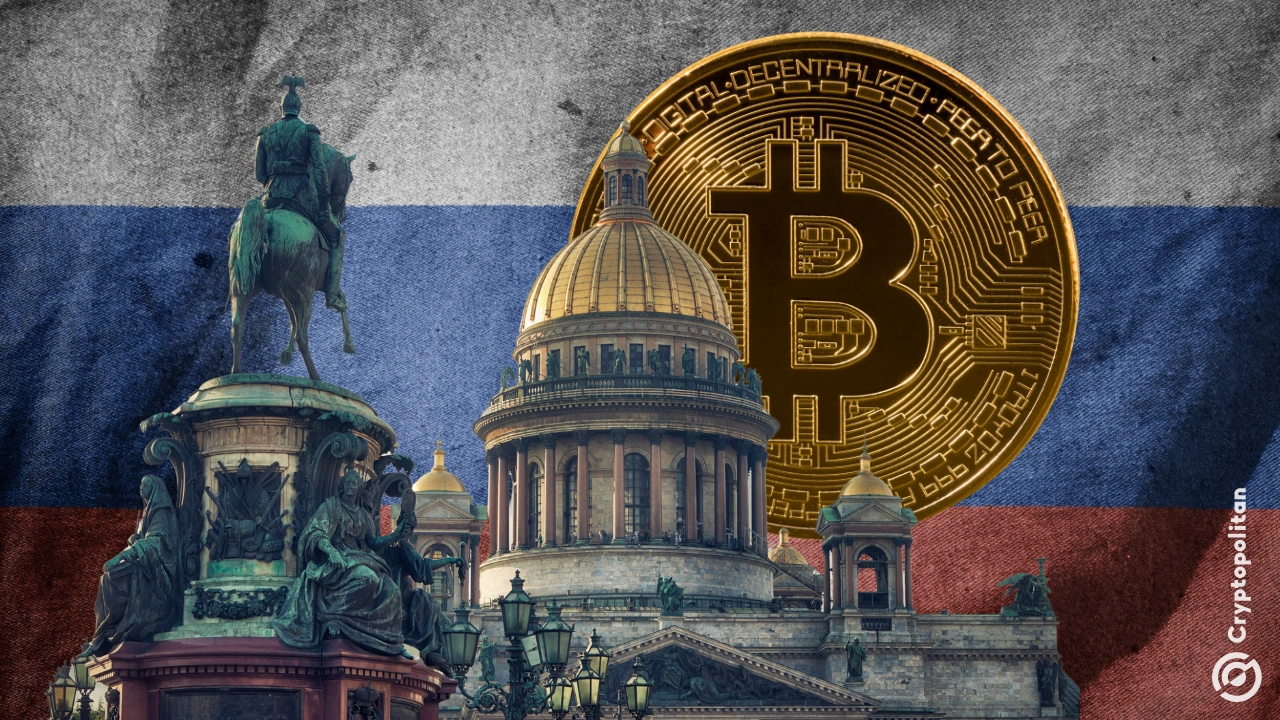
Russia has extended its cryptocurrency mining restrictions into Moscow, the surrounding Moscow Region and parts of Kursk Region, thereby reducing the mining capacity of one of the major Bitcoin centers in the world.
The information regarding the ban was published on the legal information portal of the Russian government and reported by Anadolu Agency on Friday, at a time when the Bitcoin network has already shown some slowdown signs.
The move is significant beyond just Russia. As per Hashrate Index’s Q3 2026 heatmap, Russia’s share is approximately 17.2% of the global Bitcoin hash rate, surpassed only by that of the United States.
Each new regulation pushes the mining process and its rewards further in favor of competing regions. Meanwhile, the total Bitcoin network hash rate has decreased for two quarters in a row and is almost 12% lower than its December 2025 high.
What the Moscow order actually bans
The new restrictions take effect on Aug. 15 and will remain in force through the end of 2032. They cover Moscow, the Moscow Region, and several districts in the Kursk Region.
According to Russia’s Ministry of Energy, the high demand from energy-consuming mining facilities can adversely impact the power grid and create problems for other consumers in terms of available capacity.
The quote is taken from the explanatory note to the draft decree prepared by the Ministry, stating that the restriction of mining is an essential step in order to ensure the supply of electricity in the face of continuously growing demand from data centers.
As stated by TASS, 65 data centers with a total capacity of 734 megawatts are linked together throughout Moscow and the surrounding region.
Nineteen of these facilities with a combined capacity of 233 megawatts, are located within the Moscow Region itself. The authorities previously planned on implementing the restrictions on July 1 but later agreed to start them in mid-August.
Where the network’s compute now lives
Understanding Russia’s role in the global mining industry puts a lens on why the most recent ban is important. The Hashrate Index indicates that the US has about 36.7% of the total hash rate globally and that Russia has around 162 exashes per second.
Domestic figures back this up. Kommersant newspaper had reported that Russia has nearly 15.5% of the global mining in 2025. Association of Industrial Mining placed Russia’s share between 13% and 17 % depending on the method used in estimation.
Earlier estimates, including the data reported by Cryptonews from Cambridge Centre for Alternative Finance, give much lower figures for Russia, indicating that precise estimation of mining activities is very challenging.
Kommersant has also noted that the burden on Russian miners was increasing even before the latest restrictions were introduced. The costs of connecting to the grid exceeded five rubles for one kilowatt hour, above the global value, which makes it more difficult for small players to make a profit in this area.
The exits point toward the US and Central Asia
Though mining activities in Russia may be hindered, they would likely be shifted to other places instead of ceasing to exist.
According to Cryptonews, the earlier ban on Russian mining has led to around 50,000 operators being impacted across 13 regions, with the majority of capacity projected to shift to the US, Kazakhstan, and other countries in Central Asia.
BitRiver, among the biggest Russian mining organizations, is known to be one of the most affected businesses due to its dependence on cheap electricity in Siberia.
For the wider Bitcoin market, having hash rate in Russia dropping significantly is a way to temporarily reduce mining difficulty, thereby boosting miners’ profitability around the world until the terms of the network are automatically adjusted.
Given that Bitcoin is still trading below the highs enjoyed in late 2025, such short-term benefits will mostly go to the efficient miners, whereas the obsolete operations will shut down.
A year of bans, not a single decree
Russia has been working to impose restrictions on the mining of cryptocurrency, and the latest ban in Moscow is just one part of this campaign.
The authorities claimed that they imposed a ban on mining activities for the whole year on January 1, 2026, in ten regions such as Dagestan, Chechnya, North Ossetia, and the areas of Donetsk, Luhansk, Zaporizhzhia, and Kherson that are occupied by Russia.
They reported that the same restrictions were also applied in Buryatia and Trans-Baikal Territory, and that more bans might be introduced in other regions if the authorities have requests from the local governments.
This change is significant as Russia only legalized crypto mining in August 2024, even though the central bank had encouraged the use of digital assets for cross-border payments in the wake of Western sanctions.
Now, however, it seems that energy limitations rather than financial policy are coming to dominate the debate about which locations will be able to continue Bitcoin mining operations.
The smartest crypto minds already read our newsletter. Want in? Join them.
0
0

 Manage all your crypto, NFT and DeFi from one place
Securely connect the portfolio you’re using to start.

0
0

0
0

0
0

0
0