
Cardano Academic Research Papers and the Technology Behind ADA
0
0
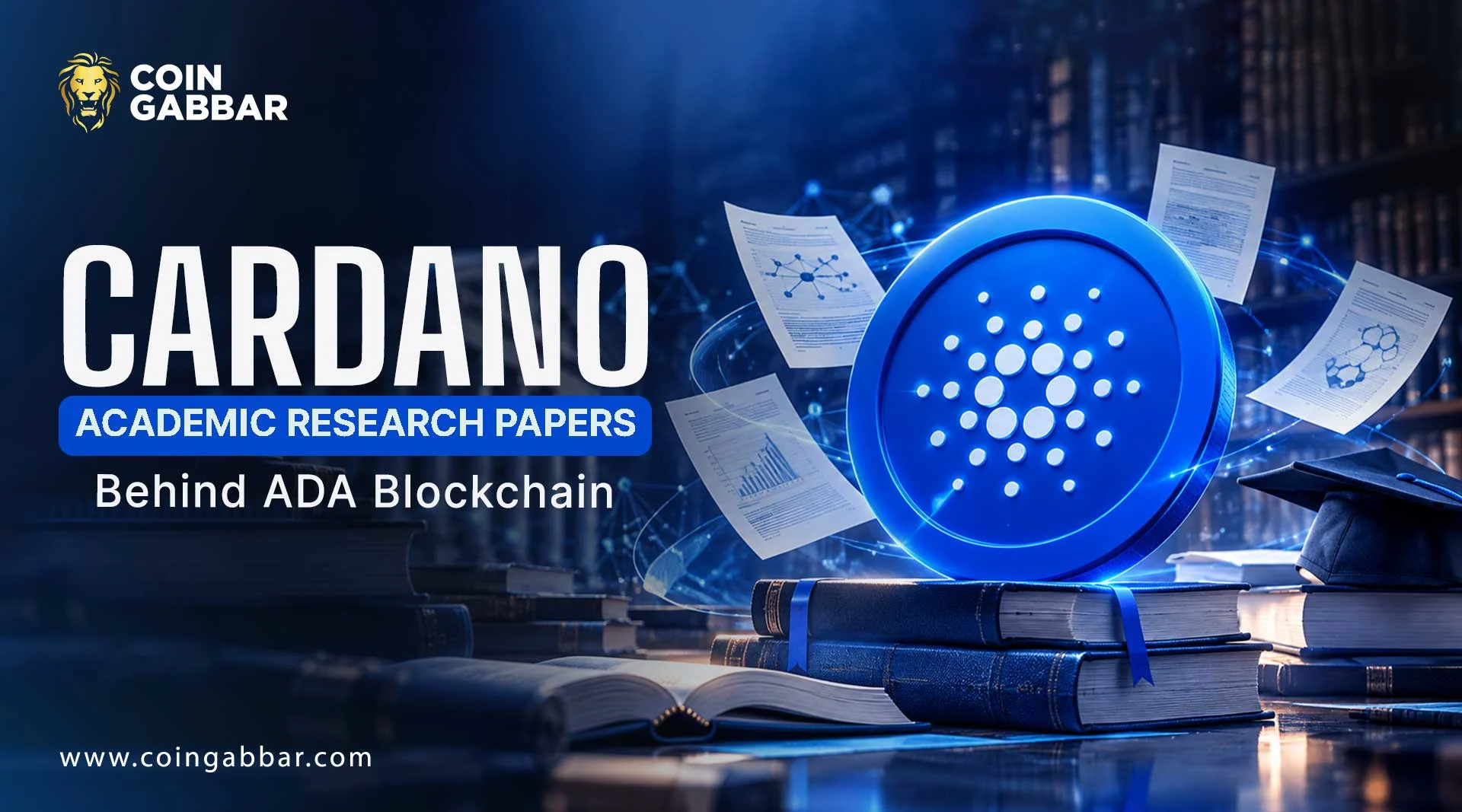
Cardano Academic Research Papers That Shaped Its Blockchain Design
Most blockchains start with a single whitepaper, but ADA took a different path. Its design rests on a growing library of studies, and the Cardano-academic-research-papers explain why the network works the way it does.
Cardano is known for using academic-research and peer-reviewed studies to guide its blockchain development. It uses proof-of-stake rather than Bitcoin-style mining to secure the network.
What Are the Cardano Academic Research Papers?
Cardano academic research papers are scientific studies and technical specifications that describe how the network is designed. They follow the style of university-research. Many went through peer review before reaching academic conferences.
The project's documentation says Cardano is the first platform to grow out of a philosophy of discovery, peer review, and cryptographic-research.
That is the project's own claim. What can be checked is simpler. The material is public, and the official research papers and specifications page lists it by development era.
Cardano academic-research papers and specifications are not the same thing. A paper argues that an idea works. A specification describes exactly how the software must behave. Cardano publishes both.
How Did Ouroboros Become the Core of Cardano?
Consensus is the method a network uses to agree on valid transactions. Cardano uses a method called Ouroboros, one of the better-known proof-of-stake blockchain designs. Miners do not solve puzzles here. Participants create blocks based on the stake they hold.
The first paper, "Ouroboros: A Provably Secure Proof-of-Stake Blockchain Protocol," was peer-reviewed and published at the Crypto 2017 conference. Among all Cardano-academic-research-papers, it is the starting point. IOG's research overview describes how later versions followed:
Classic: the base design for the early, federated network
Praos: stronger security for an open, permissionless network
Genesis: an upgrade to Praos that helps new nodes join safely
Chronos: a design meant to make Genesis more robust once implemented
Each version added a feature. None replaced the core idea.
How Do the Five Eras Map to the Research?
Cardano's roadmap has five eras: Byron, Shelley, Goguen, Basho, and Voltaire. The official docs pair every era with Cardano-academic research-papers. The table shows one example from each.
Era | Main Focus | Sample Paper |
Byron | Foundation and federated network | Ouroboros-BFT |
Shelley | Decentralization and staking | Reward Sharing Schemes for Stake Pools |
Goguen | Smart contracts and multi-asset ledgers | The Extended UTXO Model |
Basho | Scaling and interoperability | Hydra: Fast Isomorphic State Channels |
Voltaire | Governance and treasury | A Treasury System for Cryptocurrencies |
The pattern is clear. Research-came first, and software followed. But era names describe roadmap themes, not finished products. The docs page still uses some eras in the future tense, so its text may lag behind the live network.
Which Papers Shaped Staking, Smart Contracts, and Scaling?
Three areas show how Cardano-academic-research-papers turn into real features.
Staking and Delegation
Not every holder can stay online all day. The 2020 paper "Account Management in Proof of Stake Ledgers" studies how holders can hand their stake to others. That idea gave rise to stake pools, which the ADA staking guide covers in plain steps.
A second paper, "Reward Sharing Schemes for Stake Pools," looks at rewards. According to the project, a pledging mechanism makes it costly for one entity to run many pools.
Smart Contracts and Tokens
"The Extended UTXO Model" is the base for Cardano's contract design. Related papers cover native custom tokens and Marlowe, a language built for financial contracts.
Scaling and Governance
Hydra explores off-chain state channels. Mithril studies stake-based signatures. On governance, CIP-1694 outlines an on-chain voting system for the Voltaire era.
IOG's news page also reports that Leios, a throughput upgrade in the Ouroboros family, reached six times-Cardano's throughput on its first testnet in August 2026. That is a project result, not independent proof.
What Does Peer Review Prove About Cardano Academic Research Papers?
Peer review means outside experts checked the reasoning. For Cardano-academic-research papers, it suggests an idea is sound under stated assumptions. That is useful but limited.
A proof covers a model, not every line of code. It cannot show that a live network is bug-free, popular, or profitable. Those are separate questions.
The scale is still notable. The project's own overview counted 139 papers in its library when it was published in June 2022. The Cardano research hub now serves as the starting page for newer work.
What Are the Main Risks to Consider?
Even strong Cardano-academic research-papers do not remove risk. The main points:
Research-to-product gap: a published idea may take years to reach the mainnet or change on the way.
Roadmap delays: era goals can slip, and docs may trail behind.
Engineering shifts: IOG's news page lists several 2026 announcements about engineering work moving to other organizations. This could widen decentralization or disrupt continuity. The outcome is uncertain.
Market risk: ADA's price depends on trading, not on paper quality.
Are Cardano Academic Research Papers Worth Following Now?
For readers who want evidence, yes. Cardano academic research papers are public, specific, and testable. That is rarer than it sounds in crypto.
Still, research is a signal and not a forecast. Papers say nothing about future prices. Anyone studying ADA's market outlook, such as a Cardano price prediction, should treat research quality and market value as two separate topics.
Conclusion
Cardano-academic research-papers are the technical backbone of ADA. They cover consensus, staking, smart contracts, scaling and governance, and the official docs organize them by era.
What stands out is the public, peer-reviewed trail. What remains uncertain is delivery. Roadmap timing, engineering changes, and test results still need proof on the live network. The official docs and research pages are the best next stop.
Disclaimer:
This article is for information only and is not financial advice. Crypto assets are volatile and carry a high risk of loss. Research independently before making any decision.
0
0

 Manage all your crypto, NFT and DeFi from one place
Securely connect the portfolio you’re using to start.


