
Another energy chokepoint? As Iran‑US war drags on, oil and inflation fears surge

0
0
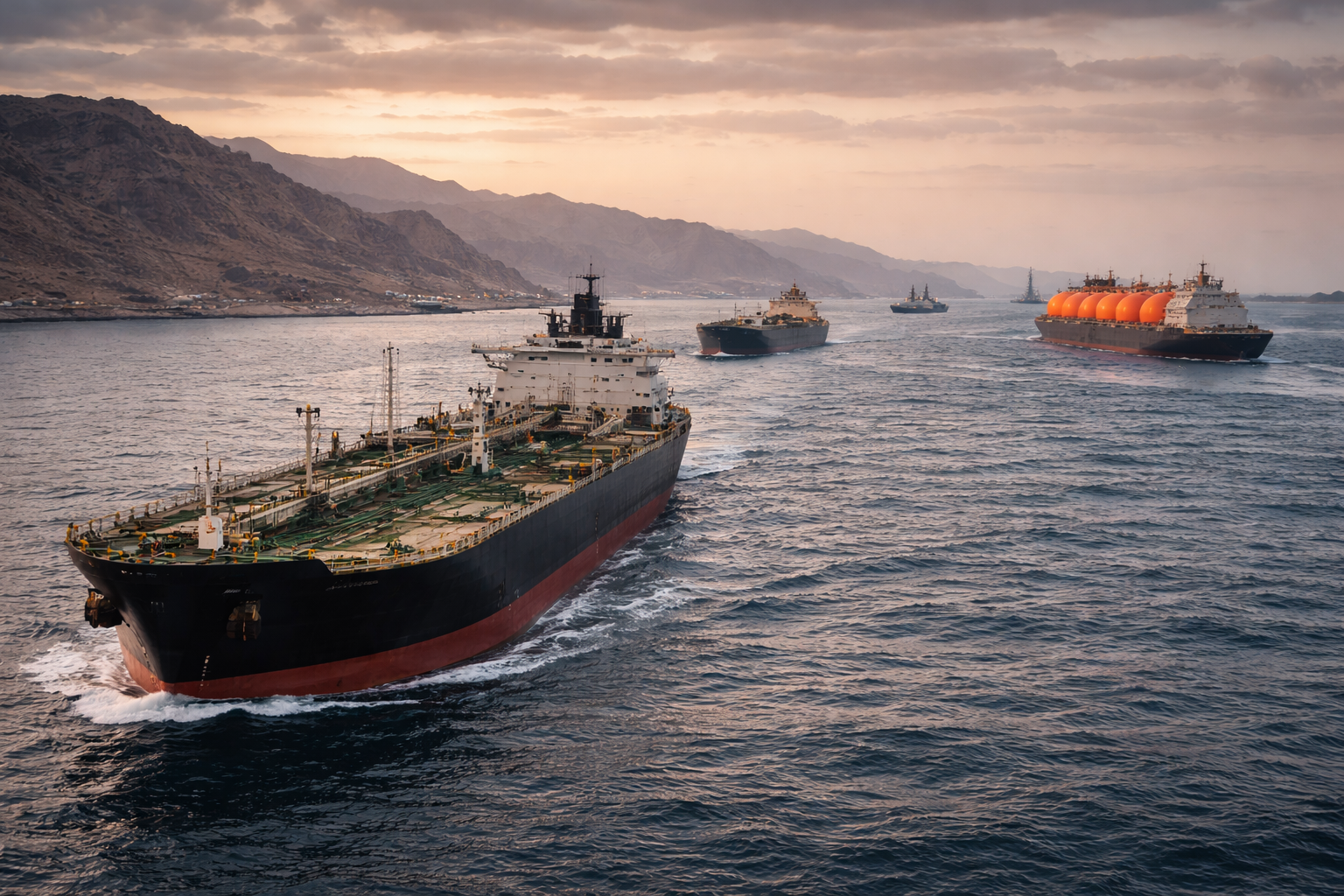
Four weeks ago, the United States and Israel launched a war they expected to win quickly. They have destroyed most of Iran's military, eliminated its supreme leader and struck its nuclear facilities.
Yet, four weeks on, the conflict they framed as military containment has evolved into a global economic crisis, with energy prices and inflation forecasts being rewritten in real time.
As of today, they are further from ending the conflict than they were when Trump's 48-hour Hormuz deadline expired four days ago.
Iran has formally rejected Washington's peace proposal, set five conditions of its own that the US is almost certain to refuse, and threatened to extend the economic stranglehold it already has on the world's energy markets.
Brent crude has climbed to around 108 dollars a barrel, almost 48% higher than a month ago and nearly 47% above levels a year earlier.
The war that began on the battlefield is now being fought through oil prices, trade disruptions and currency volatility. This is where things stand.
Four weeks of war
On February 28, the US and Israel launched Operation Epic Fury, eliminating Supreme Leader Ali Khamenei on day one and systematically dismantling Iran's conventional military.
US CENTCOM chief Admiral Brad Cooper said this week that the US has now struck over 10,000 targets inside Iran, destroyed 92% of Iran's largest naval vessels, and driven Iran's drone and missile launch rates down by more than 90%.
On paper, it is a military campaign of extraordinary scale and effectiveness.
But Iran found the one weapon US airpower cannot easily neutralise.
By closing the Strait of Hormuz — the narrow chokepoint through which a fifth of the world's oil and gas normally flows — Tehran turned a military defeat into a global supply shock that has pushed benchmark prices back into three‑digit territory and rattled investors worldwide.
Energy markets have been in turmoil ever since.
Brent crude has surged above 100 dollars and is now trading near 108 dollars, while one‑month gains are approaching 50% as traders price in a prolonged disruption.
Fuel shortages are spreading worldwide, companies and governments are scrambling to contain the fallout, and the World Food Programme estimates that tens of millions more people will face acute hunger if the war continues into June.
The cascade of supply chain failures is now reshaping global inflation forecasts, lifting recession risks in Europe and Asia, and fracturing decades of global energy cooperation.
Economists warn that higher oil prices could add more than one percentage point to G20 inflation, with headline rates in advanced economies drifting back towards 3% rather than converging on 2% targets.
The war has also expanded well beyond Iran's borders. Israel is fighting Hezbollah in Lebanon. Iranian missiles have struck Gulf states, including the UAE, Kuwait, Bahrain, and Saudi Arabia. US military bases across the region have been targeted.
The UN Secretary-General warned this week that the world is "staring down the barrel of a wider war"—and markets are treating it as such, with major US indices recently falling more than 1.5% in a single session as Iran signalled it would keep Hormuz effectively shut.
The 15-point proposal Iran rejected
Behind the fighting, a diplomatic track has been running through intermediaries. Pakistan, Egypt, and Qatar have been carrying messages between Washington and Tehran.
Last week, the US delivered a formal 15-point peace proposal to Iran through Pakistan.
It calls for reopening the Strait of Hormuz, removing Iran's stocks of highly enriched uranium, curbing its ballistic missile programme, and cutting off funding for regional proxies, including Hezbollah, the Houthis, and Hamas.
The geopolitical goal was clear, but the economic stakes were even higher: Washington’s core demand was to restore energy flows before the global supply system buckles entirely and another leg of inflation hits consumers already facing higher living costs.
Trump said publicly this week that Iranian leaders "want to make a deal so badly" but are afraid to say it. Special envoys Steve Witkoff and Jared Kushner are leading negotiations on the US side, alongside Secretary of State Marco Rubio.
Iran's answer was a flat rejection.
Tehran issued five conditions that must be met before any negotiations can even begin: an immediate end to US and Israeli attacks, concrete guarantees against future aggression, a firm commitment to pay war reparations, international recognition of Iran's authority over the Strait of Hormuz, and a comprehensive ceasefire across all fronts.
Iran also made clear it will not enter talks until every one of those conditions is satisfied, and that it will end this war at a time of its own choosing — a stance that has kept energy traders on permanent alert and prompted emergency stockpile releases from G7 nations as they attempt to smooth price spikes and protect consumers.
The White House responded by warning that if Iran fails to accept that it has been defeated, Trump will hit harder — a statement that sent another jolt through already fragile markets, driving further losses in Asian equities and reinforcing safe‑haven flows into the dollar.
The trust problem behind the diplomatic failure
Even before Iran formally rejected the US proposal, there was a deeper problem poisoning any prospect of a deal. Iranian officials have told mediators they have been tricked twice by Trump.
In both previous rounds of nuclear talks earlier this year, Tehran says Trump green-lit surprise military strikes while simultaneously presenting himself as a willing negotiating partner. Iran's message to intermediaries is that they don't want to be fooled again.
Parliamentary speaker Mohammad-Bagher Ghalibaf, who has emerged as one of the most powerful figures in Iran's wartime leadership, has warned Washington not to test their resolve.
Analysts at the International Crisis Group describe Ghalibaf as a hardline loyalist to Iran's Islamist system for whom major concessions to Washington are highly unlikely.
His record suggests no interest in appeasing Western investors or restoring oil exports on US terms, and markets are increasingly pricing in a longer‑lasting supply shortfall rather than a quick normalisation.
There is also a leadership vacuum, making everything harder.
Iran's new supreme leader Mojtaba Khamenei has not been seen in public since being appointed. The US says he is injured.
Israel had been targeting both Araghchi and Ghalibaf for assassination before Pakistan intervened, warning Washington that if those men were eliminated, there would be nobody left to negotiate with — a risk that now carries not just diplomatic cost, but the potential for deeper economic catastrophe if talks collapse entirely and oil remains structurally tighter into next year.
Iran is now threatening a second chokepoint
The most alarming development of the past 48 hours is not the rejection of the US proposal but what Iran is saying about the future of global shipping.
Tehran has stated publicly that the Strait of Hormuz will not return to what it was before the war, that it has rewritten the maritime rules, and that the authority to grant transit permits to any vessel now rests solely with Iran — a claim of permanent sovereign control over an international waterway used by the entire world.
Iran has also threatened to close the Bab el-Mandeb Strait, the narrow passage connecting the Red Sea to the Gulf of Aden, if attacks on Iranian territory continue.
Roughly 12% of global seaborne oil passes through Bab el-Mande.
If both straits are effectively closed at the same time, analysts estimate the total supply disruption could approach 25 million barrels per day — around 25% of everything the world uses.
There is no modern precedent for that scenario, and major economies are now modelling oil at 150–200 dollars per barrel in contingency planning, alongside lower global growth forecasts and renewed pressure on central banks to delay interest rate cuts.
Adding further complexity, Iran has told intermediaries that Lebanon must be included in any final ceasefire agreement.
Any deal that does not resolve the Israel-Hezbollah conflict is, in Tehran's view, no deal at all.
That hands Israel, which has its own demands and deep scepticism of any US concessions to Iran, an effective veto over the outcome, and keeps global markets suspended between diplomacy and collapse, with Asian stock indices already suffering heavy sell‑offs as investors brace for a protracted regional war.
Where things actually stand?
The US has won the military campaign by almost every conventional measure, but is losing the broader contest it was supposed to resolve: the economic one.
Polls show that the majority of Americans disapprove of the strikes on Iran, oil prices remain elevated, inflation expectations are rising again, and the Pentagon is deploying thousands of additional airborne troops to give Trump the option of a ground assault, with the first Marine unit expected in the Gulf by the end of the month.
Iran has rejected the peace plan, claimed permanent authority over the world's most critical shipping corridor, threatened a second one, and told every intermediary in the region it will end this war on its own terms and its own schedule.
The gap between what Washington is demanding and what Tehran will accept has become a chasm — one measured not just in diplomatic distance but in the price of oil, the strength of currencies, and the strain on global consumption.
And the longer it stays that way, the more the world’s economies will pay for it, through higher fuel bills, weaker growth and a delayed return to the low‑inflation era policymakers thought they had restored.
The post Another energy chokepoint? As Iran‑US war drags on, oil and inflation fears surge appeared first on Invezz
0
0


 Manage all your crypto, NFT and DeFi from one place
Securely connect the portfolio you’re using to start.

0
0

0
0

0
0

0
0