
$294M KelpDAO Exploit Emerges as 2026’s Largest DeFi Hack, Aave TVL Drops $8B

0
0

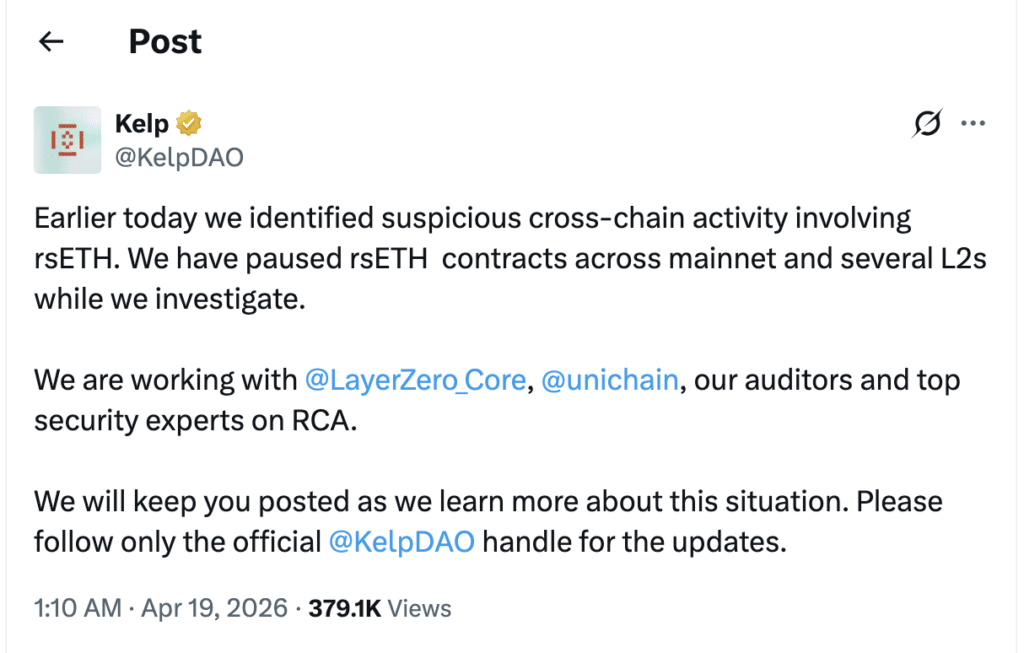
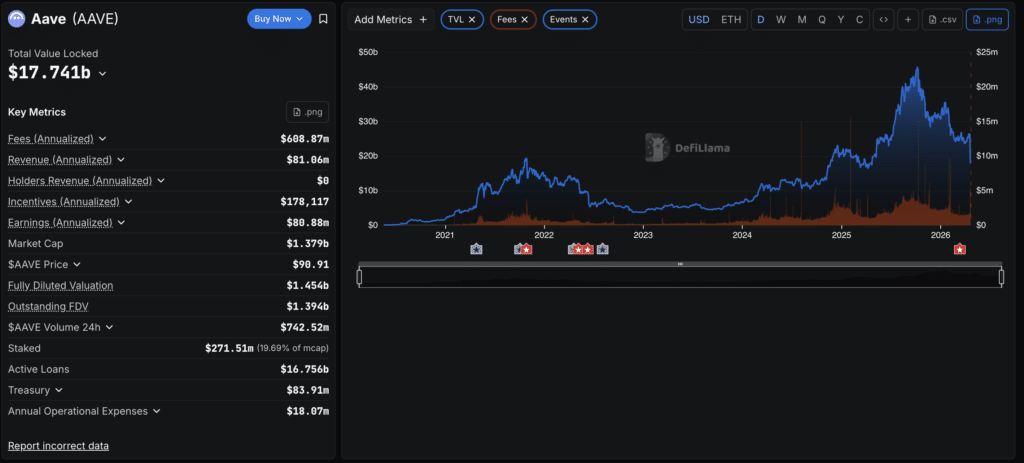
Aave TVL fell by nearly $8 billion after the Kelp DAO hack, rapidly becoming one of the most disruptive events in decentralized finance in 2026. The incident highlights how tightly connected DeFi protocols are and how quickly risk can spread across multiple platforms. The drop followed a $293 million exploit that destabilized liquidity pools and triggered panic-driven withdrawals.
It also raises concerns about collateral safety, liquidity depth, and systemic exposure across lending markets, showing how a single protocol failure can ripple through the entire DeFi ecosystem.
Exploit Trigger and How Liquidity Shock Started
The crisis began when attackers stole 116,500 rsETH tokens from Kelp DAO’s bridge infrastructure in a targeted exploit. These stolen assets were then rapidly deposited into Aave v3 as collateral to borrow wrapped Ether, creating an immediate imbalance within the lending system. As the compromised collateral entered circulation, the protocol unknowingly absorbed significant risk exposure.
This sequence demonstrates how cross-protocol integrations can significantly amplify damage when a single layer fails, particularly in complex liquid restaking ecosystems where assets move fluidly between multiple DeFi platforms.
Bad Debt Crisis and Lending Pool Stress
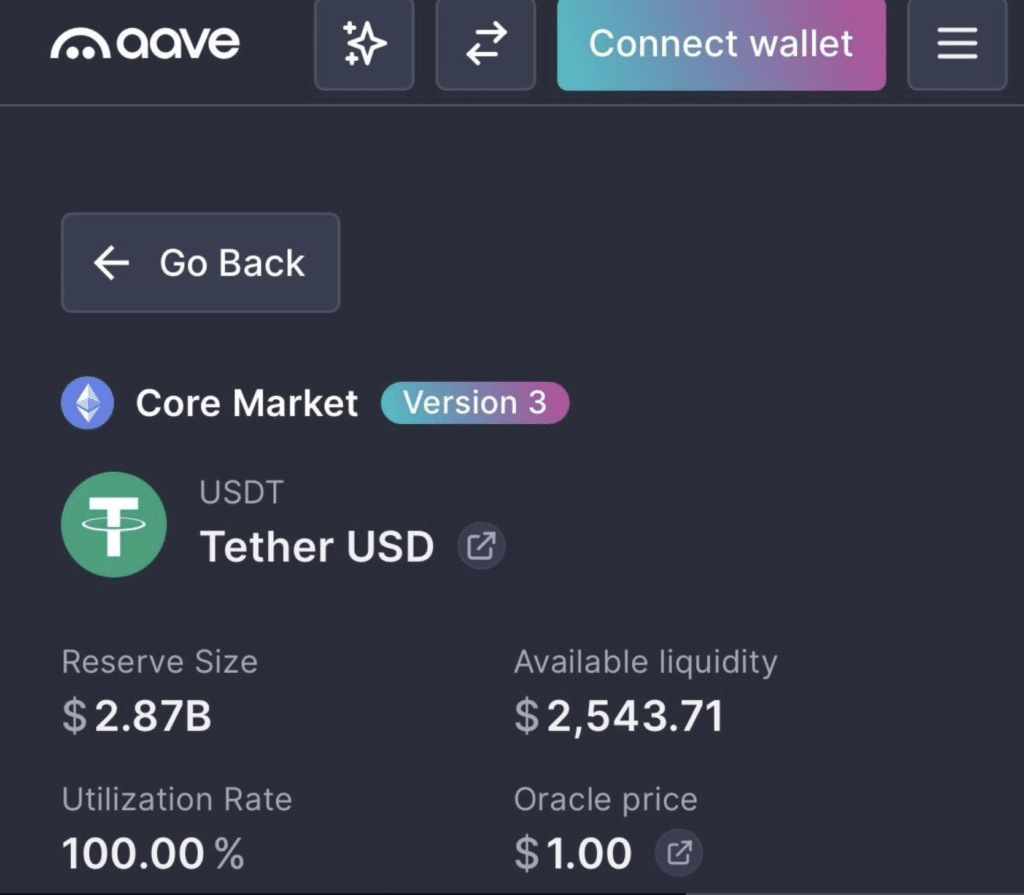
The incident led to nearly $195 million in bad debt forming within the protocol after the stolen collateral could not be properly liquidated following the exploit. This imbalance placed immediate strain on lending operations, as risk exposure accumulated faster than the system could rebalance. Stablecoin pools such as USDT and USDC surged to near 100% utilization, effectively limiting withdrawals and tightening liquidity conditions.
As a result, over $5.1 billion in funds became temporarily inaccessible, creating bottlenecks across the platform and intensifying concerns about a potential DeFi bank-run scenario.
Market Reaction and AAVE Token Pressure
Aave TVL falls $8 billion after Kelp DAO hack directly impacted the AAVE token, which dropped nearly 20% within 24 hours. Price action moved from $112 to below $90 before stabilizing near $90.98, reflecting increased volatility. Aave TVL falls $8 billion after Kelp DAO hack also reduced overall market confidence in DeFi lending protocols.
Aave TVL falls $8 billion after Kelp DAO hack triggered broader concerns about Aave protocol TVL decline and how quickly sentiment shifts when liquidity stress emerges.
Whale Withdrawals and Institutional Exit Signals
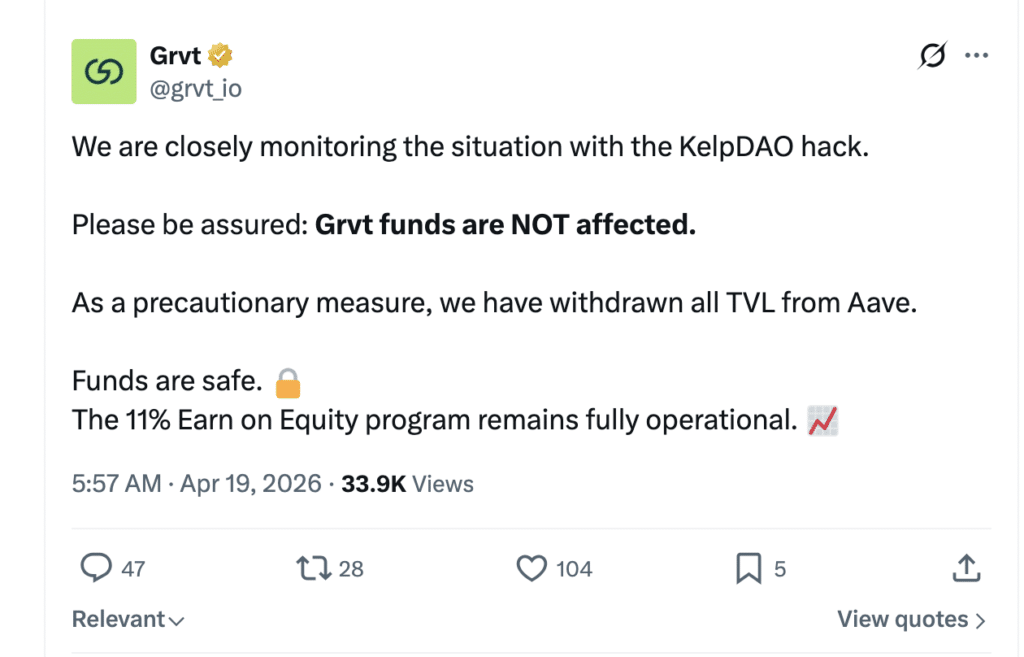
Aave TVL falls $8 billion after Kelp DAO hack intensified when large-scale withdrawals began from major players. Crypto analytics data showed MEXC withdrawing approximately $431 million, while Abraxas Capital pulled around $392 million. Aave TVL falls $8 billion after Kelp DAO hack reflects how institutional actors respond quickly to perceived risk.
Aave TVL falls $8 billion after Kelp DAO hack highlights liquidity fragility when whales exit simultaneously, amplifying DeFi TVL crash today conditions and accelerating capital outflows across lending platforms.
Systemic Risk and Liquid Restaking Exposure
Aave TVL falls $8 billion after Kelp DAO hack underscores deeper structural risks in liquid restaking ecosystems. The rsETH hack Aave exposure demonstrates how derivative assets can introduce hidden vulnerabilities into lending protocols. Aave TVL falls $8 billion after Kelp DAO hack raises the question: what happens when DeFi collateral fails at scale? Aave TVL falls $8 billion after Kelp DAO hack also connects to broader Kelp DAO hack impact on Aave, revealing weaknesses in cross-chain bridge security and leverage loops.
Liquidity Crisis and DeFi Market Contagion
Aave TVL falls $8 billion after Kelp DAO hack triggered fears of a broader DeFi liquidity crisis news cycle. Liquidity conditions tightened as borrowing demand surged and withdrawals increased. Aave TVL falls $8 billion after Kelp DAO hack is now viewed as a case study in DeFi market crash April 2026 dynamics.
Aave TVL falls $8 billion after Kelp DAO hack shows how interconnected protocols can amplify stress, turning localized exploits into system-wide liquidity pressure across decentralized finance.
Conclusion
Aave TVL falls $8 billion after Kelp DAO hack marks a major stress test for decentralized lending infrastructure. The event exposed vulnerabilities in collateral design, cross-protocol integrations, and liquidity management systems. Aave TVL falls $8 billion after Kelp DAO hack also demonstrates how quickly sentiment can shift when bad debt emerges. Aave TVL falls $8 billion after Kelp DAO hack may reshape risk frameworks for DeFi platforms moving forward, especially those relying on liquid restaking mechanisms and bridged assets.
Appendix: Glossary of Key Terms
TVL represents total capital deposited in a DeFi protocol. Liquid restaking refers to staking derivatives that can be used as collateral.
Bad debt occurs when borrowed funds cannot be fully repaid or liquidated.
Aave TVL falls $8 billion after Kelp DAO hack highlights systemic exposure in decentralized lending ecosystems.
Frequently Asked Questions
Why did Aave TVL falls $8 billion after Kelp DAO hack happen?
Aave TVL falls $8 billion after Kelp DAO hack occurred due to a $293 million exploit where stolen collateral was used within Aave, creating liquidity imbalance.
Is Aave safe after this event?
Aave TVL falls $8 billion after Kelp DAO hack raises concerns, but the protocol itself was not directly hacked. Risk exposure came from external collateral assets.
How did Kelp DAO exploit impact Aave liquidity?
Aave TVL falls $8 billion after Kelp DAO hack shows that borrowed funds backed by compromised rsETH created bad debt and liquidity strain.
What is the impact on DeFi markets?
Aave TVL falls $8 billion after Kelp DAO hack contributed to broader DeFi liquidity tightening and increased volatility across lending protocols.
References
Disclaimer
Aave price data and market figures are subject to rapid change. This article is for informational purposes only and does not constitute financial advice.
Read More: $294M KelpDAO Exploit Emerges as 2026’s Largest DeFi Hack, Aave TVL Drops $8B">$294M KelpDAO Exploit Emerges as 2026’s Largest DeFi Hack, Aave TVL Drops $8B
0
0


 Manage all your crypto, NFT and DeFi from one place
Securely connect the portfolio you’re using to start.


0
0

0
0
