
Anjouan, Curacao, and Malta Licensing Compared

0
0
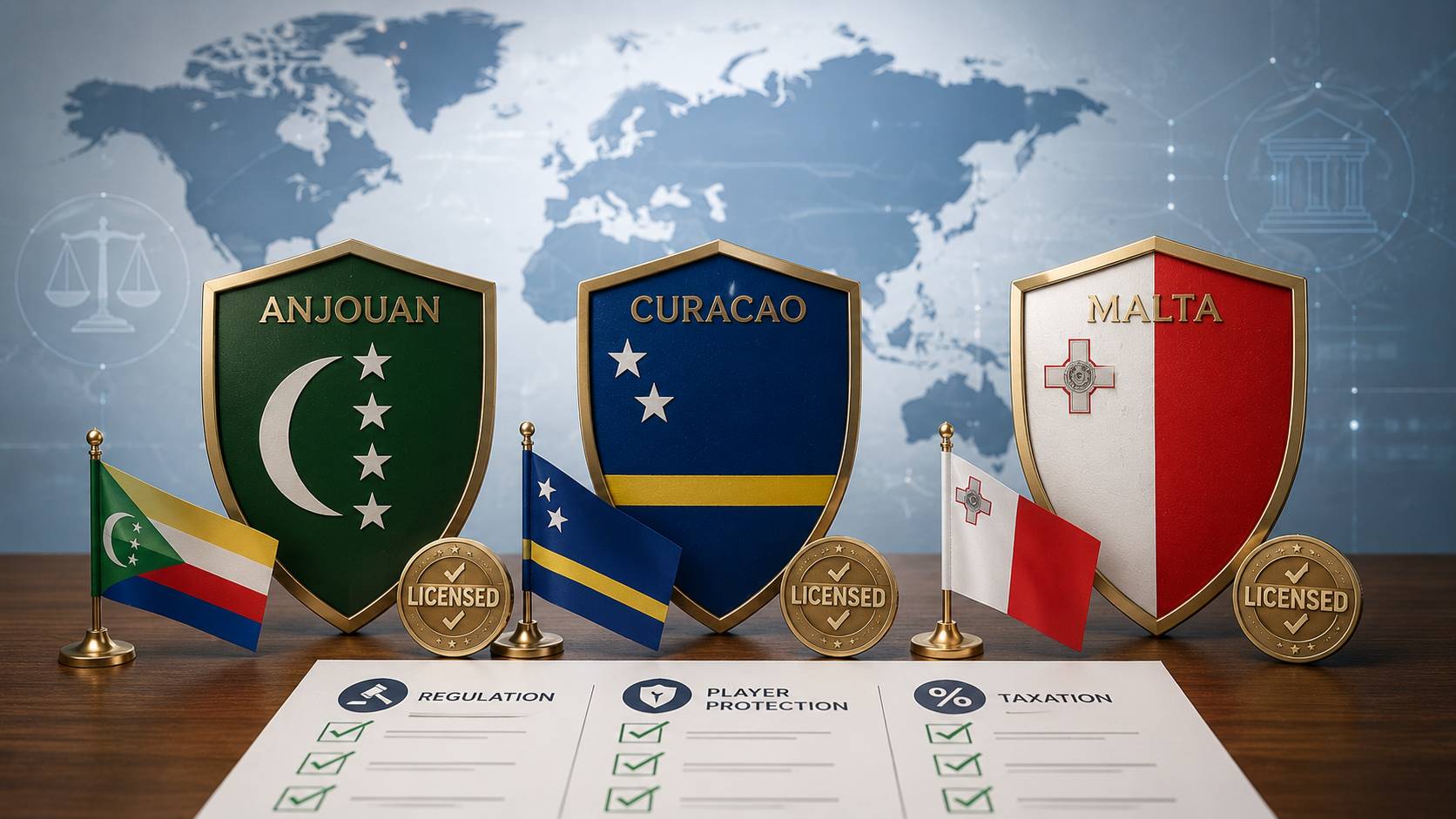
Three licences, three prices, three very different things a player gets in return. An Anjouan authorisation costs around 17,000 euros and takes about four weeks. A Malta licence costs several times that, takes months, and comes with obligations that reshape how an operator runs.
Almost every crypto casino you will encounter holds one of the first two. Understanding what separates all three explains why.
Three Regimes, Side by Side
Anjouan
Curacao
Malta
Approximate cost
Around 17,000 euros
Substantially higher
Highest of the three
Processing time
About four weeks
Months
Months
Local presence
Not required
Required from January 2026
Required
Player fund segregation
Not mandated
Not mandated in the same form
Mandated
Player recourse in a dispute
Limited
Authority can investigate
Established player-protection channel
Regulated EU market access
No
No
Yes
The cost column and the recourse column move together, which is the whole story in one line. A cheaper licence is cheaper because it asks less of the operator, and what it asks less of is mostly the parts that protect a player.
Anjouan
An autonomous island in the Union of the Comoros, running a remote gambling framework since 2005 under its Computer Gaming Licensing Act, paired with money-laundering prevention legislation from the same year.
Supervision splits across two bodies. A gaming board handles oversight and technical integrity while an offshore finance authority handles fit-and-proper assessment and anti-money-laundering compliance.
One comprehensive licence covers casino, sportsbook, live dealer, poker and lotteries instead of requiring a separate permit per vertical, which is a genuine structural advantage for a platform running several products.
The regime carries real obligations, including AML duties, responsible-gaming requirements and suspension powers. It carries a long excluded-territories list, and its recourse for a player in dispute is thinner than either alternative.
Curacao
The jurisdiction most crypto casinos hold, and the one that changed most recently. Under the previous arrangement, an operator bought a sublicence from one of a handful of master licence holders, and oversight was largely nominal.
That ended when the National Ordinance on Games of Chance came into force in December 2024.
Legacy sublicences expired the following month, and operators now hold direct licences from the Curacao Gaming Authority, which maintains a public register, conducts its own ownership investigations and holds suspension and revocation powers. Operators also had to establish real local substance from January 2026.
The practical result is a middle tier that did not previously exist. Curacao now asks meaningfully more than Anjouan and meaningfully less than Malta, and several established brands left instead of requalifying.
Malta
The Malta Gaming Authority is a European Union regulator, and the difference that makes is structural, not cosmetic.
Player funds must be segregated from operating capital, so a player's balance is not funding the business. A formal player-protection channel handles disputes with an authority that can compel outcomes.
Advertising, bonus terms and responsible-gambling tooling all sit under detailed rules instead of general obligations.
Very few crypto-first casinos hold one, because the compliance burden and cost are built for operators serving regulated European markets. When a crypto platform does hold an MGA licence, it usually reflects a decision to operate inside the EU instead of around it.
Most Crypto Casinos Sit in the First Two Tiers
The reason is not simply cost. It is that Tier-1 regimes impose requirements a crypto-native model struggles with, including detailed source-of-funds tracing and the identity infrastructure that comes with it.
A platform built around wallet connections and light onboarding is a poor fit for a regime designed around bank rails and documented identity. That tension, more than the fee, is why the offshore tiers dominate this category, and why verification practices look the way they do on crypto sites.
Dexsport Against the Three Tiers
Dexsport holds an Anjouan licence, which places it in the lightest of the three tiers, and saying so plainly is more useful than implying otherwise.
What it adds sits outside the licence entirely. Its smart-contract code has been audited by CertiK and Pessimistic, covering a layer no gaming regulator examines.
It is non-custodial, so player funds settle to a wallet the player holds instead of an operator account, which addresses the fund-segregation question from a different direction than Malta does. Bets post to a public on-chain desk where outcomes stay independently checkable.
Those are not substitutes for Tier-1 recourse. They are answers to some of the same problems, arrived at through platform design instead of regulation, and a player choosing an offshore-licensed casino should know which of the two they are relying on.
Reading a Badge Against Its Tier
The useful question is not whether a casino is licensed but which tier it sits in and what that tier requires. Anjouan asks least and delivers a real but thin framework. Curacao now asks more than it used to. Malta asks most and protects most.
That tier also shapes what happens if a payout stalls, since withdrawal handling differs partly by what an operator is obliged to do.
Confirm what is legal where you live, keep stakes within a set budget, and play only if you are of legal age, since KYC or AML checks may apply. Responsible gambling rests more heavily on the player the lighter the regime.
Disclaimer: The information here is provided for general purposes only and is not legal, tax, investment, or financial advice. Licensing requirements, fees, and obligations change over time and vary by application, so confirm current details with the relevant authority before relying on them. Betting carries risk, and rules vary by country, so check the law where you live. Please gamble responsibly, within your means, and only if you are of legal age.
0
0

 Manage all your crypto, NFT and DeFi from one place
Securely connect the portfolio you’re using to start.

0
0

0
0

0
0

0
0