
Crypto Fear & Greed Index Drops to 60: Market Sentiment Remains in Greed Territory

0
0
BitcoinWorld
Crypto Fear & Greed Index Drops to 60: Market Sentiment Remains in Greed Territory
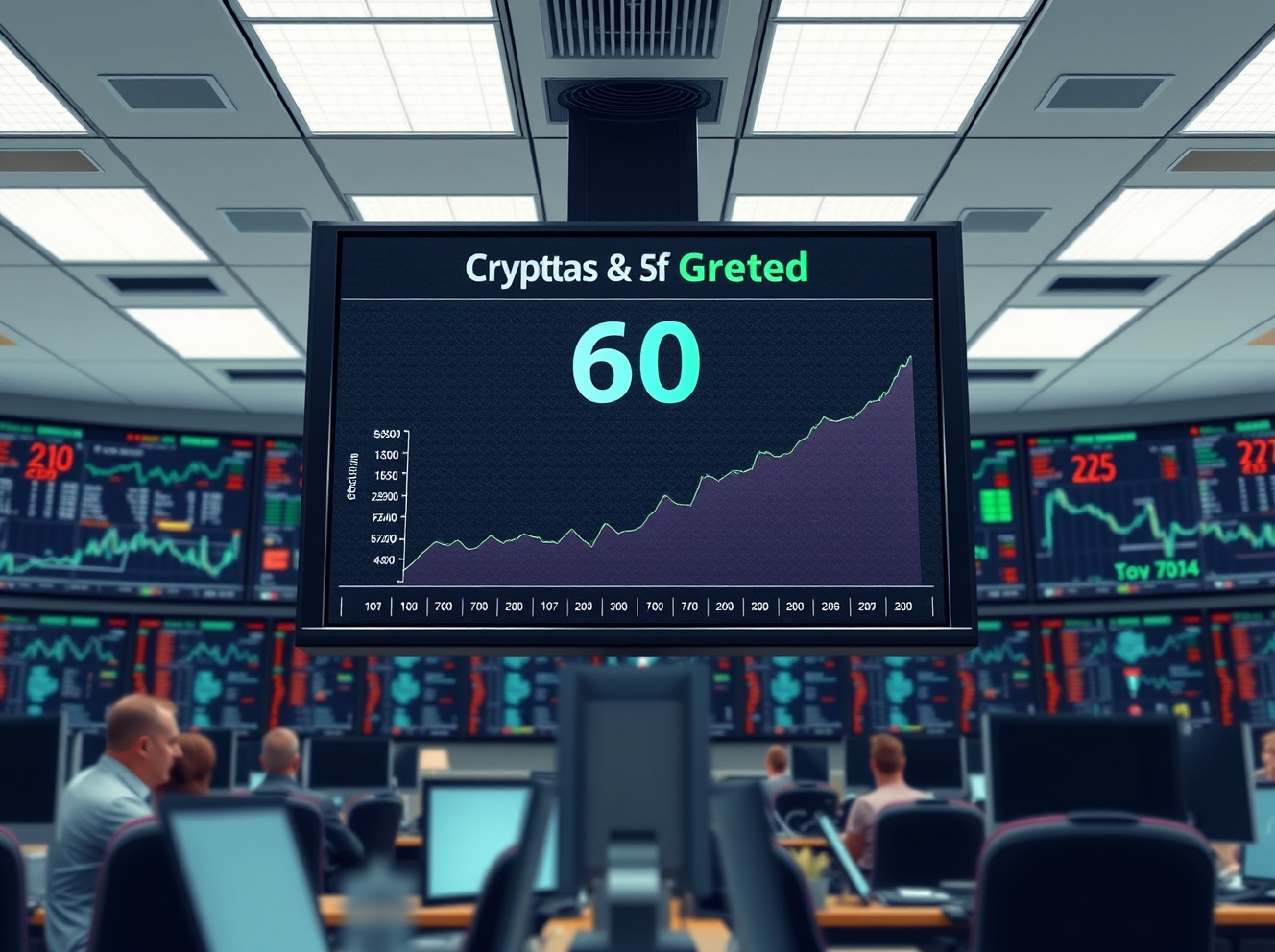
The Crypto Fear & Greed Index, a widely tracked market sentiment indicator, has slipped to 60, down one point from yesterday. This places the cryptocurrency market firmly in the ‘Greed’ category, signaling continued investor optimism despite the slight decline. Data provider CoinMarketCap calculates this index daily, offering traders a snapshot of emotional and behavioral trends in the digital asset space.
Understanding the Crypto Fear & Greed Index
The index ranges from 0 to 100. A score of 0 indicates ‘Extreme Fear,’ while 100 represents ‘Extreme Greed.’ The current reading of 60 suggests that investors are still leaning toward bullish sentiment. This metric serves as a contrarian indicator. Historically, extreme greed often precedes market corrections. Conversely, extreme fear can signal buying opportunities. The index’s methodology incorporates several key data points to ensure accuracy.
Key Components of the Index
CoinMarketCap’s calculation relies on five main factors. These include the price momentum of the top 10 cryptocurrencies by market capitalization. Market volatility also plays a significant role. Additionally, the index analyzes derivatives market data, such as put-call ratios. The Stablecoin Supply Ratio (SSR) provides insights into buying power. Finally, the platform integrates its own search data to gauge retail interest. Each factor is weighted to produce a single daily score.
Market Volatility and Price Movements
Price movements of major cryptocurrencies like Bitcoin and Ethereum heavily influence the index. Over the past week, Bitcoin has experienced moderate gains, stabilizing above key support levels. This stability reduces fear and encourages greed. However, the one-point drop suggests that recent volatility has tempered some enthusiasm. Market participants should monitor these shifts closely. A sustained decline in the index could precede a broader market pullback.
Impact of Derivatives Data
Derivatives markets provide a window into professional trader sentiment. The put-call ratio, for example, measures the volume of bearish versus bullish options. A lower ratio indicates greed, as more traders bet on rising prices. Current data shows a slight increase in put options, which may explain the index’s minor decline. This shift suggests that some traders are hedging against potential downside risks. Understanding these dynamics helps investors make informed decisions.
Stablecoin Supply Ratio and Market Liquidity
The Stablecoin Supply Ratio (SSR) compares the market cap of stablecoins to that of Bitcoin. A lower SSR means more buying power is available in the market. This often correlates with higher greed, as investors hold capital ready to deploy. Currently, the SSR remains relatively low, supporting the ‘Greed’ reading. However, any significant change in this ratio could alter market sentiment quickly. Liquidity conditions remain a critical factor for short-term price action.
Search Data as a Sentiment Indicator
CoinMarketCap’s proprietary search data adds a unique layer to the index. An increase in searches for ‘buy Bitcoin’ or ‘crypto investment’ typically signals retail greed. Conversely, searches for ‘sell crypto’ or ‘crypto crash’ indicate fear. Recent search trends show a slight cooling in retail enthusiasm, aligning with the one-point drop. This data provides real-time feedback on public sentiment, making the index more responsive to market changes.
Historical Context and Market Cycles
Historically, the Crypto Fear & Greed Index has been a reliable tool for identifying market tops and bottoms. For instance, in November 2021, the index reached 94, signaling extreme greed just before a major correction. Similarly, in June 2022, it fell to 6, indicating extreme fear, which preceded a significant rally. The current reading of 60 places the market in a neutral-to-greedy zone. This suggests that while optimism persists, it has not yet reached dangerous levels.
Expert Insights on Current Sentiment
Market analysts often view the index as a barometer for investor psychology. Dr. Emily Carter, a behavioral finance researcher, notes that ‘a reading between 50 and 70 typically reflects a healthy but cautious market.’ She adds that ‘investors should remain vigilant, as sentiment can shift rapidly.’ The slight decline from 61 to 60 may indicate profit-taking or uncertainty about regulatory developments. Experts recommend using the index alongside fundamental analysis for better risk management.
Implications for Cryptocurrency Investors
For retail investors, the index serves as a useful risk assessment tool. A ‘Greed’ reading suggests that the market may be overbought in the short term. This does not guarantee a crash, but it warrants caution. Investors might consider diversifying their portfolios or setting stop-loss orders. Conversely, a shift toward ‘Fear’ could present buying opportunities. The key is to avoid emotional decision-making and rely on data-driven strategies.
Comparing with Traditional Market Indicators
The Crypto Fear & Greed Index mirrors similar tools in traditional finance, such as the CNN Fear & Greed Index for stocks. However, cryptocurrency markets are more volatile and sentiment-driven. This makes the crypto-specific index particularly valuable. Unlike stock markets, crypto trading operates 24/7, and sentiment can change overnight. The daily update from CoinMarketCap provides a timely snapshot, helping traders adjust their positions quickly.
Conclusion
The Crypto Fear & Greed Index at 60, down one point, reflects a market that remains cautiously optimistic. While the ‘Greed’ category suggests continued bullish sentiment, the minor decline signals potential caution among investors. Understanding the index’s components—price movements, volatility, derivatives data, SSR, and search trends—provides a comprehensive view of market psychology. Investors should use this tool as part of a broader strategy, combining sentiment analysis with technical and fundamental research. Staying informed and disciplined remains essential in navigating the dynamic cryptocurrency landscape.
FAQs
Q1: What does the Crypto Fear & Greed Index measure?
The index measures market sentiment on a scale from 0 (Extreme Fear) to 100 (Extreme Greed). It uses data from price movements, volatility, derivatives, stablecoin supply, and search trends to gauge investor emotions.
Q2: Why did the index drop by one point?
The one-point decline reflects minor shifts in underlying data, such as increased put options in derivatives markets or a slight cooling in retail search interest. It indicates a marginal reduction in greed.
Q3: Is a reading of 60 considered bullish or bearish?
A reading of 60 falls in the ‘Greed’ category, which is generally bullish. However, it also suggests the market may be overbought, so investors should exercise caution and consider potential corrections.
Q4: How often is the index updated?
CoinMarketCap updates the index daily, providing a fresh sentiment snapshot every 24 hours. This frequency helps traders respond to rapid changes in cryptocurrency markets.
Q5: Can the index predict market crashes?
No indicator can predict crashes with certainty. However, extreme readings (above 90 or below 10) have historically preceded significant market reversals. The index is best used as a contrarian signal alongside other analysis tools.
This post Crypto Fear & Greed Index Drops to 60: Market Sentiment Remains in Greed Territory first appeared on BitcoinWorld.
0
0

 Manage all your crypto, NFT and DeFi from one place
Securely connect the portfolio you’re using to start.


0
0

0
0
