
NatWest, Bank of America and four peers want AI shopping agents to disclose themselves

0
0

On Sept. 22, six banks put out joint principles proposing that all parties to an agentic commerce purchase know when an AI agent is involved in the transaction and who it is acting for.
The paper, titled “Building Trust in Agentic Commerce,” was co-authored by NatWest Group, Bank of America, Capital One, ING Group, Commonwealth Bank of Australia, and New Zealand’s ASB Bank.
Principles are voluntary, not binding. Banks plan to consult policymakers on the proposals and bring out a second paper on how to implement them.
Transparency heads the list of five principles
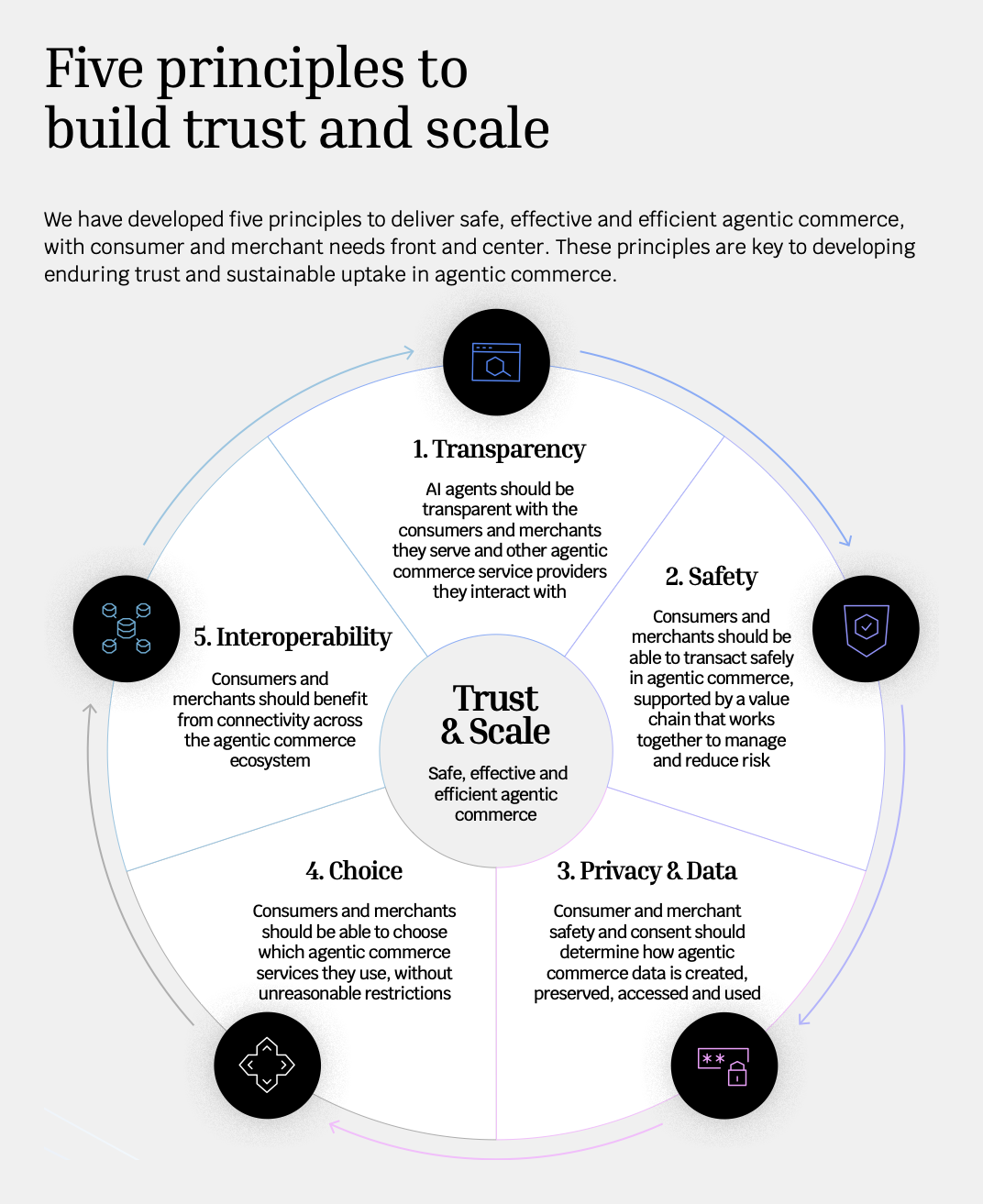
The disclosure proposal falls under transparency, the first of five principles. The other four are safety, privacy and data, choice, and interoperability.
Transparency also stretches to how agents rank options and make decisions, including sponsored options. The paper warns that agents may promote products or payment methods that give their providers a larger cut, such as higher commissions, even if they are not the best value for the consumer.
On safety, the banks want consumers to be able to control the authority they give to agents, including the ability to view and manage delegations. Agents should enter payment credentials in a secure, auditable manner.
Every party should be involved in the dispute process, and the liability should be where the risk or error was introduced.
The data principle asks providers to keep auditable records of consumer instructions and intent, touch only the data they need, and allow consumer and merchant consent to determine any further use.
Consumers and merchants should be free to make a choice on agentic commerce services without unreasonable constraints.
“But for that potential to be realised, customers need to trust that they remain in control of how payments are made and that their money is safe,” NatWest Chief Payments Officer Mark Brant said.
Card details keyed straight into websites top the unsafe list
“Consumers are unclear if AI agents will act in their interests,” the paper said.
Consumers are troubled that agents may buy the wrong thing, spend too much, or lose money to scams and fraud, and they don’t know who to turn to when things go wrong.
The paper finds unsafe practices by some providers, such as requesting consumer card details and then keying them into websites, and prioritizing payment methods that offer less protection.
It also flags attackers that compromise or impersonate AI agents and merchants. Merchants fear disputes and chargebacks may rise for reasons outside their control.
Agentic commerce has already progressed from closed trials to live pilots and early scaling, and those developments are outpacing formal governance, the banks said.
According to Cryptopolitan, Robinhood rolled out credit card spending for AI agents in May while most finance companies were still stuck in pilot mode.
Six banks invited other banks and payments firms to apply the principles and help build a blueprint for implementing them.
If you're reading this, you’re already ahead. Stay there with our newsletter.
0
0

 Manage all your crypto, NFT and DeFi from one place
Securely connect the portfolio you’re using to start.


