
LINK and World Cup Prediction Markets: Can Sports Data Become Crypto’s Mainstream Hook?

0
0
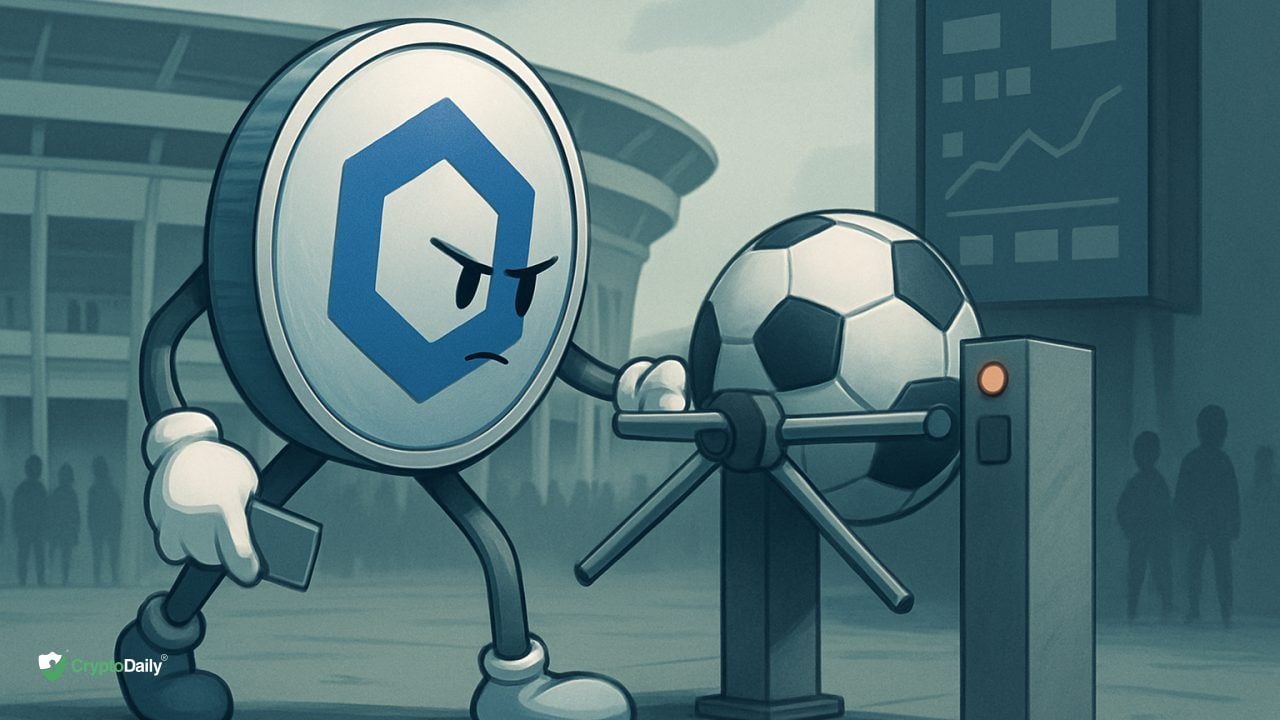
Sports are the ultimate mainstream funnel. If crypto is going to win new users fast, it won’t be via whitepapers—it will be via matchday moments that feel instant, fair, and fun. With the FIFA World Cup on the horizon, prediction markets are testing whether reliable sports data on-chain can make that moment happen.
This article breaks down how World Cup prediction markets actually settle outcomes, where Chainlink (LINK) fits, what’s changed in 2026, and how these platforms compare to sportsbooks and regulated event exchanges. You’ll also find risk checklists, common mistakes to avoid, and a practical view on whether sports data can be crypto’s mainstream hook.
Editor's note: The ADI Predictstreet news validated what we’d been hearing privately: official partnerships won’t move without enterprise-grade resolution. My small positions during international friendlies also reminded me how fast gas and spreads can ruin expected value if you aren’t prepared. The tech works; execution discipline still decides outcomes. — Elliot Veynor
Yes—sports data could be crypto’s most credible mainstream hook in 2026, and LINK is positioned at the center because many World Cup markets are choosing Chainlink for oracle-secured resolution and automated payouts. Adoption momentum is real, volumes are up, and official partnerships have arrived; but the outcome hinges on UX, clear market rules, and regulators’ tolerance. For users, the appeal is faster settlement and transparent rules; for builders, it’s an oracle stack battle won on reliability, not hype.
- Official partner momentum: ADI Predictstreet chose Chainlink as exclusive oracle for FIFA World Cup 2026 markets (PR Newswire / ADI Predictstreet press release).
- User demand spike: Monthly prediction-market volume jumped to about $24B by April 2026, up from under $5B in Sep 2025 (The Washington Post).
- Pre‑tournament interest: Polymarket and Kalshi’s World Cup winner contracts together passed $2B lifetime volume (Bitbase (Medium)).
- Builder activity: Myriad selected Chainlink for World Cup markets and launched a $100k trading competition (LCX Crypto News).
How do World Cup prediction markets actually work—and where does Chainlink fit?
On-chain prediction markets tokenize outcomes. A “Yes” share pays $1 if the event occurs; a “No” share pays $1 if it doesn’t. Market prices—say, $0.63 for “Yes”—imply probabilities (~63%). After the match, a smart contract needs a trusted answer to settle who won. That trusted answer is the oracle layer’s job.
Chainlink supplies decentralized oracle networks that fetch and agree on off-chain data, then deliver it to smart contracts. For sports, the critical pieces are: timely, unambiguous final scores and event status (completed, abandoned, rescheduled). Chainlink’s infrastructure can also automate settlement flows—so when a match ends and the outcome is final per predefined rules, smart contracts can trigger payouts programmatically.
In 2026, real deployments have clarified this role. ADI Predictstreet, the first Official Prediction Market Partner of the FIFA World Cup 2026, announced it adopted Chainlink as its exclusive oracle infrastructure to power market resolution and instant payouts for World Cup markets (PR Newswire / ADI Predictstreet press release). Myriad likewise chose Chainlink as its exclusive oracle for its World Cup slate and paired the launch with a $100,000 trading competition (LCX Crypto News).
The oracle is only as good as the rules it’s enforcing. Most reputable markets publish a resolution spec: which data sources are authoritative, how extra time or penalties are counted, what counts as abandonment, and dispute windows. Chainlink’s value-add is reducing single points of failure so a bad API or delayed feed won’t mis-settle a market.
Why does 2026 look like a watershed for sports prediction markets?
Two forces have converged: demand and institutional-grade plumbing. On demand, mainstream attention and capital have arrived. The Washington Post reported that monthly global trading volume across leading prediction-market platforms climbed from under $5B in September 2025 to roughly $24B by April 2026, citing a Pew analysis of The Block’s data (The Washington Post).
On the plumbing side, official partnerships and product polish are closing the trust gap. ADI Predictstreet’s World Cup partnership with FIFA and its choice of Chainlink for oracle infrastructure signal that “who resolves the outcome” is now table stakes for big events (PR Newswire / ADI Predictstreet press release).
Pre-tournament positioning is reflecting this confidence. A breakdown close to kickoff put Polymarket’s “World Cup Winner” market at roughly $1.9B lifetime volume and Kalshi’s equivalent at about $132M as of June 8–11, 2026—crossing $2B combined (Bitbase (Medium)). For builders, that’s a signal that onboarding UX and routing liquidity to marquee markets can pay off.
Finally, incentives help. Myriad’s $100k competition is a classic bootstrapping play—draw traders for the World Cup and keep them after with product depth and better risk tools (LCX Crypto News). The winners will be products that collapse settlement time, explain market rules plainly, and make self-custody less intimidating.
What separates sports prediction markets from traditional sportsbooks—and from regulated event exchanges?
Sportsbooks, on-chain markets, and regulated event exchanges overlap in function but differ in custody, resolution, and rules. Here’s a side-by-side view:
Feature Centralized Sportsbook On-Chain Prediction Market Regulated Event Exchange (e.g., Kalshi) Custody House wallets User self-custody; smart contracts Brokerage-like accounts Settlement Logic Bookmaker terms; internal data feeds Smart contract + oracle-resolved rules Exchange rulebook; regulated procedures Transparency Limited; closed odds models On-chain markets; public rules and outcomes Public rule filings; audited processes KYC/Access Strict; geo-restricted Varies by app; some KYC, some not; geo blocks may apply Strict KYC; jurisdiction-limited Fees/Edge House margin baked into odds Trading fees + spread; no house opposing you Exchange fees + spread Liquidity Deep on top leagues Concentrated in marquee markets; variable depth Grows with interest; concentrated in headline events Disputes Support team resolution On-chain rules, oracle reports, sometimes community disputes Formal dispute pathways under oversight
For crypto-native users, on-chain markets bring transparency and programmable settlement. For traditional bettors, sportsbooks still feel simplest—and many are legally accessible where on-chain apps are geo-blocked. Regulated event exchanges sit between, with legal clarity and more finance-like market microstructure.
When sports meet crypto, the key experiential win is instant, rule-based payouts. That’s where reliable oracles matter most. If a final score is uncontroversial and the oracle is decentralized, “who won” becomes a machine instruction, not a customer support ticket.
Is LINK the linchpin here—or just invisible middleware?
For end users, LINK can feel invisible. You fund a wallet, trade outcome tokens, and get settled—often without touching LINK. For developers and protocols, however, Chainlink is often a core dependency for secure data delivery and automation. Demand for oracle services can translate into network usage and fees funded in LINK or converted under the hood, depending on integration.
The important mental model: value accrues at multiple layers. Attention accrues at the app layer (the market you trade). Trust accrues at the oracle layer (the resolver you rely on). And liquidity accrues wherever the best UX and rules attract traders. LINK’s role is to make the oracle layer credible and robust across chains and events.
From a risk standpoint, this also means concentration risk exists. If many World Cup markets standardize on the same oracle provider, the upside is consistency and speed; the downside is correlated failure in a highly visible moment. Diversified oracle configurations, clear fallbacks, and transparent incident playbooks help mitigate that.
What are the biggest risks—and how do you manage them during a global tournament?
Event markets compress time and emotions. Mistakes compound quickly on matchday. The following risks are the ones that most often turn wins into headaches:
- Market rule ambiguity: If rules don’t specify extra time, penalties, or abandonment, disputes follow. Favor markets with explicit resolution specs and reference sources.
- Oracle latency or failure: Even robust networks can see delays. Pick platforms that disclose their oracle setup, redundancy, and dispute process.
- Smart contract bugs: Audits reduce risk but don’t eliminate it. Limit exposure per market; avoid newly deployed contracts without audit history.
- Regulatory and KYC issues: Some users are blocked by jurisdiction; circumventing blocks can expose you to account freezes or legal risk. Know your local rules.
- Custody and wallet safety: Use hardware wallets for larger balances; consider session wallets with spending limits for live trading.
- Gas and network congestion: Big matches can spike gas. Keep enough buffer; consider L2s with predictable fees.
Pro tip: Before trading, read the market’s resolution rules end to end. If you can’t answer “Which sources define the final score, and how are abandoned matches handled?” in one sentence, skip it.
The 2026 cycle puts this to the test. ADI Predictstreet’s integration of Chainlink for instant payouts raises the bar for resolution speed and clarity (PR Newswire / ADI Predictstreet press release). Myriad’s competition illustrates how incentives pull in traders—but once they arrive, the trust factors above decide if they stay (LCX Crypto News).
How do payouts stay fair when matches get chaotic?
World Cup matches are orderly until they aren’t—think VAR overturns, extended stoppage, weather delays. High-quality markets plan for chaos in their rules and in their oracle design.
Resolution rules should define primary and secondary sources, the definition of “final” (including penalties), cutoff times, and abandoned scenarios. Oracles then ingest the agreed data, reach consensus off-chain or on-chain, and post the verdict to the contract, which pays out. If a source is down, redundancy kicks in. If the situation is ambiguous, the market may pause and escalate to a dispute path.
Some platforms add community-based checks—a short challenge window where participants can flag an incorrect resolution. This adds friction but prevents catastrophic mis-settlements. The balance to strike is speed vs. certainty. A one-hour delay to avoid a wrong payout is usually worth it on headline markets.
For promotions (like raffles or bracket lotteries), verifiable randomness tools are often used so no operator can skew draws. Chainlink VRF is a popular primitive for that category; it’s cryptographically provable and public, which aligns with the “don’t trust, verify” ethos.
What should a new participant check before placing a World Cup market trade?
Think like a referee before you think like a fan. Here’s a pre‑trade checklist that saves grief:
- Rules read-through: Clarify how extra time and penalties are counted; confirm abandonment policy and reference sources.
- Oracle disclosure: Look for the oracle provider, redundancy, and dispute process. ADI Predictstreet and Myriad both publicly cite Chainlink for their World Cup markets (PR Newswire / ADI Predictstreet press release; LCX Crypto News).
- Jurisdiction checks: Understand KYC and local regulations; avoid VPN workarounds that could jeopardize funds.
- Contract provenance: Prefer audited, battle-tested contracts; skim docs and changelogs.
- Fee math: Factor trading fees, spreads, gas, and potential slippage into expected value.
- Bankroll sizing: Cap per‑match risk; consider setting spend limits on session wallets.
Once you’re set, start with liquid, well-understood markets (match winner, total goals). Niche props can be fun but thinner liquidity magnifies spreads and slippage.
After kickoff: Can sports data keep users in crypto post‑World Cup?
Onboarding during a mega‑event is half the story. Retention is the other half. Sports data can anchor a habit loop—regular fixtures, data-driven narratives, familiar stakes. If settlement is fast and fair during the biggest stress test, trust extends to smaller leagues and off‑season props.
But long-term stickiness needs more than oracles. It needs interoperable wallets that feel like modern apps, fiat on- and off‑ramps that don’t stall, and cross‑chain liquidity routing that hides complexity. In short, users need to forget they’re using blockchains while still keeping the guarantees that make them better.
If 2026 proves that oracle-secured sports results can resolve instantly and fairly at scale, the next hook may be composability—parlays that span sports and macro events, or hedges that blend with on-chain portfolios. That’s a different product from a sportsbook—and it’s where crypto-native design can differentiate.
Common Mistakes
- Skipping the rulebook: Trading without reading the market’s resolution rules. Fix: Only trade markets with explicit, unambiguous specs.
- Overexposing to one match: Allocating too much to a single knockout game. Fix: Cap per‑match exposure and pre‑commit to a bankroll plan.
- Ignoring jurisdictional limits: Using a VPN to bypass blocks. Fix: Respect local rules; choose platforms you can legally use.
- Underestimating fees: Forgetting spreads, trading fees, gas, and slippage. Fix: Model all costs before sizing positions.
- Trusting screenshots: Placing trades based on social media “edges.” Fix: Verify data and injury news with primary sources.
- No wallet hygiene: Live-trading from a single hot wallet with large balances. Fix: Use session wallets and hardware protection for treasury funds.
For deeper, balanced coverage across market structure, DeFi, and Web3 UX, visit Crypto Daily.
Frequently Asked Questions
What happens if a match is abandoned or postponed?
Good markets define abandonment scenarios up front—often voiding or extending the market if play doesn’t reach a specified threshold or if the match is replayed within a set window. Check the rulebook: it should name the authoritative source and timeline for rescheduling.
Do I need to hold LINK to use these markets?
Usually no. End users interact with the app’s supported tokens (often stablecoins). LINK primarily powers the oracle infrastructure behind the scenes, though some integrations may settle oracle fees in LINK under the hood.
How fast are payouts after full time?
Where resolution is unambiguous and the oracle feed is live, payouts can be near‑instant once the oracle posts to the contract. If there’s ambiguity or a dispute window, expect a delay to ensure accuracy—especially on high‑stakes matches.
Are these markets legal in my country?
It depends. Some jurisdictions treat on-chain prediction markets like gambling; others have no clear rules. Many apps geo‑restrict. Using workarounds can risk freezes or loss of access. Always review local regulations and platform terms before trading.
What stablecoin should I use for matchday trading?
Favor widely used, reputable stablecoins supported by the platform. Spread balances across two if you’re trading size to reduce counterparty or depeg risk. Consider L2s for lower fees and faster confirmations during peak times.
Could oracle manipulation change a match result?
No oracle can change the real‑world result, but a bad feed could mis‑report it. Decentralized oracles with multiple sources and dispute processes reduce this risk. Choose platforms that disclose their oracle design and fallbacks.
What if gas fees spike right before kickoff?
Pre‑fund wallets on your chosen network and set prudent gas limits. Consider placing orders earlier or using L2 networks with more predictable fees. Avoid last‑second market orders that can suffer slippage in congestion.
Disclaimer: This article is provided for informational purposes only. It is not offered or intended to be used as legal, tax, investment, financial, or other advice.
0
0

 Manage all your crypto, NFT and DeFi from one place
Securely connect the portfolio you’re using to start.


0
0

0
0

0
0