
MoneyGram MGUSD Stablecoin Launch Enters $320B Market with Stripe-Backed Issuer

0
0
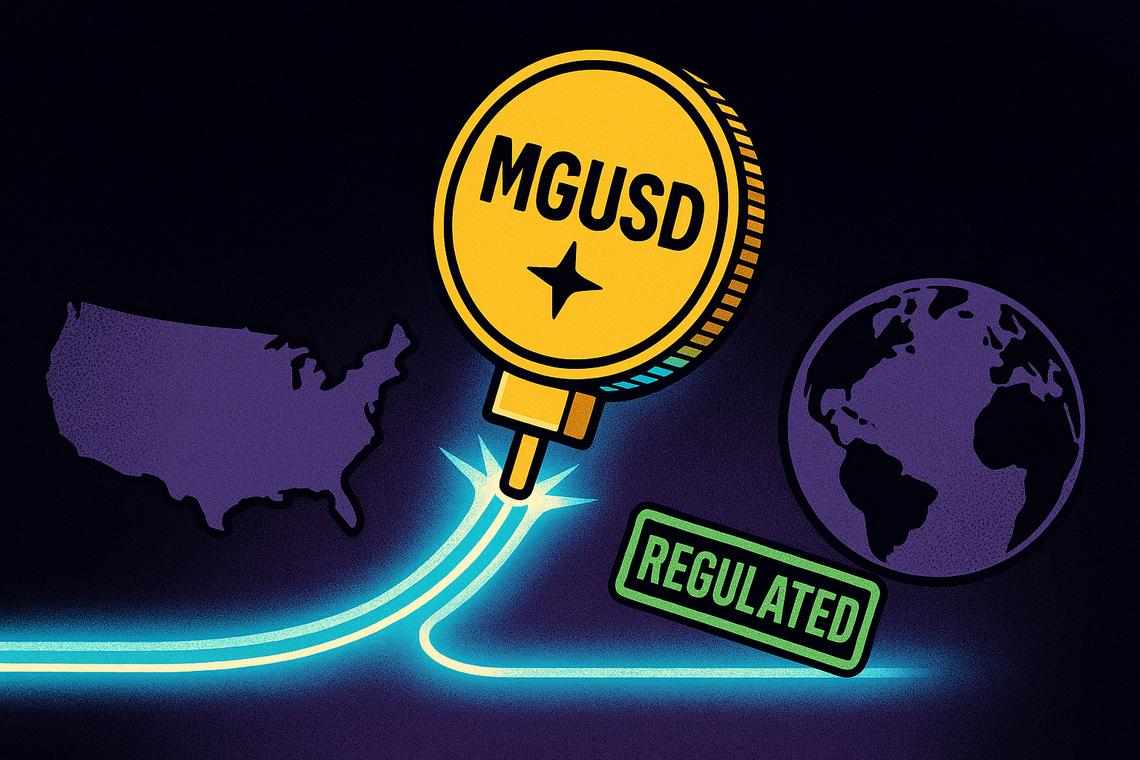
MoneyGram is entering the stablecoin market with its own native dollar-backed token, a move that puts one of the world’s most recognizable money transfer brands directly inside a $320 billion digital asset space already dominated by giants. The company announced the MoneyGram MGUSD stablecoin launch on June 2, positioning MGUSD as more than another digital dollar. Instead, MoneyGram is framing it as a financial access tool for families sending money across borders and for the roughly 1.4 billion people worldwide who remain underserved by traditional banking systems.
That framing matters because MoneyGram is not starting from scratch. It brings over 60 million active users and nearly 500,000 retail locations to the table, giving MGUSD a distribution base that most crypto projects can only dream about. As a result, the launch arrives with a built-in audience and a clear use case.
Still, the company is stepping into a crowded market. The stablecoin sector has expanded quickly, and the MoneyGram MGUSD stablecoin launch comes as dominant players such as Tether’s USDT and Circle’s USDC continue to control much of the supply and transaction volume.
MoneyGram launches MGUSD on Stellar blockchain
How MGUSD works and where the funds will sit
MGUSD runs natively on the Stellar blockchain, a network built for fast, low-cost cross-border transactions that fits MoneyGram’s core business. M0, a smart contract infrastructure provider, manages MGUSD’s minting and burning processes, so token supply expands and contracts based on real demand rather than manual intervention.
On the custody side, MGUSD funds will be held in Fireblocks wallets and then routed to individual customer wallets directly integrated into the MoneyGram app. That setup keeps technical complexity out of the user experience while maintaining the security standards expected from regulated financial products.
United States first, global scaling later
MGUSD will initially launch in the United States, with global scaling planned as the next step. In practice, that US-first approach reflects both regulatory caution and market testing logic, allowing MoneyGram to work within an established framework before expanding into markets where stablecoin rules are still being written.
Bridge, Stripe and the GENIUS Act framework
One of the most important structural details behind the MoneyGram MGUSD stablecoin launch is the regulated issuer. Bridge, a company owned by Stripe, will serve as the regulated issuer for MGUSD under the GENIUS Act framework.
That partnership signals that MoneyGram is not improvising on compliance. Stripe’s acquisition of Bridge was widely seen as a major bet on stablecoin infrastructure, and plugging Bridge into the MGUSD issuance chain gives the product institutional credibility from day one. The GENIUS Act, which established clearer rules for stablecoin issuers in the US, makes this structure possible. Just as importantly, choosing a Stripe-backed entity as the regulated issuer sends a message to both regulators and institutional partners.
Why the stablecoin market is hard to break into
Stablecoin market cap hits $320 billion
The stablecoin sector has grown at a remarkable pace. Its market capitalization has reached approximately $320 billion in just five years, reflecting rapid adoption across trading, payments and remittances.
However, the market is still concentrated. Tether’s USDT and Circle’s USDC sit at the top by a wide margin, commanding the largest shares of supply and transaction volume. That matters because even though switching costs in stablecoins can be low, network effects are powerful. Traders, exchanges and payment platforms usually default to what is already liquid and trusted.
MoneyGram’s distribution advantage
MoneyGram CEO Anthony Soohoo addressed that reality directly. “The stablecoin market has largely focused on the asset itself,” he said. “MoneyGram is taking a fundamentally different approach. Starting with our distribution platform, we’re using stablecoin as a foundation to build future applications on our global network.”
That distinction is important. Where Tether and Circle built assets and then sought distribution, MoneyGram already has the distribution and is now layering the asset on top of it. More than 70% of MoneyGram’s transactions reportedly flow through its digital channels, which means MGUSD could be embedded into financial workflows that tens of millions of people already use regularly.
Whether that reversal of the usual crypto launch playbook is enough to win meaningful share is the bigger question. The advantage is real, but scale in stablecoins ultimately comes from where people spend, save and settle, not just where they receive.
CLARITY Act stablecoin regulation remains uncertain
MGUSD is launching against a broader regulatory backdrop that remains unsettled. The CLARITY Act, a wider piece of digital asset market structure legislation, has yet to be approved, and prediction markets place the odds of passage at around 55%.
That uncertainty matters for MoneyGram. Unlike yield-focused stablecoin projects, the company’s model leans heavily on cross-border payment utility. A clearer regulatory structure would make it easier to scale globally, bring in institutional partners and expand into markets where local regulators watch US policy closely.
Senator Cynthia Lummis offered a more optimistic read. “We are closer to a functioning digital asset market structure than we have ever been,” she said recently. “Now is not the time to flinch.” Whether that optimism translates into legislative momentum before year-end remains to be seen.
For now, the GENIUS Act framework gives MGUSD enough cover for its US launch. Even so, the wider regulatory picture will shape how fast MoneyGram can move beyond its home market and how confidently partners and customers in other jurisdictions engage with the product.
If the CLARITY Act clears, MoneyGram’s stablecoin could operate in a more favorable environment. If it stalls, the company will have to navigate a patchwork of rules market by market, which is slower and more expensive.
FAQ
What is MGUSD and who launched it?
MGUSD is a native US dollar stablecoin launched by MoneyGram on June 2. It is designed to support cross-border payments and provide financial access to underserved populations worldwide.
On which blockchain does MGUSD operate?
MGUSD operates natively on the Stellar blockchain, with M0’s smart contract infrastructure handling the minting and burning processes.
Who will serve as the regulated issuer for MGUSD?
Bridge, a company owned by Stripe, will serve as the regulated issuer for MGUSD under the GENIUS Act framework.
What is the current regulatory status of the CLARITY Act?
The CLARITY Act’s approval remains uncertain, with prediction market odds sitting at around 55% at the time of MoneyGram’s announcement.
How does MoneyGram plan to differentiate MGUSD in the stablecoin market?
Rather than focusing only on the stablecoin asset itself, MoneyGram is using its existing global distribution network, including over 60 million active users and nearly 500,000 retail locations, as the foundation for MGUSD.
0
0


 Manage all your crypto, NFT and DeFi from one place
Securely connect the portfolio you’re using to start.

0
0

0
0

0
0

0
0