
Solana Co-Founder Anatoly Yakovenko Calls His Wife the “Invisible Solana Founder”

0
0
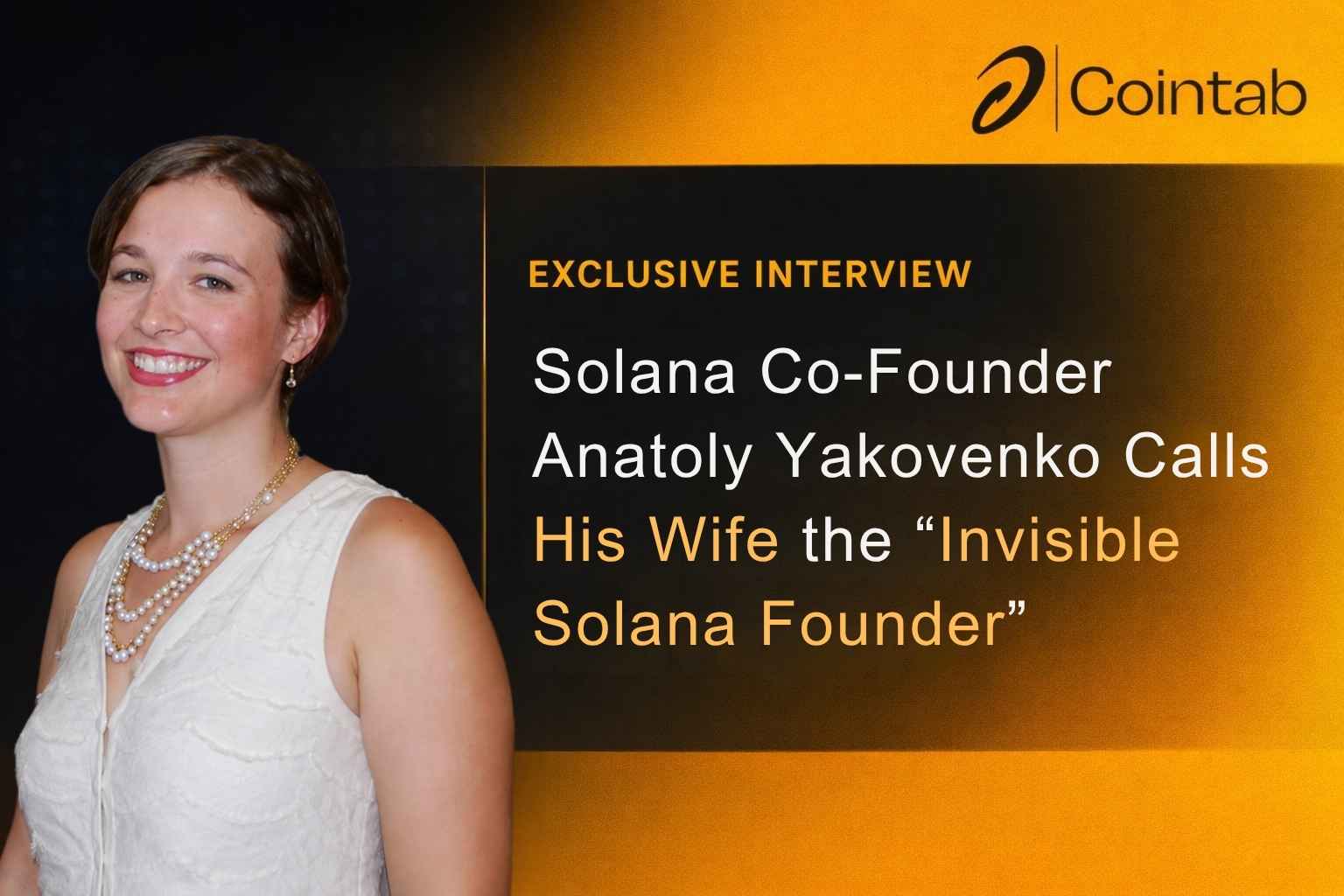
Behind every successful startup is a Behind-the-Scenes (BTS) story that rarely makes the headlines. While it is common knowledge that Anatoly Yakovenko is the engineer behind the Solana network, the blockchain’s co-founder recently revealed that he believes the journey was never his alone.
In a conversation with Life of Luba, Yakovenko opened up about some of the sacrifices his wife, Laura Skelton, made to support the creation of the Solana blockchain during its most uncertain days. He also gave a brief history of his childhood and some roles his parents played that shaped both his career and the network’s rise.
Beyond the personal stories, the Solana co-founder shared some lesser-known moments about the blockchain’s early days and how the collective efforts of him and his team fueled Solana’s growth.
The Invisible Solana Co-founder
During the conversation, the host, Luba, noted that the Solana co-founder often referenced his wife while discussing pivotal moments in his journey and, after pointing out that they had been married for many years, she asked how they met. Yakovenko revealed that their paths crossed at a friend’s 30th birthday party.
Luba then followed up by asking Yakovenko whether he considers his wife as an “invisible co-founder” of Solana. The network’s co-founder answered, “Absolutely, yeah.” He continued, “We had two kids and a start-up, and she had a super stressful job, and had to kind of carry the family during that whole phase where it looked more like we were going to fail and we weren’t going to succeed.”
Yakovenko also mentioned how Laura gave him vital strategic advice when he first thought of Solana. Based on the experience she gathered while working on a Facebook competitor at Columbia, the Solana co-founder recounted that his wife warned him that there is usually a short runway, about a six-month window for founders to secure funding and launch an idea before competitors beat them to it, thus pushing him into action.
Looking back on his early years, Yakovenko recounted his childhood and some of the sacrifices his parents made, which likely influenced his journey to co-founding Solana.
In 1992, Yakovenko and his family emigrated from the Soviet Union to the United States, exposing him to an environment that brimmed with educational and technological opportunities. A year later, his parents, who had to make career changes, invested in his future by purchasing a computer for him, a decision that sparked his passion for programming.
Solana: A Product of Teamwork
While family provided the foundation he needed to keep going, the Solana co-founder also emphasized the importance of surrounding oneself with the right people when building a startup.
“I don’t think it matters what phase of your life you start a company. You can do it at any phase because I literally had a newborn when I did it. So what you need are really good people you can trust and delegate to. That’s the most important part,” he stated.
For Yakovenko, these trusted individuals included Solana co-founder Raj Gokal, other team members, and the VCs that provided funding for the startup. According to him, the two co-founders had a “work marriage” relationship where they constantly challenged each other’s thinking whenever they had tough company problems, until they arrived at the best decision.
The two complemented each other. Raj, with his business management skills, and Yakovenko, who was purely an engineer. The former also encouraged the latter to build his Twitter personality, which ultimately fueled Solana’s massive community growth.
More than that, Yakovenko was fortunate to have a good team, whom he described as good, honest, hardworking, and smart people. He added, “I was able to trust them to just go on and execute on the big parts of the system or engineering” without having to oversee every detail. In his words, “I basically could delegate completely and blindly.”
The Solana co-founder also went further to talk about how venture capital firms such as Multicoin Capital, Slow Ventures, and Foundation Capital provided more than just funds. These platforms, especially Multicoin, acted like an extension of the Solana team, offering support in non-engineering areas, such as marketing, PR, business development, and strategic network introductions.
Lesser-Known Stories Behind Solana’s Rise
In his conversation with Life of Luba, Yakovenko also offered a glimpse of some of the lesser-known stories behind Solana’s development. For instance, before founding Solana, Yakovenko and his engineering group (made up of his friends from Qualcomm and the underwater hockey community) built GPU machines for deep learning. To fund the project, they began mining cryptocurrency, which ultimately motivated him to study more about blockchain technology.
Another interesting story was how Yakovenko had a eureka moment that led to the birth of Proof of History. Yakovenko revealed that after having two coffees and a beer at Café Del Sol in San Francisco, he had trouble falling asleep.
While he was wide awake, pacing until 4:00 AM, he figured out the concepts of the Proof of History, a core innovation of the Solana blockchain.
Recounting how Solana came to life, Yakovenko mentioned that the key driver to the creation of the blockchain was a lack of specific search terminology. After his eureka moment at 4:00 AM, he didn’t know the specific term to Google, and so he thought he had figured out a unique concept.
But unknown to him, his concept was already an advanced mathematical construct called “Verifiable Delay Functions” (VDFs) that researchers at Stanford were already exploring. His naivety gave him blind confidence and momentum to build the Solana blockchain.
While Solana is now recognized as one of the leading blockchain networks, its success didn’t happen overnight. Another interesting revelation from the interview, which the Solana community might be unaware of, was Yakovenko’s claim that he and Raj had to attend literally 1,000 meetings before they could get funding for their startup.
Final Thoughts
Although Solana has grown into one of the prominent blockchains, its technology alone didn’t drive its growth. The success of the blockchain can also be attributed to the support of Yakovenko’s wife, Solana’s “invisible co-founder.” Other drivers include his parents’ sacrifices, his partnership with Raj, his team members’ efforts, and the support of early investors who believed in the project’s potential.
The post Solana Co-Founder Anatoly Yakovenko Calls His Wife the “Invisible Solana Founder” appeared first on CoinTab News.
0
0

 Manage all your crypto, NFT and DeFi from one place
Securely connect the portfolio you’re using to start.

0
0

1
0

0
0

0
0