0
0

$XRP just received one of its strongest institutional signals in months. According to the latest ETF inflow data, U.S. XRP spot ETFs purchased $38.04 million worth of XRP in a single day — a clear sign that institutional players are stepping in early.
For ETFs to load up this aggressively — and this early — is a power move.
Institutions do not allocate capital unless they expect long-term stability, reduced regulatory uncertainty, or a potential upside breakout.
The timing is especially notable: this surge in ETF buying comes right after weeks of tight consolidation, reinforcing the idea that accumulation may finally be turning into momentum.
ETFs represent traditional finance. Their flows reflect the behavior of asset managers, pension funds, and large investors.
When these players load up on XRP:
This is the kind of “quiet accumulation” phase that historically precedes strong moves.
The buying pressure isn’t just institutional.
An 85% spike in XRP trading volume shows that retail traders are reacting to ETF inflows.
Retail typically chases momentum — but in this case, retail is reacting to institutional cues.
That’s exactly how early bull phases look: smart money buys first, retail follows, liquidity deepens, volatility expands upward.
XRP has spent a long period consolidating, building a stable base around the $2 level. The recent inflows suggest that:
If ETF inflows remain steady over the next few sessions, XRP could establish a stronger liquidity floor — which often sets up the next major move.
XRP price is trading around $2.06, sitting directly above the massive psychological level at $2 — marked by the orange support line.
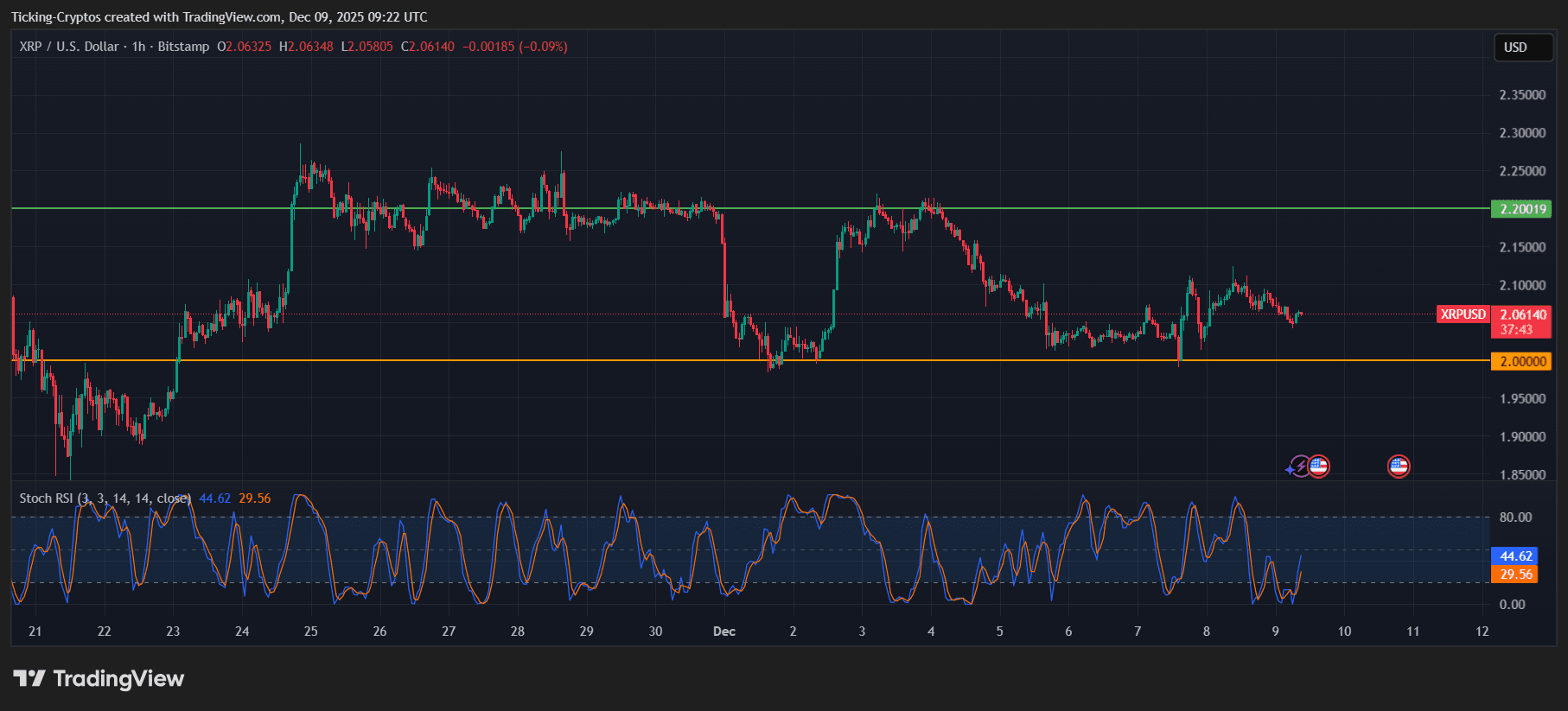
XRP/USD 1-hour chart - TradingView
As long as XRP stays above $2.00, the bullish structure remains intact.
If $2 fails, short-term liquidity pockets may open toward $1.85–$1.90, but current ETF flows significantly reduce the probability of a sharp breakdown.
The Stoch RSI also shows XRP rising from oversold levels, hinting at a possible near-term bullish reversal.
0
0
 Manage all your crypto, NFT and DeFi from one place
Securely connect the portfolio you’re using to start.


0
0