
Thailand Audits USDT Trades As Foreign Sellers Reach 40%

0
0
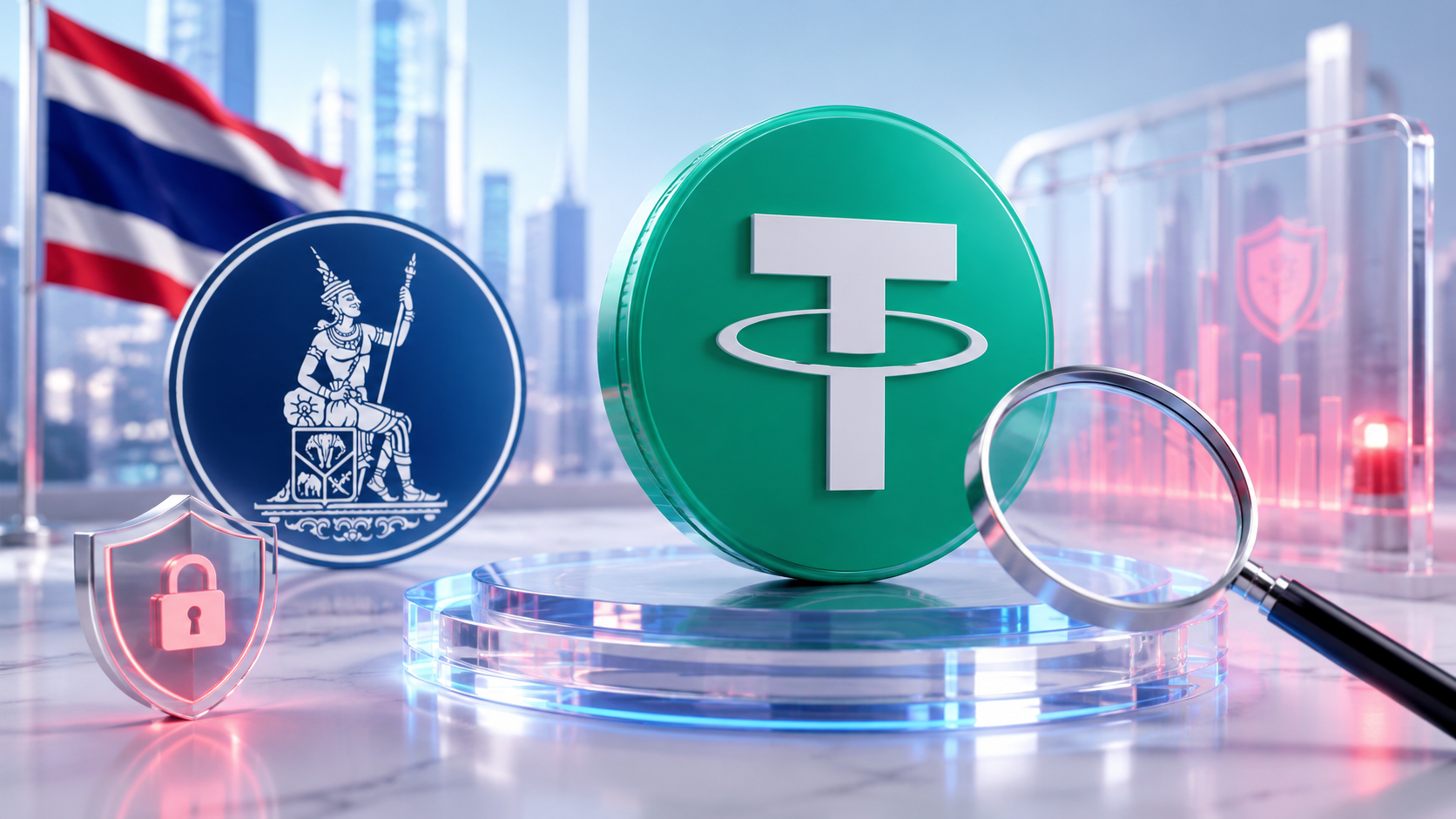
Thailand’s central bank and securities regulator have opened a joint audit into high-volume USDT trading as authorities widen a crackdown on money laundering and unregistered foreign activity.
The Bank of Thailand is using transaction analytics alongside the Securities and Exchange Commission to examine stablecoin trades structured to conceal ownership or bypass domestic remittance channels. Suspicious findings from the USDT trading audit have been referred to the SEC for potential disciplinary or statutory action.
Foreigners account for roughly 40% of USDT sellers operating through Thai platforms, a share Bank of Thailand Governor Vitai Ratanakorn said should not be participating in the domestic market.
USDT represents about 52% of digital-asset trading in Thailand. Total crypto turnover averages around 2.8 billion baht ($86 million) per day, below the 10 billion to 15 billion baht traded daily through the country’s foreign exchange market.
The stablecoin review forms part of a fourth-quarter enforcement package covering cash deposits, banknote exchanges, digital gold, mule accounts and online gambling networks. Individuals depositing at least 5 million baht in cash will be required to document the source of the funds.
Chinese-Linked Network Faces Separate $300M Probe
Thailand’s Department of Special Investigation is separately pursuing a Chinese-linked network accused of laundering proceeds from online scams and gambling through illegal cryptocurrency mining.
The network handled more than 10 billion baht, or about $304 million, in suspected annual financial flows. Investigators seized 6,390 mining machines and estimated that the operation consumed about 953 million baht of stolen electricity. Arrest warrants were issued for four Chinese financiers and four Myanmar nationals.
A warrant also names Chinese businessman Wang Yicheng, whose alleged network used illegal mining operations to generate revenue and launder criminal proceeds. A crypto wallet opened in Wang’s name received at least $9.1 million from an address associated with investment scams between 2021 and 2022, although investigators have not established whether he controlled the account.
The Thai enforcement push follows a wider crackdown on overseas crypto scam centers and laundering networks operating across Southeast Asia.
USDT has become a recurring part of those investigations because it combines dollar liquidity with rapid cross-border settlement. Tether can also freeze specific balances, including the USDT held across 131 sanctioned TRON walletsdesignated by the U.S. Treasury in July.
Thailand Advances Baht Stablecoin Framework
Thailand is tightening oversight of dollar stablecoins while expanding controlled tests for baht-backed digital settlement.
The Bank of Thailand’s programmable payment sandbox allows regulated companies to test blockchain-based payment units backed by Thai baht deposits equal to or greater than the tokens issued. Bitkub Blockchain Technology, TrueMoney and other participants are running projects involving tokenized-asset payments, escrow and bridging through 2026 and early 2027.
A broader baht-pegged stablecoin proposal would require full 1:1 reserve backing. The central bank plans to open a public consultation before the end of 2026, with initial use limited to settlement between regulated financial institutions.
The post Thailand Audits USDT Trades As Foreign Sellers Reach 40% appeared first on Crypto Adventure.
0
0

 Manage all your crypto, NFT and DeFi from one place
Securely connect the portfolio you’re using to start.

0
0

0
0

0
0

0
0