
Bitcoin Macro Outlook Weakens as Fed Hike Bets, Treasury Yields and ETF Outflows Pressure BTC

0
0

The Bitcoin macro outlook has turned more difficult as traders price a renewed Federal Reserve rate hike risk for December 2026. Bitcoin traded near $77,000 as higher Treasury yields, a stronger dollar, and ETF outflows tested market confidence.
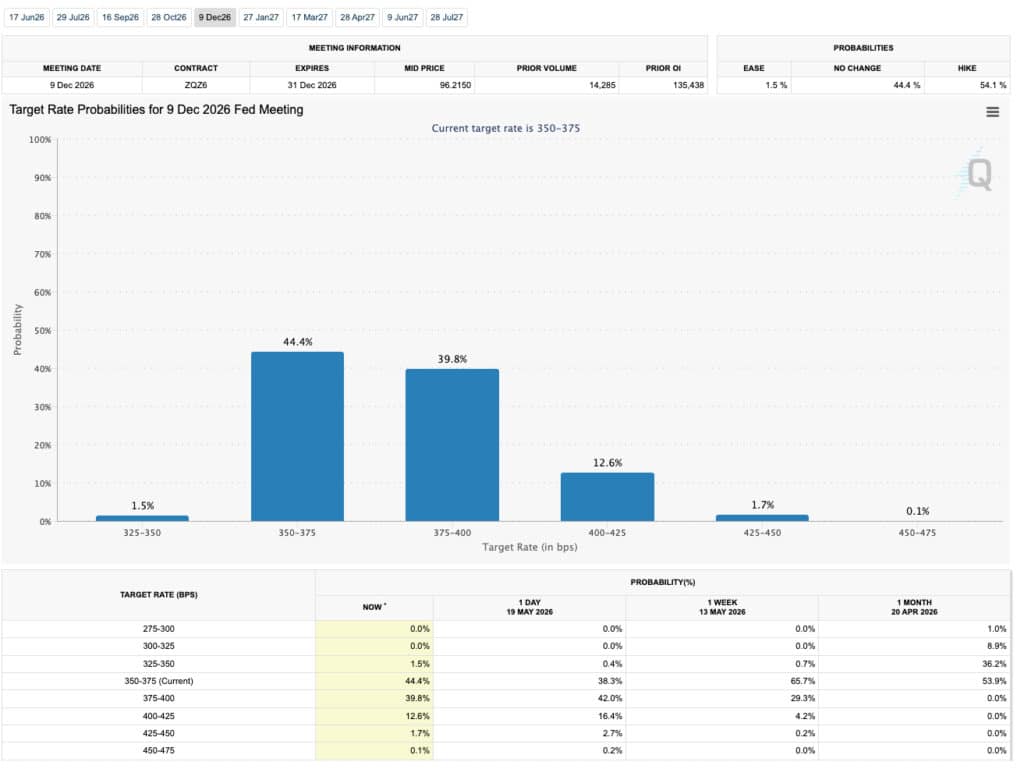
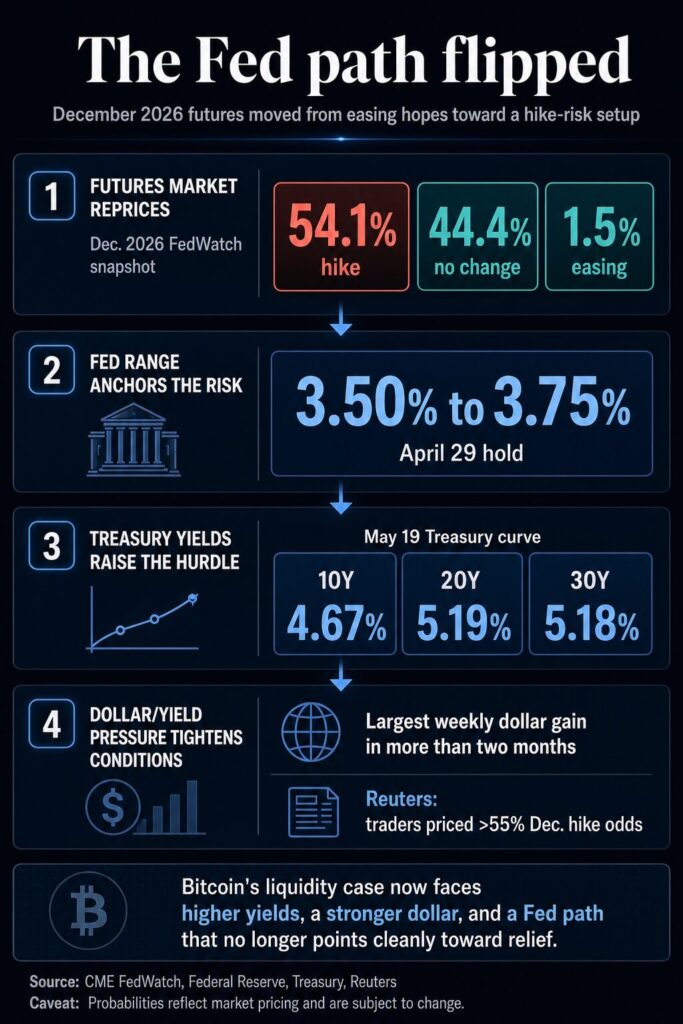
CME FedWatch showed a 54.1% chance of a December rate hike as of May 20, 2026. It also showed 44.4% odds of no change and 1.5% odds of easing. The shift changed the tone around Bitcoin.
Bitcoin Macro Outlook Weakens as Fed Hike Bets Rise
The Bitcoin macro outlook now rests on a harder policy backdrop. The Federal Reserve held rates at 3.50% to 3.75% on April 29. Yet futures pricing later moved toward another possible hike.
That change matters because Bitcoin had benefited from hopes of easier money. Many investors expected cooling inflation, future Fed cuts, and better liquidity. The market is now questioning that view.
Bitcoin is now facing pressure from several directions. Treasury yields are rising. The dollar is strengthening. Spot Bitcoin ETFs are seeing fresh outflows.
The Bitcoin macro outlook is no longer driven only by scarcity demand. It is also being shaped by portfolio choices. Investors are comparing Bitcoin with cash, bonds, and other income-producing assets.
Fed Bets Pressure Bitcoin Demand
The December rate-hike odds have changed the market message. Traders are no longer focused only on when the Fed may cut. They are also watching whether tighter policy could return.
This creates a direct challenge for Bitcoin. Higher rates usually reduce demand for volatile assets. They also delay the liquidity boost that often supports crypto markets.
Treasury Yields Raise the Hurdle
The Treasury market has added more pressure. The 10-year yield stood at 4.67% on May 19. The 20-year yield reached 5.19%, while the 30-year yield stood at 5.18%.
Those levels make government debt more attractive. Bitcoin does not pay income. That makes the asset harder to defend when safe yields rise.
ETF Outflows Test Market Strength
Spot Bitcoin ETFs gave institutions a simple route into BTC. They also gave the market a daily view of demand. That demand is now being tested.
Farside Investors showed $648.6 million in U.S. spot Bitcoin ETF outflows on May 18. Another $331.1 million left on May 19. That placed two-day exits near $980 million.
The Bitcoin macro outlook depends on whether these flows stabilize. Short outflows may show risk control. Longer redemptions could show weaker institutional appetite.
Support Zone Becomes Key Signal
Bitcoin’s $76,000 to $77,000 zone has become a major support area. A strong hold could show that buyers are still active despite macro stress.
A break below that area would change the signal. It could raise the risk of a move toward $70,000. It may also show that bond-market pressure is moving into Bitcoin through ETF channels.
Strong Dollar Adds Another Risk
A stronger dollar also hurts the liquidity case. It tightens global financial conditions. It can reduce demand for risk assets across markets.
The Bitcoin macro outlook would improve if the dollar softened. Lower yields would also help. A return to ETF inflows could quickly weaken the bearish case.
Conclusion
However, the Bitcoin macro outlook remains temperamental as traders watch the Fed, Treasury yields and the dollar. The ETF flows: long-term Bitcoin scarcity case vs. short-term macro stress
Sentiment could improve on a reclaim of $82,000. It would demonstrate that buyers are take-up tighter conditions. In the meantime, the $76,000 to $77,000 area stays the first point of test.
Appendix: Glossary of Key Terms
Fed rate hike: The US Federal Reserve increase of the Fed Funds target interest rate to tame inflation.
CME FedWatch: A market-play tool to follow how the options both in EUR and USD-based futures, decide what the Federal Reserve is more likely going to do next.
Treasury Yields: Bond returns of the U.S. debt instrument that drives risk appetite
Money flowing out of exchange-traded funds, often signifies weaker demand.
Dollar Strength: A stronger U.S. dollar that can pull Bitcoin and other risk assets lower.
Support Zone: A price area in which buyers could protect Bitcoin from further drawdown.
Liquidity: Accessible market capital able to raise or lower asset prices.
Institutional Demand: Interest from funds, asset managers and large investors.
Frequently Asked Questions Bitcoin Macro Outlook
1- What is causing the most recent bitcoin sell-side pressure?
Bitcoin Is Pressured By Fed Hike Odds, Treasury Yields, Dollar & Outflows from Spot Bitcoin ETFs
2- What are the implications of Fed rate expectations on Bitcoin?
But higher rates mean less liquidity and greater relative attractiveness of safe assets. This may dampen demand for Bitcoin and other risky assets.
3- Bitcoin: What is the price level that matters?
Key Support zone is $76,000-$77,000 level An ́emayfor $70,000-breaking risk down
4- Why are ETF outflows important?
Investors use ETF outflows to gauge whether Bitcoin’s regulated demand is falling off a cliff.
References
Read More: Bitcoin Macro Outlook Weakens as Fed Hike Bets, Treasury Yields and ETF Outflows Pressure BTC">Bitcoin Macro Outlook Weakens as Fed Hike Bets, Treasury Yields and ETF Outflows Pressure BTC
0
0


 Manage all your crypto, NFT and DeFi from one place
Securely connect the portfolio you’re using to start.


0
0

0
0