
Why is TRX Price Up 13.5% YTD While Crypto Crashes?

0
0
Tron (TRX) Records 13.5% YTD Gains Amidst Crypto Consolidation
While the broader digital asset market struggles to find its footing in 2026, Tron (TRX) has emerged as a beacon of resilience. Currently trading at $0.32, TRX has secured a 13.5% Year-to-Date (YTD) increase. This performance is particularly striking when compared to the total crypto market cap, which has retracted by an average of 22% in the same period.
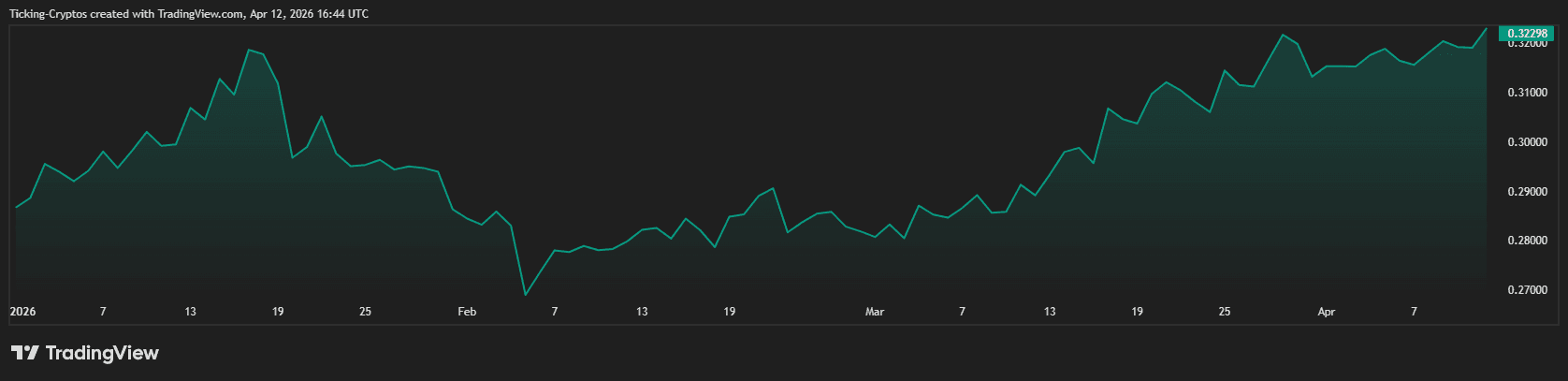
As investors look for stability during high-volatility cycles, the $TRX price has decoupled from the downward trend of $Bitcoin and major altcoins. This article analyzes the fundamental drivers behind Tron’s growth and its role as a portfolio stabilizer.
What is Tron (TRX)? A Foundation for the Decentralized Web
Tron is a high-performance blockchain platform focused on decentralizing the internet through high throughput and low-cost transactions. Originally launched as an "Ethereum competitor," Tron has carved out a massive niche in the stablecoin and payment settlement sectors.
Core Features of the Tron Network:
- High Scalability: Capable of handling 2,000+ transactions per second (TPS).
- Unique Fee Model: Users "freeze" TRX to gain Energy and Bandwidth, allowing for feeless transactions.
- Stablecoin Dominance: Tron hosts a significant portion of the global USDT (Tether) supply, often surpassing Ethereum in daily active addresses.
Why is TRX Outperforming the 22% Market Crash?
The primary reason for Tron’s 13.5% YTD gain lies in its utility-driven demand. During market downturns, traders often rotate out of volatile speculative assets and into stablecoins. Because the Tron ecosystem is the primary highway for TRC-20 USDT transfers, the demand for TRX (to power these transactions) remains constant even when prices for other coins fall.
Furthermore, institutional adoption has seen a steady rise. Data from CoinMarketCap suggests that Tron’s deflationary mechanism—where a portion of TRX is burned daily to cover transaction costs—is putting upward pressure on the price as the circulating supply shrinks.
Low Volatility: Is TRX the New Crypto "Safe Haven"?
Volatility is often the biggest deterrent for traditional investors entering the crypto space. However, TRX has demonstrated a significantly lower beta compared to the rest of the market.
Why TRX Stability Matters:
- Staking Lock-ups: A large percentage of TRX is staked for governance and network resources, reducing the "liquid" supply available for panic selling on exchanges.
- Predictable Ecosystem: Unlike many DeFi-heavy chains that suffer during liquidations, Tron’s primary use case—payments—is evergreen.
- Risk Mitigation: Adding a low-volatility asset like TRX can lower the overall Sharpe ratio of a crypto portfolio, providing a buffer during 20%+ market drawdowns.
0
0


 Manage all your crypto, NFT and DeFi from one place
Securely connect the portfolio you’re using to start.

0
0


0
0

0
0