
Three Factors Holding Ether Price Below $2.4K

0
0
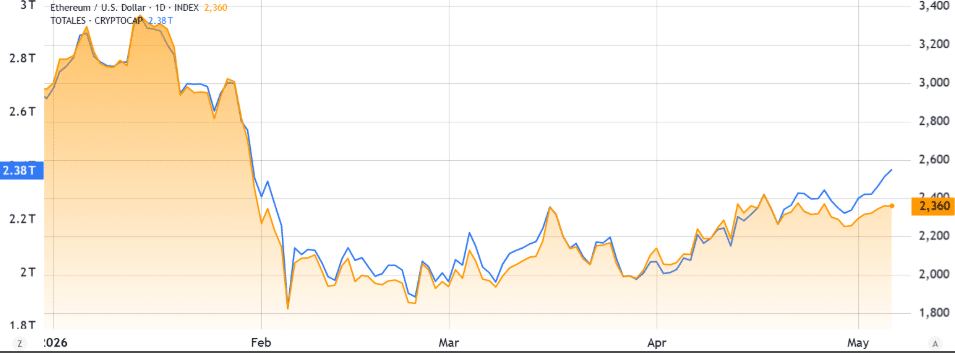
Ether is still finding it hard to hold the $2,400 level, even as parts of the wider crypto market show signs of recovery. The latest market data points to a more specific Ethereum problem rather than a simple market-wide pullback. Ether price is down 21% in 2026, while the total crypto market cap has fallen around 11%, showing that ETH has lagged behind the broader sector this year.
Why Ether price Momentum Is Losing Strength
The first pressure point is weakening on-chain activity. Ethereum has long depended on decentralized apps, trading activity, and network demand to support investor confidence. That engine is not running as strongly right now.
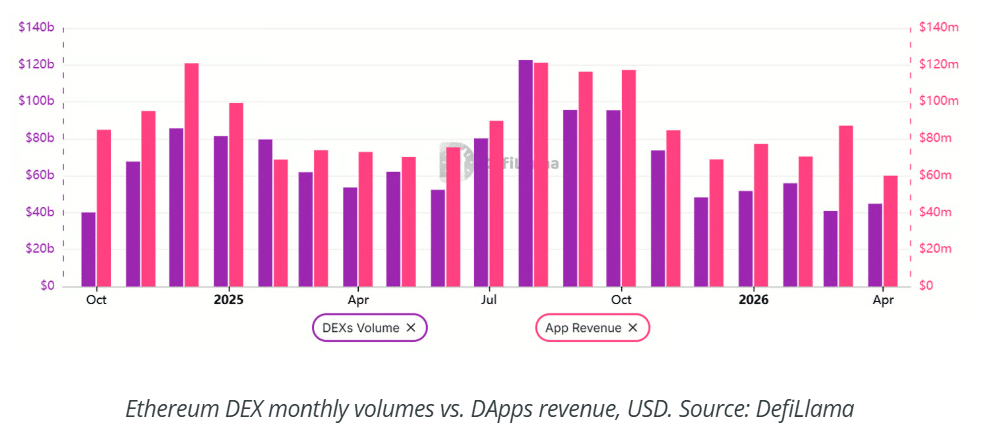
Decentralized exchange volumes on Ethereum have dropped 53% in six months, while DApp revenue has fallen 49% in the same period. That matters because lower trading volume usually means fewer fees, less user activity, and weaker demand across the ecosystem. For Ether price recovery, this is not just a technical chart problem. It is a usage problem.
A crypto network can have strong branding, deep liquidity, and loyal developers, but markets still care about real activity. When users trade less, launch fewer tokens, and pay fewer fees, the value case becomes harder to defend in the short term.
DEX Volume, DApp Revenue, and Market Confidence
Ethereum’s DApp economy remains large, but it is no longer moving without pressure. The fall in memecoin trading and token launches has taken heat out of DEX activity. At the same time, investors are paying closer attention to whether Ethereum can turn network use into better staking returns and stronger ETH demand.
This is where Ether price struggles become more visible. A rally toward $2,400 can happen when traders chase momentum, but holding that level needs deeper support. It needs users, fees, liquidity, and confidence working together. Right now, those parts are not moving in the same direction.
Hacks Have Added Another Layer of Caution
Security issues have also damaged market mood as the crypto industry suffered about $630 million in hack losses in April, with KelpDAO and Drift Protocol linked to most of that total. The report also noted that aggregate industry DEX activity dropped 47% over three months.
For regular investors, hacks create a simple reaction: caution. Even when Ethereum itself is not the direct failure point, the wider DeFi environment affects how traders view risk. If users are less active on DApps, liquidity dries up and speculative appetite cools. That makes each Ether price rally easier to fade.
Competition From Solana and Hyperliquid Is Getting Harder to Ignore
Ethereum still leads the broader smart contract economy, especially when layer-2 networks are included. Yet rivals are taking meaningful share in areas that users care about most: speed, low fees, and smoother trading.
Solana and Hyperliquid now account for a combined 42% share of DApp revenue, even though Ethereum has much higher total value locked. That comparison says a lot. Investors are no longer looking only at how much capital sits on a chain. They are looking at how efficiently users move, trade, and pay.
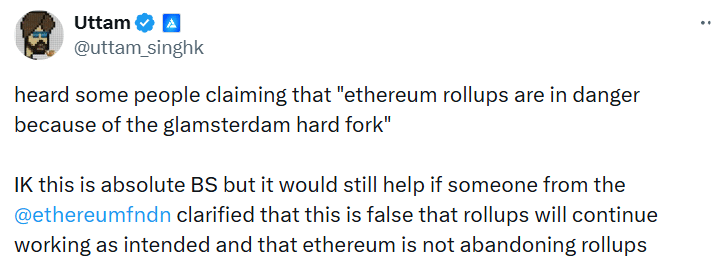
This competition is one reason Ether price has not fully matched broader market recovery. The market wants proof that Ethereum’s scaling roadmap can bring activity back, not just promise better infrastructure later.
Institutional Demand Looks Less Excited
Institutional sentiment is another weak spot as large public ETH holders sitting on unrealized losses can reduce enthusiasm among new buyers. One major listed ETH holder reportedly spent $12.2 billion on ETH, while its position is now valued around $10.8 billion. That does not mean a forced sale is coming, but it can weigh on perception.
For institutions, timing matters as if corporate ETH buyers are underwater, fresh capital may prefer waiting for clearer momentum before stepping in. That pause can cap Ether price rallies near resistance zones.
Key Indicators Crypto Traders Are Watching
Traders are now watching DEX volume, DApp revenue, total value locked, staking yield, network fees, ETF flows, whale holdings, exchange reserves, and relative strength against Bitcoin. These indicators help show whether demand is improving or only price speculation is moving.
For Ether price to break higher with conviction, Ethereum likely needs stronger app revenue, better fee activity, and renewed institutional interest. A move toward $2,800 is still possible, but it needs more than a quick bounce. It needs evidence that users are returning.
Conclusion
Ethereum is not broken, but the market is asking harder questions. Lower DEX activity, weaker DApp revenue, major hack losses, stronger competitors, and cautious institutions are all keeping pressure near $2,400. The next real test is whether Ethereum can turn its scaling upgrades and deep developer base into visible demand. Until that happens, Ether price rallies may continue to look promising at first, then lose steam before bulls get comfortable.
FAQs
Why is Ether struggling near $2,400?
Ether is struggling because Ethereum activity has slowed, DEX volumes have dropped, DApp revenue is weaker, and rival networks are gaining market share.
Can Ether still reach $2,800?
Yes, Ether can still move toward $2,800, but stronger on-chain demand and better institutional confidence would make that move more sustainable.
Which indicators matter most for ETH?
DEX volume, DApp revenue, staking yields, network fees, total value locked, whale activity, and ETH performance against Bitcoin are among the key indicators.
Glossary of Key Terms
DEX: A decentralized exchange where users trade crypto without a central platform.
DApp: A decentralized application built on blockchain networks.
TVL: Total value locked, meaning capital deposited across DeFi protocols.
Staking Yield: Rewards earned by locking ETH to help secure the network.
Whale: A large crypto holder whose trades can affect market sentiment.
Source
Read More: Three Factors Holding Ether Price Below $2.4K">Three Factors Holding Ether Price Below $2.4K
0
0


 Manage all your crypto, NFT and DeFi from one place
Securely connect the portfolio you’re using to start.

0
0

0
0

