
Babylon Aave Support: $3M USDT Deposit Boosts DeFi Liquidity

0
0

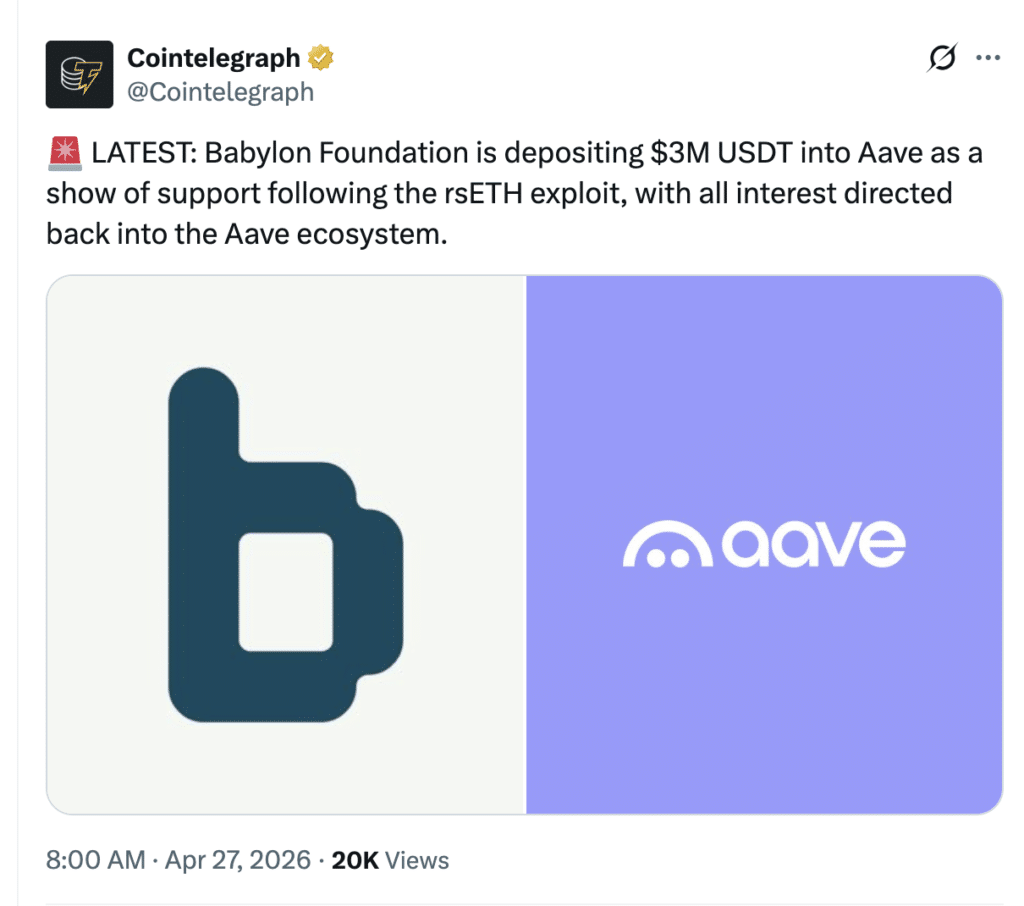
Babylon Aave support has emerged as a key development in the 2026 DeFi landscape after Babylon Foundation confirmed a $3 million USDT deposit into Aave. The move arrives shortly after the rsETH exploit linked to KelpDAO disrupted confidence across decentralized markets. The decision reflects a broader effort to stabilize liquidity and rebuild trust within major lending protocols. Under this initiative, all interest generated will be redirected back into the ecosystem, reinforcing long-term resilience rather than short-term yield extraction.
Babylon Aave support is increasingly being viewed as a symbolic and structural intervention, highlighting how DeFi protocols are evolving into collaborative financial networks rather than isolated systems.
Why Babylon Invested $3M in Aave
The question many market participants are asking is simple: why Babylon invested $3M in Aave at this specific moment? The answer lies in restoring market confidence after turbulence triggered by the rsETH exploit. Babylon Aave support reflects a calculated strategy to reinforce liquidity stability while signaling that leading ecosystem players still trust Aave’s foundational architecture.
Babylon Aave support is not positioned as a speculative move but as a trust-building mechanism. By allocating capital directly into lending pools, Babylon backs Aave during a sensitive phase in DeFi recovery. This move strengthens Babylon crypto news 2026 narratives around institutional-style intervention in decentralized finance.
From a broader lens, Babylon Aave support also demonstrates how DeFi recovery Aave news cycles are increasingly shaped by coordinated liquidity injections rather than reactive governance alone.
Aave V3 vs V4 Liquidity Injection Details
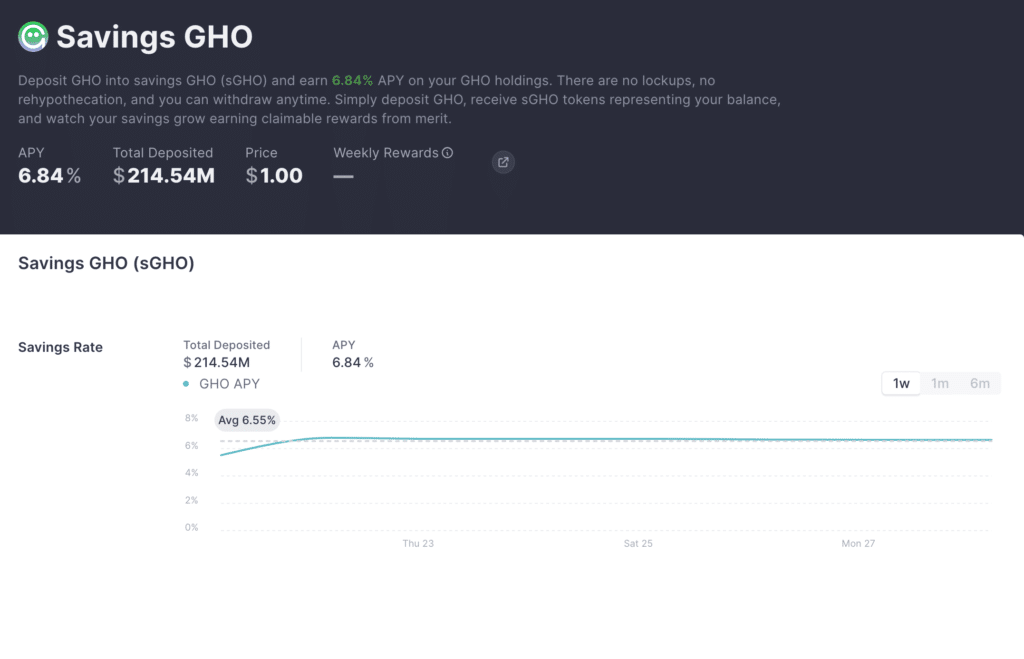
A key component of Babylon Aave support is the structured allocation of funds across protocol versions. Out of the $3 million USDT deposit, $2 million has been directed to Aave V3, while $1 million supports Aave V4 liquidity pools. This split reflects a dual-layer strategy focused on both mature liquidity systems and emerging protocol infrastructure.
Babylon Aave support highlights how Aave V3 vs V4 liquidity support details are becoming central to ecosystem planning. V3 provides deep, battle-tested liquidity markets, while V4 represents the next evolution of modular DeFi lending architecture. The injection strengthens both layers simultaneously.
Babylon Aave support in this context is also referred to as Aave V3 V4 liquidity injection, reinforcing confidence across multiple protocol generations while supporting smoother capital flow in volatile conditions.
rsETH Exploit Impact and DeFi Recovery Aave News
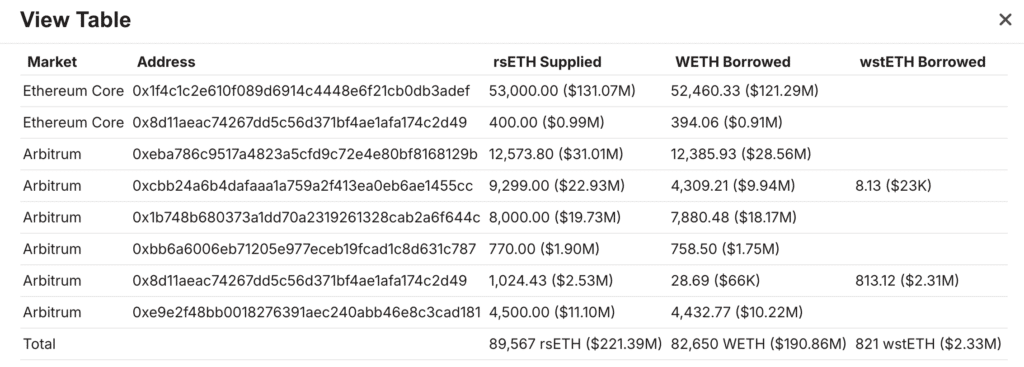
The rsETH exploit acted as a critical stress test for decentralized lending systems, particularly affecting wrapped asset markets and liquidity confidence. Babylon Aave support arrives directly in response to this disruption, offering a stabilizing capital buffer when sentiment was weakening.
Babylon Aave support plays a central role in DeFi recovery Aave news coverage, as it represents one of the first structured liquidity injections following the incident. Aave governance temporarily froze rsETH and wrsETH markets after concerns linked to the wider KelpDAO exploit surfaced, intensifying the need for ecosystem reassurance.
By introducing Babylon Aave support at this stage, market participants are witnessing a shift toward proactive stabilization strategies rather than delayed recovery responses. This positions Babylon backs Aave as a meaningful case study in DeFi liquidity crisis recovery.
Market Implications and Aave Ecosystem Support Update
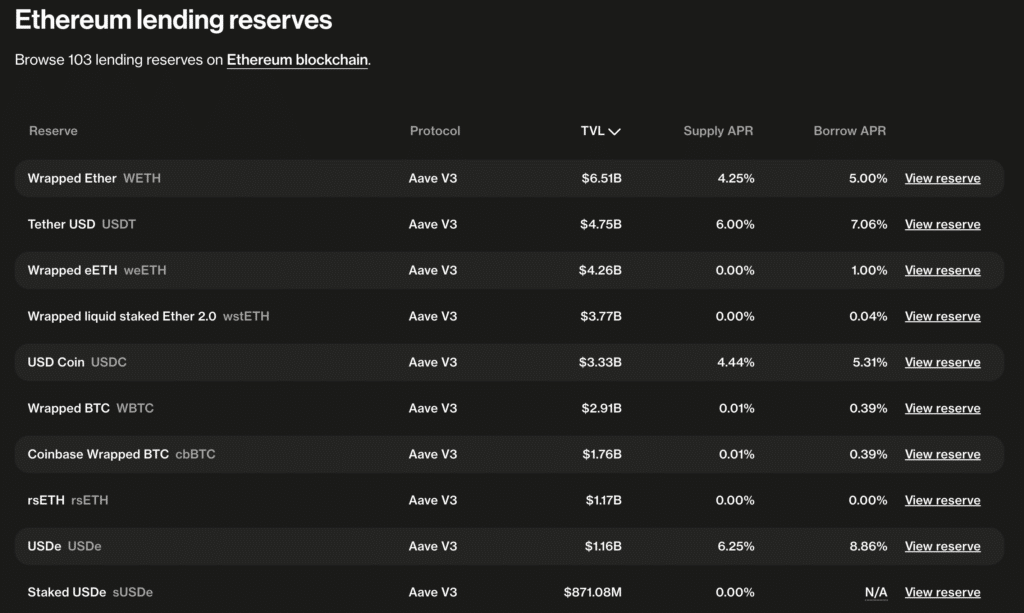
Babylon Aave support is reshaping how analysts interpret liquidity flows in decentralized markets. Instead of isolated protocol reactions, the ecosystem is now showing coordinated responses to systemic risks. Babylon Aave support reinforces the idea that major DeFi players are willing to intervene directly when stability is threatened.
The Babylon $3M USDT deposit Aave structure ensures that liquidity is not only added but continuously recycled, as all earned interest is returned to the ecosystem. This mechanism strengthens long-term sustainability rather than short-term incentives.
In broader terms, Babylon Aave support reflects evolving standards for Aave ecosystem support update cycles. It also raises deeper questions about whether future DeFi stability will depend more on governance alone or hybrid interventions involving external foundations.
Is Aave Safe After rsETH Exploit?
One of the most discussed topics following the incident is: is Aave safe after rsETH exploit? Babylon Aave support plays a significant role in answering this concern. While no system in DeFi is entirely risk-free, the injection of capital helps reinforce liquidity depth and reduces short-term volatility risks.
Babylon Aave support, combined with Aave protocol latest news updates, suggests that the platform is actively managing exposure and improving resilience. The structured liquidity addition helps stabilize borrowing markets and reduces potential cascading liquidations.
From a risk perspective, Babylon Aave support demonstrates how Aave recovery after DeFi exploit scenarios are increasingly being handled through coordinated capital reinforcement rather than isolated protocol fixes.
Conclusion: Babylon Aave Support Redefines DeFi Collaboration
Babylon Aave support stands as a notable example of how decentralized finance is evolving into a more cooperative ecosystem. The $3 million USDT injection into Aave is not just a liquidity event but a strategic confidence signal following the rsETH exploit disruption.
Babylon Aave support highlights the growing importance of cross-ecosystem participation, where foundations actively reinforce major protocols during instability. This approach strengthens DeFi market recovery after exploit 2026 scenarios and signals a shift toward more resilient financial infrastructure.
As DeFi continues to mature, Babylon Aave support may be remembered as a key moment where liquidity support transformed into ecosystem-wide collaboration. Market participants are encouraged to monitor ongoing Aave ecosystem developments closely, as similar interventions may shape the next phase of decentralized finance evolution.
Appendix: Glossary of Key Terms
DeFi refers to decentralized finance systems built on blockchain networks that remove traditional intermediaries.
Aave is a leading lending protocol enabling users to borrow and lend crypto assets.
Liquidity injection refers to the addition of capital into a financial system to stabilize markets.
rsETH is a liquid staking derivative asset affected by a recent exploit event.
USDT is a stablecoin pegged to the US dollar, commonly used for liquidity provisioning in DeFi ecosystems.
Frequently Asked Questions About Babylon Aave Support
What is Babylon Aave support?
Babylon Aave support refers to the $3 million USDT liquidity injection into Aave designed to stabilize the protocol after the rsETH exploit.
Why did Babylon invest in Aave?
The investment aims to restore confidence and improve liquidity conditions following DeFi market disruptions.
How is the $3M USDT distributed?
Funds are split between Aave V3 and Aave V4 to strengthen both mature and next-generation liquidity systems.
Does this improve Aave safety?
It improves liquidity stability but does not eliminate underlying smart contract or market risks.
What happens to the interest earned?
All interest generated is reinvested into the Aave ecosystem for further support.
References
Read More: Babylon Aave Support: $3M USDT Deposit Boosts DeFi Liquidity">Babylon Aave Support: $3M USDT Deposit Boosts DeFi Liquidity
0
0


 Manage all your crypto, NFT and DeFi from one place
Securely connect the portfolio you’re using to start.

0
0

0
0


0
0