
Ethereum Foundation cuts 40% of budget, then appoints security researcher to board

0
0
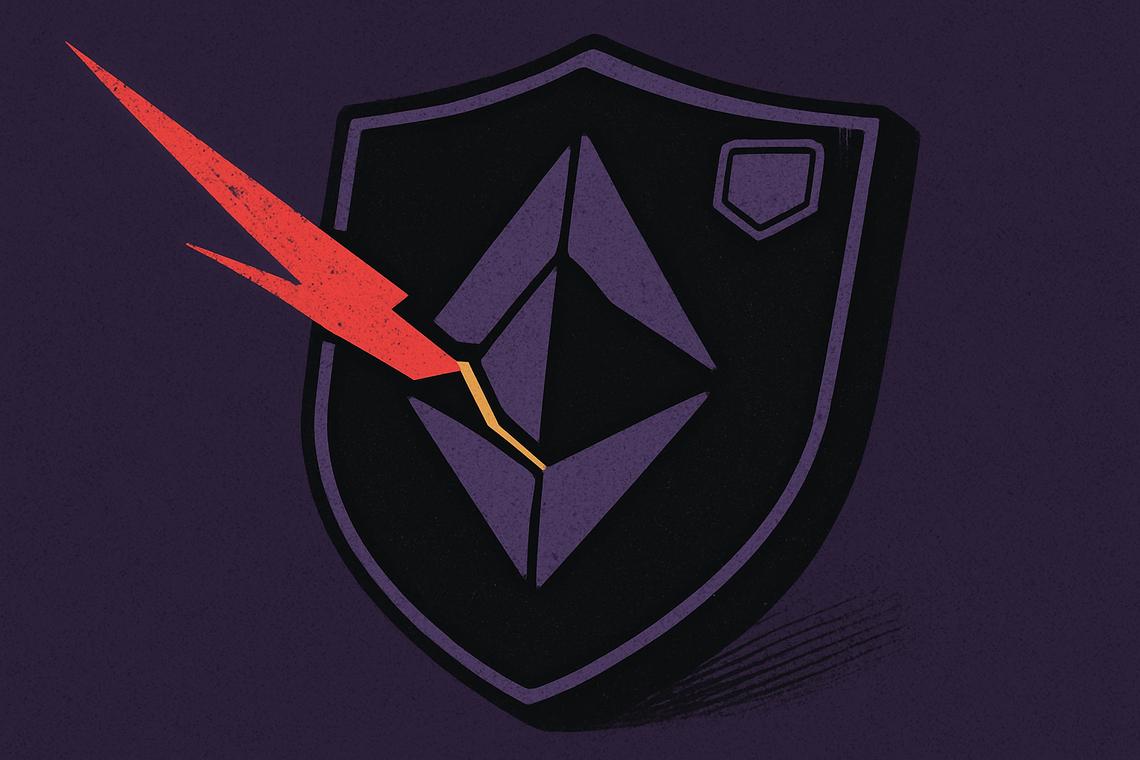
When a foundation overseeing the world’s second-largest blockchain cuts its budget by 40%, eliminates 54 jobs, shuts down a core research lab, and loses both co-executive directors in the same year, the question is no longer whether something is changing — it’s who gets handed the wheel. That answer came on July 29, 2026, when the Ethereum Foundation made a notable board appointment, naming security researcher Pascal Caversaccio, widely known in the ecosystem as “pcaversaccio” or “pc,” to its Board of Directors.
Key takeaways
- Pascal Caversaccio joined the Ethereum Foundation Board of Directors on July 29, 2026, for a voluntary, unpaid one-year term.
- He is co-founder of emergency security response group SEAL 911 and author of Ethereum privacy books, including a 2025 publication.
- His addition brings the Foundation’s board to four members: President Aya Miyaguchi, Vitalik Buterin, Patrick Storchenegger, and Caversaccio.
- The appointment follows a 40% budget cut, 54 job losses, the closure of the Privacy and Scaling Explorations lab, and the resignations of co-executive directors Hsiao-Wei Wang and Tomasz Stańczak in 2026.
- No changes to Ethereum network function or user action are required as a result of this appointment.
Pascal Caversaccio Joins the Ethereum Foundation Board
Caversaccio is not a newcomer to the Foundation’s orbit. He has served on the EF’s Silviculture Society, an advisory group focused on preserving the Foundation’s core principles — including censorship resistance, open-source development, privacy, and security. His track record in Ethereum security is deep and well-documented.
Security Researcher and SEAL 911 Co-Founder
Caversaccio co-founded SEAL 911, the emergency security response initiative designed to coordinate rapid responses to critical vulnerabilities across the Ethereum ecosystem. That kind of operational background — where the stakes are real and the margin for error is zero — makes him a different type of board member than a typical governance or legal appointment.
The board he joins now has four members: Foundation President Aya Miyaguchi, Ethereum co-founder Vitalik Buterin, Swiss legal counsel Patrick Storchenegger, and Caversaccio himself, according to CoinDesk. The board’s mandate includes setting the EF’s strategic vision, ensuring management decisions align with the organization’s values, and acting as a “security council” responsible for compliance with Swiss law, where the Foundation is based.
Authorship on Ethereum Privacy
Beyond hands-on security work, Caversaccio has contributed to the intellectual framing of Ethereum’s privacy debate. He wrote two books on Ethereum privacy, with the most recent being Ethereum Privacy: The Road to Self-Sovereignty, published in 2025. He also published The Ethereum Cypherpunk Manifesto in 2024, arguing for stronger on-chain privacy protections — a position that now sits inside the boardroom rather than just on the margins of ecosystem debate.
His board role is unpaid. The one-year term means the Foundation will face a renewal decision by July 2027.
The Restructuring Behind the Appointment
The context here matters as much as the appointment itself. This is not a routine governance update — it comes at one of the most turbulent periods in the Ethereum Foundation’s recent history.
2026 Budget Cuts and Staff Reductions
The Foundation cut its 2026 budget by roughly 40% and reduced headcount by approximately 54 jobs, a reduction of around 20%, as reported by CoinDesk. Those numbers represent a significant contraction for an organization that has historically served as the intellectual and operational backbone of Ethereum’s development.
Vitalik Buterin did not minimize what was lost. “I respect my EF colleagues far too much to pretend that there was not much that is lost,” he wrote, an unusually candid acknowledgment of the human and institutional cost of the restructuring.
Closure of the Privacy and Scaling Explorations Lab
The same period saw the Foundation wind down its Privacy and Scaling Explorations lab — the in-house research unit that had worked on some of Ethereum’s most technically ambitious privacy and scaling projects. The closure removes a significant internal capability at precisely the moment when privacy is becoming a competitive differentiator across blockchain ecosystems.
That gap is worth noting. Adding a privacy-focused board member while simultaneously shutting down the internal privacy research lab reflects the Foundation’s broader pivot: less direct technical execution, more strategic oversight and stewardship.
Senior Executive Resignations and Vacant Leadership Roles
The leadership changes compound the picture. Tomasz Stańczak exited his co-executive director role in February 2026. Hsiao-Wei Wang resigned from the same position in June 2026. The Foundation has not yet named permanent replacements for either seat, leaving both co-executive director positions vacant as the organization navigates its restructuring.
According to reporting by The Block, the total number of senior departures since January has reached nine, with several former researchers and executives launching new Ethereum-focused ventures outside the Foundation.
A Strategic Shift, Not Just a Personnel Change
The deeper story here is about what the Ethereum Foundation is becoming. Rather than acting as the center of ecosystem development, the Foundation is deliberately shifting authority toward independent, community-run organizations. Caversaccio’s appointment fits that model: a trusted, security-oriented community figure joining the board while day-to-day technical work increasingly moves to external groups.
This decentralization of execution — while concentrating oversight and values-alignment at the board level — represents a meaningful governance bet. Whether a four-person board with one dedicated security voice can effectively steward a network of Ethereum’s scale, without the internal technical depth it is shedding, is a question the ecosystem will be watching closely.
For ETH holders and Ethereum users, none of this changes how the network functions today. No user action is required. But the structural decisions being made now — who sits on the board, which labs stay open, which executive roles get filled — will shape how quickly Ethereum can respond to emerging security threats, regulatory pressure, and the privacy expectations of institutional users exploring public blockchains.
The clock on Caversaccio’s one-year term starts now. Whether the Foundation fills its two vacant executive director seats before that term expires may say more about its governance direction than any single board appointment can.
FAQ
Who is Pascal Caversaccio and what qualifies him for the Ethereum Foundation Board?
Pascal Caversaccio is a prominent Ethereum security researcher, co-founder of the emergency security response group SEAL 911, and author of two Ethereum privacy books, including Ethereum Privacy: The Road to Self-Sovereignty published in 2025. He has also served on the Foundation’s Silviculture Society advisory group.
What organizational changes is the Ethereum Foundation undergoing?
In 2026, the Foundation cut its budget by approximately 40%, reduced staff by around 54 jobs, shut down its Privacy and Scaling Explorations lab, and saw the resignations of both co-executive directors — Tomasz Stańczak in February and Hsiao-Wei Wang in June.
How will Pascal Caversaccio’s appointment affect Ethereum users?
There are no changes to Ethereum network function or any required user actions following his appointment. The change is at the governance and board level only.
What is the Foundation’s approach to governance following recent changes?
The Ethereum Foundation is shifting authority away from itself and toward independent, community-run organizations. Both co-executive director seats remain vacant, and the Foundation has not yet named permanent replacements for the departed executives.
Article produced with the assistance of artificial intelligence and reviewed by the editorial team.
0
0


 Manage all your crypto, NFT and DeFi from one place
Securely connect the portfolio you’re using to start.


0
0

0
0

0
0