
TRON's $90B USDT Base: Can Settlement Scale Finally Reprice TRX?

0
0
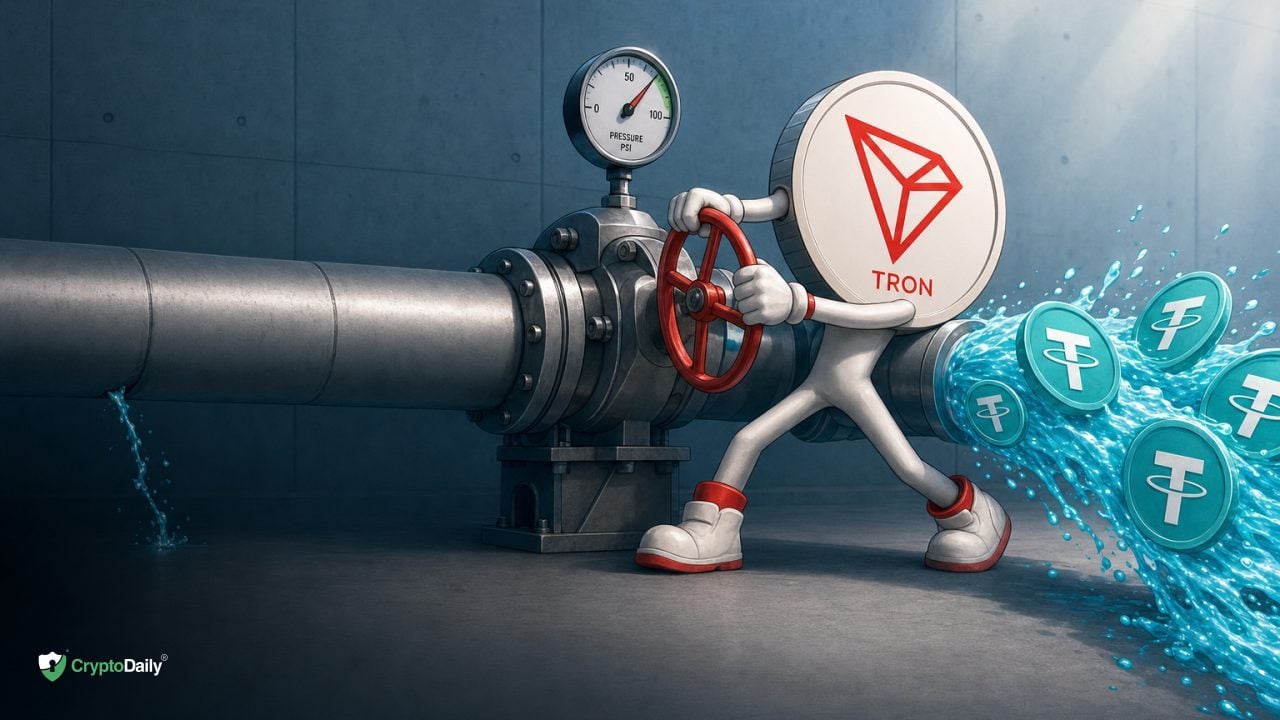
A payment processor in Lagos moves millions in USDT between exchanges every day. Not on Ethereum. On TRON. Fees are tiny, speed is predictable, and the rails almost never clog.
That quiet reality just hit a loud milestone: TRON now hosts more than $90 billion in USDT, and by some counts it’s leading this year’s transfer volume by a wide margin. The natural question follows. If settlement lives on TRON, does value eventually flow to TRX?
It’s not a simple yes. But the mechanics are clearer in 2026 than they were a year ago.
Stablecoins won the distribution war by being useful. TRON leaned into that utility with low fees, a predictable resource model, and integrations across exchanges, OTC desks, and remittance hubs. In July 2026, TRON DAO said the USDT float on TRON crossed $90 billion, and cited data showing TRON leading year‑to‑date USDT transfer volume around $4.2 trillion. Those are settlement numbers you usually associate with banks, not a crypto chain. And yet, TRX hasn’t obviously rerated on the back of it.
Massive settlement can be necessary for token repricing, but it isn’t sufficient. The bridge from throughput to token value is fee capture, scarcity, and lock‑up behavior — not raw volume.
So who benefits right now? Users and businesses moving dollars cheaply on-chain. Who might benefit later? TRX holders, if fee burns, staking demand for energy, or protocol-level monetization finally scale with the traffic.
Why USDT lives on TRON right now
Let’s pin the facts before the narratives run away with us.
First, the headline: TRON DAO announced on July 9, 2026 that the circulating supply of USDT on TRON exceeded $90 billion, with TRON leading all networks in USDT transfer volume this year, roughly $4.2 trillion year‑to‑date. That disclosure, relayed by The Block and citing Token Terminal for the volume figure, is the cleanest snapshot we have of how central TRON is to stablecoin payments today. See coverage here: The Block (reporting TRON DAO press release).
Second, zoom out to market share. DeFiLlama’s live dashboard in July 2026 puts total stablecoins around $312.26 billion, with USDT roughly $184.16 billion — about 59% of the total at that snapshot, underscoring how dominant Tether still is in this market: DeFiLlama stablecoins dashboard.
Third, the chain split. Reporting that aggregates DeFiLlama data shows TRON as one of the largest hosts of on‑chain stablecoins — on the order of $90 billion sitting on TRON in mid‑June 2026, with Ethereum and TRON together carrying the lion’s share of circulating on‑chain stables: Reap Global (summarizing DeFiLlama data).
What that means in practice
In plain English: a big chunk of the world’s on-chain dollars live on TRON, and a huge portion of the dollar transfer traffic clears there. The appeal is practical, not ideological. TRON’s fees are tiny. The resource model lets big actors pre‑stake TRX to get “energy,” effectively reserving compute so they can batch withdrawals or run merchant payouts without guessing gas spikes.
How settlement scale might (or might not) convert to TRX demand
TRX value accrual rests on a few pipes. Some are obvious. Some are leaky.
Fees and any burn dynamics
Every on-chain action requires TRX for bandwidth or energy. Depending on how the protocol accounts for fees and whether any portion is burned or recycled, more transactions can slowly reduce net supply or at least route value to validators. The catch: on TRON, fees per transaction are tiny, and many high‑throughput accounts stake for resources instead of paying spot fees. Great for UX; weaker for direct fee capture.
The energy model and pre‑funded throughput
Service providers stake TRX to acquire energy, which they spend to execute transactions for users. The larger the PSP or exchange, the more they stake. That’s a real demand vector. But it’s elastic. Once they’ve staked enough to cover expected throughput, incremental volume doesn’t always require proportional new staking. Unless volumes stair‑step higher or the cost curve changes, TRX demand can plateau.
Validator economics and governance
TRON’s Super Representatives and node operators get paid in protocol emissions and fees. If emissions trend lower over time, fee share matters more. Large settlement could justify higher on-chain monetization later, but that’s a governance outcome, not a law of physics. Token repricing tends to follow hard changes to cash flows or supply, not hopes.
What the 2026 data actually says
Here’s a compact snapshot you can keep in your head when thinking about TRX versus TRON settlement.
Metric Snapshot (mid-2026) Source Implication for TRX USDT on TRON (circulating) Exceeded $90B (July 9, 2026) The Block (TRON DAO) Large stablecoin base entrenches TRON as a payment rail. USDT transfer volume YTD on TRON ~$4.2T year‑to‑date The Block citing Token Terminal Settlement scale is massive; fee capture per tx is small. Total stablecoin market cap ≈ $312.26B (July 2026) DeFiLlama USDT dominance keeps TRON relevant while USDT dominates. USDT market cap share ≈ $184.16B (~59% of total) DeFiLlama Concentration risk; upside if USDT grows, downside if it rotates. Stablecoins hosted on TRON ~$90B (mid‑June 2026) Reap Global (DeFiLlama) TRON is one of the top stablecoin chains alongside Ethereum.
Who’s affected by these dynamics
Three groups feel the difference first: payment processors, exchanges, and high‑frequency arbitrage desks.
- They source USDT where fees are predictable and liquidity is deep. Lately, that’s often TRON.
- They pre‑stake TRX for energy to eliminate gas volatility in operations.
- They automate payouts and withdrawals through TRC‑20 rails, using exchange listings on both sides.
- They hedge TRX exposure if staking requirements rise, but otherwise keep TRX balances thin.
- They monitor competing rails (Solana, Ethereum L2s, TON) and can rotate flows if routing improves.
Notice the asymmetry: USDT volume can surge without a symmetrical bid for TRX unless staking thresholds or protocol fees change materially.
Settlement rails versus token value: where the link snaps
A frequent misunderstanding is that more transactions should always push a chain’s token up. In reality, the link depends on what the chain charges, how it collects, and whether participants must hold the token at scale.
Low fees are a feature, and a valuation bug
TRON’s low fees helped it win settlement. That same low fee path caps revenue per dollar settled. It’s the opposite of L1s that bank on high gas prices and smaller user counts. TRON optimizes for volume. Volume is sticky — good — but monetization remains thin until parameters or auxiliary services change.
Staking demand is lumpy
Energy staking scales in steps. A global exchange might stake a big chunk of TRX once, then not touch it for months. New entrants and growing processors add some marginal demand, but it’s not linear with $4.2 trillion of annualized flow. That’s why you can have monster settlement numbers without a clean, daily spot bid for TRX.
Externalities matter
Stablecoin risk and regulatory moves can overshadow everything. If USDT grows, TRON rides the wave. If policy or counterparty risks push traffic to other rails, TRX doesn’t get a say. Concentration cuts both ways.
What could actually reprice TRX
“More volume” is not a catalyst. These might be.
1) Structural fee capture or higher effective burn
If governance or technical updates route a larger cut of transaction value into burns or validator revenue tied to TRX, the market may treat settlement scale as cash‑flow scale. That’s a different narrative. It would align TRX with throughput more directly.
2) Mandatory or economically sticky staking
If more categories of apps, wallets, or custodians must post TRX to guarantee performance — and keep it locked — free float tightens. The key is stickiness. Temporary operational balances don’t move the needle; programmatic lock‑ups might.
3) Native settlement products
Think remittance corridors, merchant services, or cross‑exchange clearing that explicitly price in TRX for priority or discounts. If TRX becomes the loyalty point of the rail, not just the fuel, you get reflexivity: more business needs more TRX, and more TRX held attracts more business.
4) Interoperability that keeps value in‑house
If TRON-linked scaling or cross‑chain options let stables ping‑pong across ecosystems while settling value back into TRX economics, you increase surface area for accrual. Without that, bridges and competing L1s can siphon the upside.
5) Clearer, favorable stablecoin rules
Regulatory clarity that keeps USDT widely used and compliant in key markets helps the chain hosting most of it. Any policy that reduces operational friction for PSPs using TRC‑20 rails indirectly supports TRX demand via larger embedded operations.
How PSPs actually use TRON USDT today
It helps to picture a real flow. Here’s a simplified version of what a mid‑market processor or exchange desk might do every day.
- Pre‑fund a TRON hot wallet with staked TRX to secure enough energy for expected throughput.
- Collect USDT from merchants, users, or exchange counterparties via TRC‑20 addresses.
- Batch payouts and internal transfers during liquidity windows, optimizing for exchange fees.
- Rebalance to other chains or banks only when necessary, often during quieter periods.
- Top up staked TRX if monitoring flags energy shortfalls, otherwise keep TRX exposure minimal.
The punchline: the working capital here is mostly USDT, not TRX. TRX appears as an operational line item. That’s efficient for them and not obviously bullish for the token unless usage forces persistent, larger TRX locks.
Competition and rotation risk
TRON’s advantage isn’t uncontested. Solana’s low fees and growing stablecoin velocity have made it a natural alternative. Ethereum L2s improved a lot in 2025–2026, cutting finality times and fees. TON’s mobile‑first distribution has pulled in fresh USDT activity. None of that erases TRON’s position; it just means flow can rotate if pricing, reliability, or listings change. And because moving USDT isn’t the same as moving a native asset, users can be chain‑agnostic when merchants and exchanges support multiple rails.
Risks and what could go wrong
- Stablecoin concentration: TRON’s settlement advantage is tied to USDT. Any shock to Tether’s market share or operations could redirect flows quickly.
- Regulatory whiplash: New rules on stablecoins, money transmission, or exchange custody could reroute volumes to compliant venues or specific chains.
- Fee compression forever: If governance keeps fees ultra‑low with limited burn, TRX may never fully monetize the scale it enables.
- Competition for “cheapest reliable rail”: Solana, Ethereum L2s, or TON could undercut on price or UX, nudging PSPs to multi‑home or migrate.
- Operational centralization: If a small set of big actors controls staking and throughput, value accrual might concentrate away from the open market.
- Bridge and routing risk: Cross‑chain liquidity breaks can impose costs on TRON users, reducing its role in multi‑chain workflows.
High throughput cuts unit costs. It also compresses margins. Unless the protocol captures a slice of growing gross settlement, tokenholders can be passengers on their own network.
If you want a steady feed on where stablecoin liquidity is shifting each week and how that hits token economics, we track it closely at Crypto Daily — from dashboards to desk anecdotes.
Frequently Asked Questions
Does $90B of USDT on TRON automatically mean TRX should go up?
No. It proves TRON is a dominant settlement rail. TRX may benefit if fees, burns, or staking lock‑ups rise with usage, but raw volume alone doesn’t force a repricing.
Who actually holds TRX because of USDT settlement?
Mainly service providers: exchanges, PSPs, and large wallets that pre‑stake TRX for energy to guarantee throughput. End users typically hold USDT and never touch TRX directly.
What could link TRX price more tightly to settlement?
Higher effective fee capture, stronger burn mechanics, and sticky staking requirements that scale with activity. Native programs that reward holding TRX for settlement priority could help too.
Could flows rotate away from TRON even with today’s dominance?
Yes. Competing low‑fee chains and L2s are viable. If they match reliability and exchange coverage, volumes can multi‑home or migrate, especially if incentives or rules change.
How important is USDT’s overall market share to TRON?
Very. DeFiLlama’s July 2026 snapshot shows USDT around 59% of total stablecoins. As long as USDT leads and TRON hosts a large share of it, TRON remains central. A rotation to other stablecoins on other rails would be a headwind.
Is there a near‑term catalyst for TRX from here?
Watch for governance proposals that change fee routing or burns, growth in institutional staking for energy, and new settlement products that explicitly embed TRX into pricing or loyalty. Those are the pragmatic levers.
Is this financial advice?
No. Digital assets are volatile and carry smart‑contract, market, and regulatory risks. Do your own research and size positions carefully.
Disclaimer: This article is provided for informational purposes only. It is not offered or intended to be used as legal, tax, investment, financial, or other advice.
0
0


 Manage all your crypto, NFT and DeFi from one place
Securely connect the portfolio you’re using to start.


0
0

0
0