
WhiteBIT Coin (WBT): 32,426 Tokens Burned on 1 October, Price 4 Percent Below the Record

0
0

WhiteBIT destroyed 32,426 WBT at 13:48 UTC on 1 October 2026, worth 2,716,488 USDT. This is not a one-off event but the exchange’s regular weekly buyback, through which it puts part of its revenue into permanently shrinking the supply of its own token. According to CoinGecko the price stands at $84.22 as of 05:46 on Saturday, which is 4.2 percent below the all-time high of $87.91 set on 21 September.
For you as a holder or a prospective buyer, three things matter here: how much was actually burned, what that means in relation to the circulating supply, and through which route you can legally buy and hold the token in Germany at all. In that order.
What happened in the WBT burn on 1 October
By its own account, WhiteBIT carries out what it calls a burn every week. The exchange buys back its own tokens on the market and sends them to an address they cannot leave again. The amount follows from the previous week’s revenue: 33 percent of trading fees and 5 percent of further income, for example from withdrawal fees and margin trading, flow into the buyback.
For 1 October the exchange names 32,426 tokens and a value of 2,716,488 USDT on its WBT overview page. That works out at an average buyback price of around $83.78 per token. Measured against the circulating supply of 118,819,745 WBT, the batch amounts to roughly 0.027 percent of all freely tradable tokens. That is a small number for one week, and that is precisely the point: the model works through repetition, not through single events.
Why the exchange burns at all
An exchange token such as WBT is not a standalone network asset like Bitcoin but a product of the exchange that issues it. Its usefulness rests on discounts on trading fees, on tier models for high-volume traders and on extra platform functions. The burn is the counterpart to that: it ties part of the business result to the token without the exchange having to promise a payout. The more that is traded on the platform, the larger the weekly batch.
WBT price this week: $84.22 and 4.2 percent away from the all-time high
According to CoinGecko the price stands at $84.22 as of 05:46 on Saturday, German time. Over 24 hours that is 1.17 percent lower, over seven days a gain of 0.21 percent. Market capitalisation comes to around $10.01 billion, which corresponds to rank 15 among all crypto-assets.
What is notable is less the direction than how narrow the movement is. On CoinGecko’s daily values, WBT moved between $83.49 and $84.73 over the past seven days. The range of the last 24 hours is considerably wider at $83.53 to $86.71, so the spike to the upside did not carry through to the end of the week.
Turnover in relation to valuation
Trading turnover comes to around $130.7 million in 24 hours. Measured against a market capitalisation of a good ten billion dollars, that moves about 1.3 percent of the stock in a single day. For large assets such as Bitcoin or Ethereum this ratio is usually higher in calm phases. In practice that means: larger orders can move the price more than with more liquid coins, and limit orders make more sense here than market orders.
Token burn explained: how WhiteBIT uses 33 percent of trading fees
Token burn describes the final destruction of tokens by sending them to an address with no known private key. Technically they continue to exist on the blockchain, but nobody can dispose of them any more, which is why they are deducted from the circulating supply.
What is special about the WhiteBIT model is that it is tied to ongoing revenue rather than to a fixed plan. Many projects burn a fixed number of units on a schedule set in advance. Here the amount hangs on the business: a month with strong turnover destroys more tokens than a weak one. That turns the burn into a kind of temperature chart of the platform, from which a patient reader can tell how trading volume runs over the months.
As its stated aim, the exchange says it will continue the buyback until at least half of all coins ever created have been destroyed. That is a declaration of intent by the provider, not a guaranteed end state and not a date anything could be pinned to.

MiCA and the purchase route: what the EU authorisation changes for investors in Germany
The transition period of the EU regulation on markets in crypto-assets expired on 1 July 2026. Since then, crypto services may only be provided in the European Union by providers holding the corresponding authorisation; the competent supervisor in Germany is BaFin. Anyone buying in Germany therefore first checks whether the platform holds that authorisation and under which company it takes you on.
WhiteBIT has cleared that hurdle: the group’s European company received a MiCA authorisation in June 2026 via the Austrian supervisory authority, which acts as a passport for the entire European Economic Area. For you in Germany that means the provider is in principle allowed to operate within the regulated framework. It expressly does not mean that the economic risk of the token has become any smaller; an authorisation governs how a provider has to work, not how a price develops. What the licensing obligations cover in detail is broken down in our overview of the MiCA obligations.
One practical note on the purchase route: WBT is not tradable on every platform available in Germany, and the fees differ considerably. A look at our comparison of regulated crypto exchanges shows which providers can prove their authorisation and what trading costs there.
Circulating, total and maximum supply: the three figures that frame the burn
When it comes to scarcity, three quantities are regularly mixed up, and without them the effect of a burn cannot be placed. For WBT, CoinGecko reports a circulating supply of 118,819,745 tokens, a total supply of 293,389,244 tokens and a maximum supply of 400,000,000 tokens.
The circulating supply is the part that is actually freely tradable. The total supply additionally covers everything that exists but is locked, reserved or not yet distributed. The maximum supply is the ceiling that can never be exceeded.
What the gap to the maximum supply says
Between the maximum supply of 400 million and the reported total supply of 293,389,244 tokens there is a gap of 106,610,756 WBT, a good quarter of the ceiling. That difference is the clearest evidence that considerable amounts have been taken out of the system over the years. With the stated target of at least half of all coins, the road is not over yet.
Put these figures in relation before you draw conclusions from a single burn. 32,426 tokens destroyed in one week stand against a good 118.8 million in circulation. Even over a whole year, at an unchanged pace, the order of magnitude would stay in the low single-digit percentage range of the circulating supply. Scarcity is a slow process here.
Deflation is no price promise: the limits of the burn model
The fact that supply disappears does not automatically mean the price rises. The price arises from supply and demand, and demand for an exchange token depends on how well the exchange behind it is running. That very dependency works both ways: if trading volume falls, the value of the fee discounts falls, and at the same time the amount that gets burned shrinks. The mechanism amplifies good phases as well as bad ones.
This week’s figures show that in miniature. Despite the burn on Wednesday, the price over seven days stands almost unchanged at a gain of 0.21 percent. A batch of $2.7 million simply does not weigh much against daily turnover of $130.7 million. Anyone reading a burn as a short-term price driver overestimates it.
There is also a point that is easily overlooked with exchange tokens: the exchange itself sets the rules of the model. Percentages, rhythm and target are the provider’s own decisions and can be adjusted. That is not an accusation but a property of the asset class you should factor into your assessment.
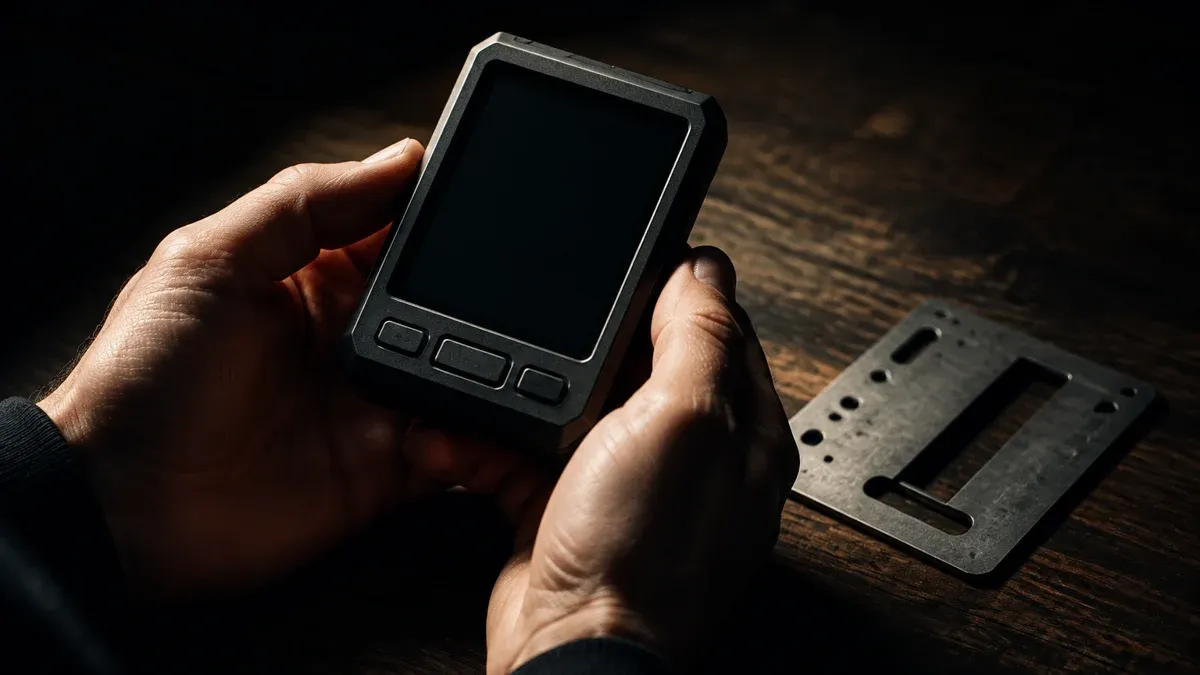
Custody of exchange tokens: why WBT carries a counterparty risk at the exchange
With an exchange token there is a conflict of aims that other coins do not know in this sharpness. The fee discounts and tier models only work as long as the tokens sit in the exchange account. But that is exactly where you carry the counterparty risk, meaning the danger that in the event of insolvency or an attack you cannot get at your balance because the exchange holds the keys.
How real that risk is was shown by the third quarter of 2026: according to the count by the security firm CertiK, losses from security incidents added up to $1.26 billion, spread over 247 incidents. The largest single case of the quarter fell on a trading platform.
No prohibition follows from this, but a split does. The part you actively need for trading and for fee tiers stays on the exchange. What you want to hold for the longer term belongs in your own custody; which devices are suitable and how they differ is set out in our hardware wallet comparison. In addition it is worth looking at an exchange’s proof of reserves, which reputable providers publish regularly and which can be recalculated yourself with a little patience.
Holding period and tax: how gains on WBT are treated in Germany
For crypto-assets held as private assets, the German rules on private disposals apply. The decisive factor is the holding period: if more than a year lies between purchase and sale, the gain stays tax-free. If you sell within a year, the gain is taxed at your personal income tax rate as soon as the exemption threshold for private disposals is exceeded in the calendar year.
With an exchange token a practical problem is added. Anyone using fee discounts moves their holdings more often than they realise, and every reshuffle starts a new period running. So keep a clean record from the outset with purchase date, amount and value in euros. Specialised programs take over the bookkeeping automatically and prepare the data for the tax return.
Note as well that the legal framework is currently moving. A draft bill on the taxation of crypto-assets is on the table and is to be dealt with by the cabinet in October. What applies today is therefore not automatically the position for next year.
Levels above and below: $83.49, $86.71, $87.91
Three points of orientation follow from the week’s figures, to be understood as observations and not as price targets.
On the downside the weekly low of $83.49 marks the zone that has caught the price several times over the past seven days. Below that, $83 is a round number where orders tend to cluster. On the upside the 24-hour high of $86.71 is the first hurdle, because last night’s spike already bounced off it once. Above that follows the all-time high of $87.91 from 21 September, currently 4.2 percent away.
That the distance to the record is so small while the course of the week stayed so narrow describes the situation best: WBT is consolidating just below its high without either side gaining the upper hand. The weekly burn changes nothing about that in the short term; it works on a timescale of months.
WBT and the burn: How to proceed now
- Clarify authorisation and purchase route. Check which company your provider takes you on under and whether it can prove its MiCA authorisation. The comparison of regulated crypto exchanges shows the providers side by side with their fees.
- Split your holdings. Decide which part has to stay on the exchange for trading and fee tiers and which part moves into your own custody. Suitable devices and their differences are in the hardware wallet comparison.
- Document the periods. Record the purchase date, amount and euro value of every position so the one-year period stays provable. The programs in our overview of crypto tax tools take the bookkeeping off your hands.
(As of October 3, 2026. This article is not investment advice. Prices and fee structures change; check the terms with the provider before you buy.)
0
0


 Manage all your crypto, NFT and DeFi from one place
Securely connect the portfolio you’re using to start.


