
Kraken Solana Trading Launches With Access to Over 2,500 On-Chain Tokens
0
0
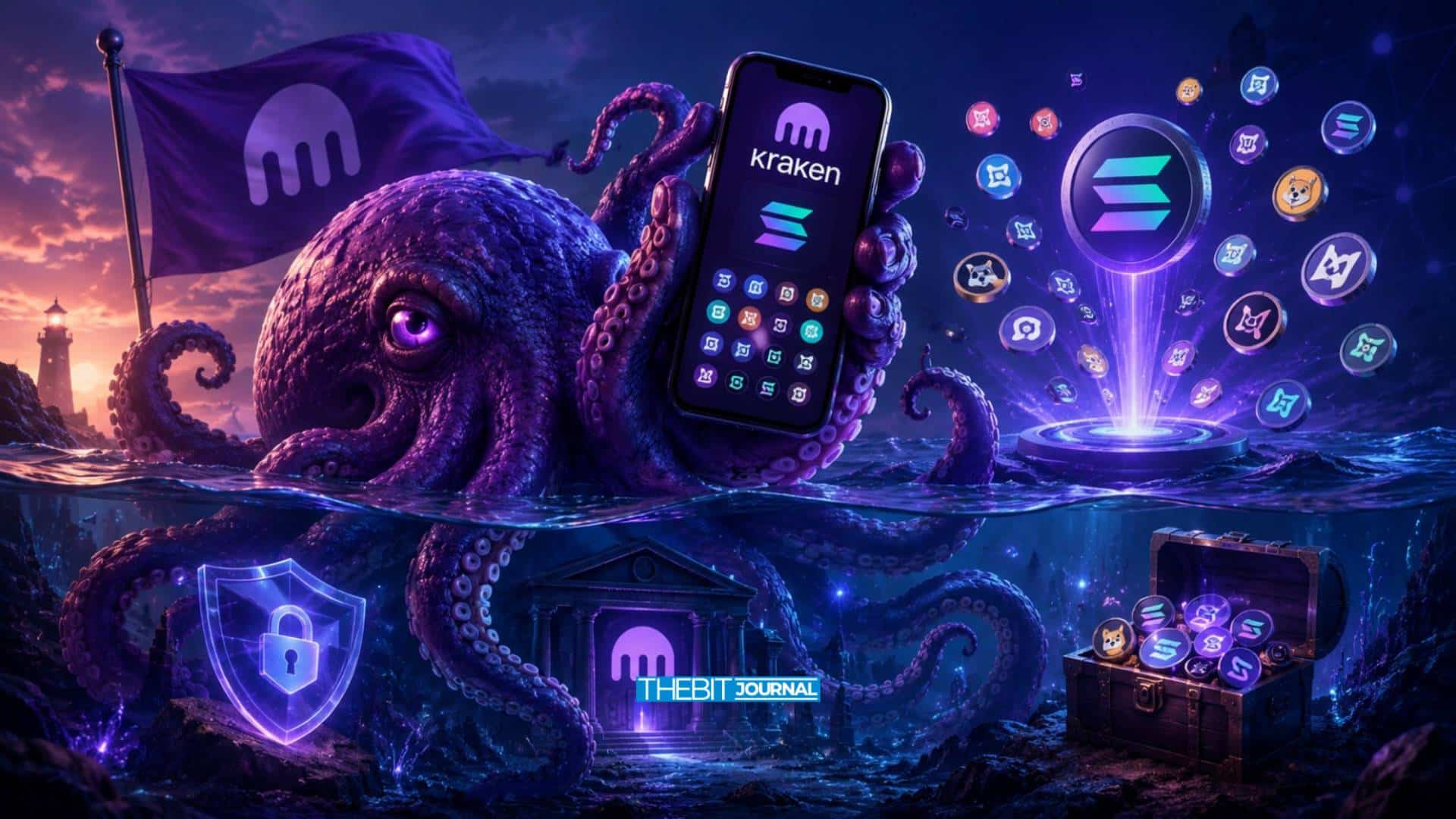
Kraken Solana trading has launched inside the exchange’s mobile app. The feature gives users in the United States and more than 100 other countries access to over 2,500 Solana-based tokens. Many of these assets are not listed on centralized exchanges.
The rollout lets users buy, hold, and sell Solana ecosystem tokens with USD or USDC. It brings on-chain trading into a familiar Kraken interface. Users do not need a separate wallet, seed phrase, bridge, or manual gas setup.
Kraken Solana Trading Combines CEX Access With DEX Exposure
Kraken Solana trading cuts several steps linked to decentralized finance. The app handles much of the process in the background. This may help users seek wider token access without separate DeFi tools.
The service uses Privy’s embedded wallet technology. It also connects with Solana decentralized exchange protocols. On-chain holdings will appear beside existing Kraken balances.
Kraken Solana trading combines centralized exchange access with decentralized token exposure. The feature keeps the user journey inside Kraken’s mobile app. It also opens access to many emerging Solana tokens.
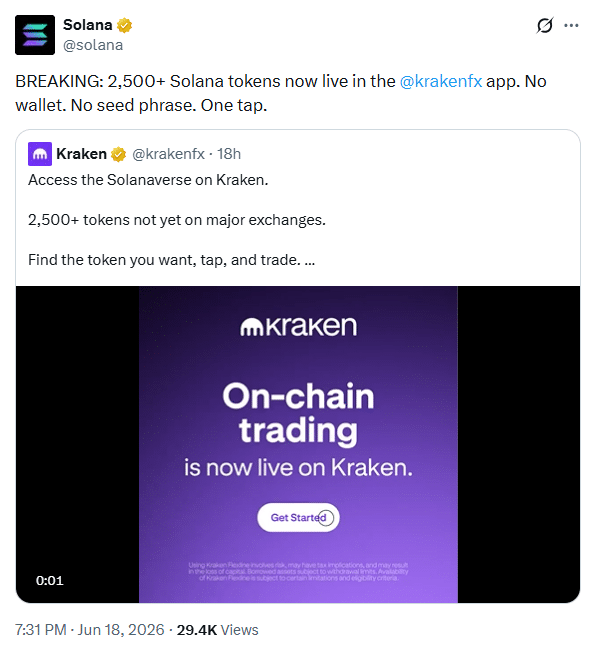
Source: XThe service is self-custodial. Kraken does not hold users’ on-chain assets or private keys. Users remain responsible for their funds, trades, and wallet activity.
Kraken also said it does not control execution. Prices, timing, fill rates, and failed transactions depend on third-party DEX protocols.
Mobile Access Expands Solana Reach
The launch gives retail users a simpler route into Solana markets. It removes the need to leave the Kraken app. This may reduce friction for new on-chain users.
Trading is available through USD and USDC. The app keeps the experience close to standard exchange trading. That structure may make Solana token access easier.
Self-Custody Brings Responsibility
Kraken Solana trading does not remove custody risk. Self-custody gives users more control. It also gives them more responsibility.
Kraken said the tokens are not reviewed or approved by the exchange. Users may face weak liquidity, sharp price swings, or project-level risks. The exchange warned that users could lose funds.
DEX Routing Creates Execution Risk
Trades depend on third-party Solana DEX protocols. These protocols route orders through available liquidity. This can create slippage during busy market periods.
Transactions may fail or face delays. Network congestion can affect speed. Final prices may differ from what users first see.
Smart contract risk also remains. Kraken can simplify access, but it cannot remove technical risks from decentralized systems.
More Blockchain Networks May Follow
Kraken Solana trading is part of a wider push into on-chain access. The exchange said it plans to add more blockchain networks. It did not give a timeline.
Kamo Asatryan, Chief Data Officer of Payward and Global Head of Consumer, said the focus is access. He said crypto trading should feel simple, even when the technology is powerful.
US Derivatives Launch Adds Context
The Solana rollout came after Kraken added perpetual futures for eligible U.S. customers. That product is available on Kraken Pro. It is operated through Bitnomial, which Kraken recently acquired.
The futures product runs under a CFTC regulated framework. It allows eligible U.S. traders to access perpetual futures beside spot, margin, and traditional futures.
Conclusion
Kraken Solana trading gives mobile users easier access to thousands of Solana-based tokens. It removes technical steps that often slow new DeFi users. It also keeps trading inside a familiar app.
The feature does not remove market risk. Users still face volatility, slippage, smart contract risk, and self-custody responsibility. Kraken’s move may improve access, but it also brings retail users closer to high-risk token markets.
Appendix Glossary of Key Terms
On-Chain Trading: Trading that takes place directly through blockchain-based systems.
Self-Custody: A setup where users control their own assets and private keys.
DEX Protocols: Decentralized exchange systems that route crypto trades on-chain.
Privy: Embedded wallet technology used to support wallet access inside apps.
USDC: A U.S. dollar-pegged stablecoin used for crypto trading and payments.
Slippage: A price change between the expected trade price and final execution price.
Smart Contract Risk: The risk of bugs or failures in blockchain-based trading code.
Frequently Asked Questions About Kraken Solana Trading
1- What is Kraken Solana trading?
Kraken Solana trading gives users access to over 2,500 Solana-based tokens.
2- Is the service custodial?
No. Kraken does not hold users’ on-chain assets or private keys.
3- What can users trade with?
Users can trade supported tokens with USD or USDC.
4- What are the main risks?
Risks include volatility, slippage, failed transactions, and possible loss of funds.
References
Read More: Kraken Solana Trading Launches With Access to Over 2,500 On-Chain Tokens">Kraken Solana Trading Launches With Access to Over 2,500 On-Chain Tokens
0
0


 Manage all your crypto, NFT and DeFi from one place
Securely connect the portfolio you’re using to start.

0
0

0
0

0
0

0
0