
Singapore: AI Tailwinds Help Offset Conflict Drag, Says UOB

0
0
BitcoinWorld
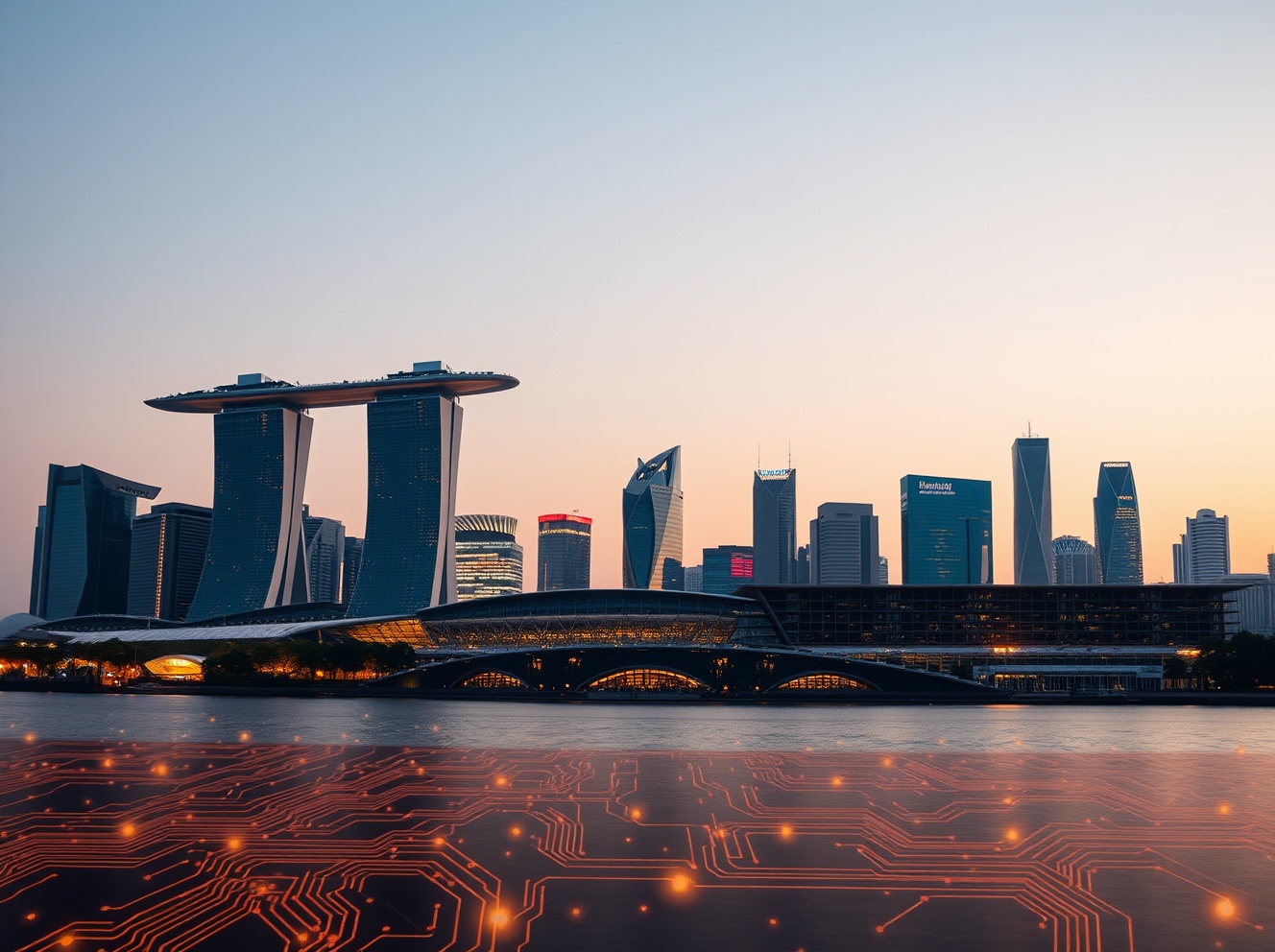
Singapore: AI Tailwinds Help Offset Conflict Drag, Says UOB
Singapore’s economy is navigating a complex global environment, with strong growth in the artificial intelligence sector providing a counterbalance to headwinds stemming from ongoing geopolitical conflicts, according to a recent analysis from United Overseas Bank (UOB). The report highlights how the city-state’s strategic positioning and robust tech ecosystem are helping to mitigate external pressures.
UOB’s Assessment of Singapore’s Economic Landscape
UOB’s analysis points to a bifurcated economic picture for Singapore. On one hand, the global tech downturn and persistent conflicts, particularly in Eastern Europe and the Middle East, have disrupted supply chains and dampened trade sentiment. These factors have traditionally weighed on Singapore’s open, trade-dependent economy. However, the surge in demand for AI-related infrastructure, including advanced semiconductors, data centers, and cloud services, is providing a powerful new growth engine.
The bank notes that Singapore’s established position as a regional hub for technology and finance makes it a primary beneficiary of the AI boom. Investments from major global tech firms in local data centers and research facilities are translating into tangible economic activity, from construction to high-value services.
How AI is Driving Growth Amid Global Uncertainty
The AI tailwind is not merely a theoretical concept; it is reflected in Singapore’s trade and manufacturing data. Exports of integrated circuits and other electronic components, which are critical for AI computing, have shown resilience. Furthermore, the services sector, particularly in areas like research and development, software engineering, and intellectual property management, is expanding to support AI adoption.
This sectoral shift is helping to offset weakness in other areas, such as traditional manufacturing and retail trade, which are more sensitive to global consumer demand and geopolitical disruptions. UOB’s report suggests that this structural change could provide a more durable foundation for Singapore’s long-term growth, reducing its historical vulnerability to global economic cycles.
Implications for Investors and Businesses
For market participants, the UOB analysis underscores the importance of looking beyond headline GDP figures. While the overall growth rate may be tempered by external drags, the composition of growth is shifting towards higher-value, technology-driven sectors. This has implications for investment strategies, with sectors tied to AI, digital infrastructure, and advanced manufacturing likely to outperform.
Businesses operating in Singapore are also advised to consider how they can leverage the AI ecosystem, whether through direct investment in technology, partnerships with research institutions, or by upskilling their workforce to meet new demands.
Conclusion
UOB’s balanced outlook for Singapore reflects a nuanced understanding of the current global economy. The bank acknowledges the very real challenges posed by geopolitical tensions but emphasizes that the AI revolution is creating a powerful countervailing force. For Singapore, the key to sustained growth will lie in its ability to continue attracting high-value tech investments and to navigate the ongoing uncertainties with its characteristic agility. The report provides a useful framework for understanding the competing forces shaping one of Asia’s most dynamic economies.
FAQs
Q1: What does UOB mean by ‘AI tailwinds’ for Singapore?
UOB refers to the strong economic benefits Singapore is receiving from the global growth of the artificial intelligence industry. This includes increased investment in data centers, semiconductor demand, and high-value tech services, which are creating jobs and boosting exports.
Q2: How are global conflicts dragging Singapore’s economy?
Geopolitical conflicts, such as the war in Ukraine and tensions in the Middle East, disrupt global supply chains, increase energy costs, and dampen trade sentiment. As a major trading hub, Singapore is sensitive to these disruptions, which can slow down non-tech sectors.
Q3: Is this analysis relevant for long-term investors?
Yes. The analysis highlights a structural shift in Singapore’s economy towards technology and AI. Long-term investors may find opportunities in sectors like tech infrastructure, semiconductors, and digital services, which are expected to be key growth drivers despite short-term global uncertainties.
This post Singapore: AI Tailwinds Help Offset Conflict Drag, Says UOB first appeared on BitcoinWorld.
0
0

 Manage all your crypto, NFT and DeFi from one place
Securely connect the portfolio you’re using to start.

0
0


0
0