
25 Cryptos to Sell Before They Die
38
34
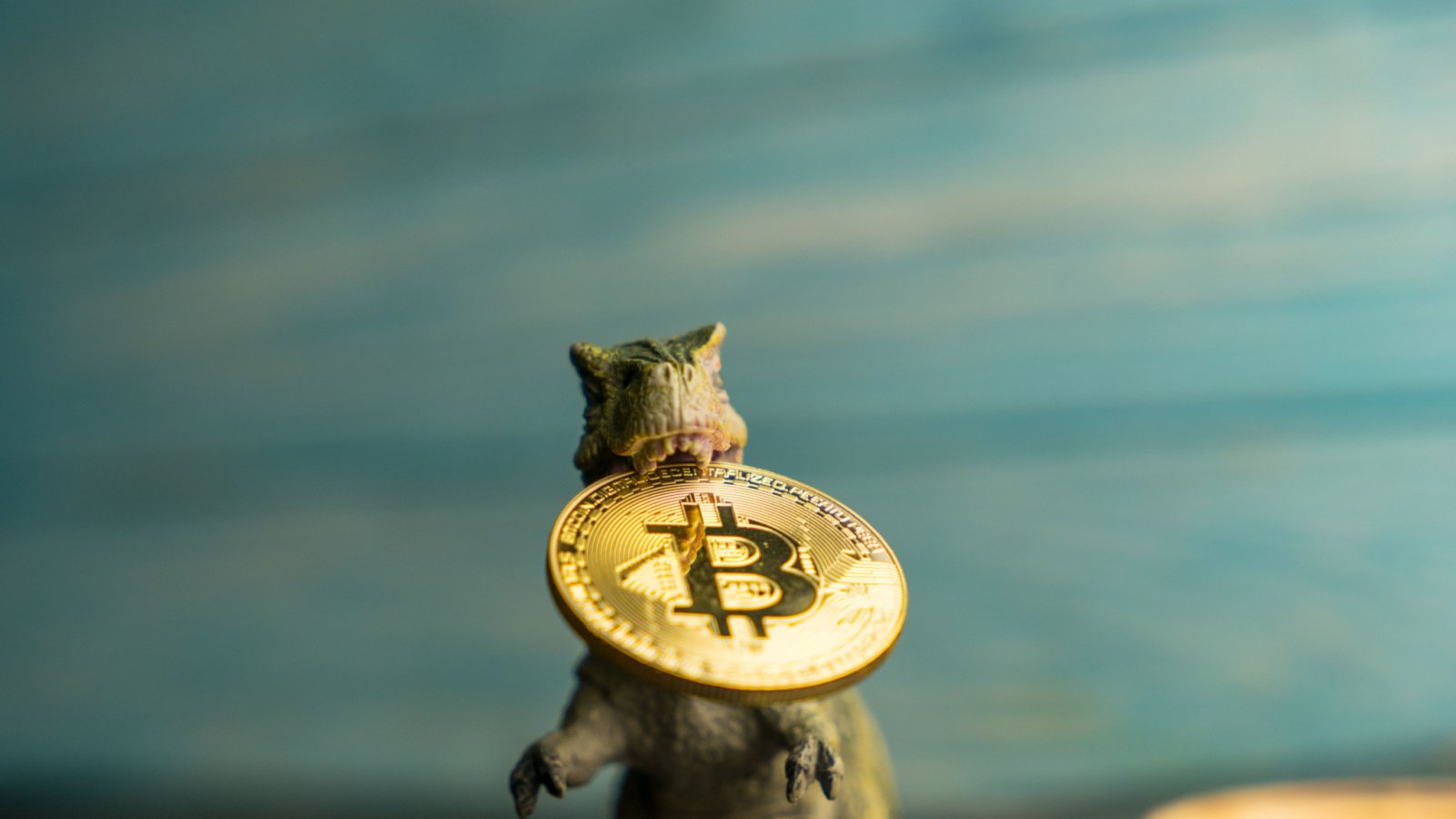
If you’re holding onto a dozen cryptos right now, you’ll want to sell many of them off anyway. In a market of thousand upon thousands of options, only a fraction of a percent of the total cryptos on the market will be around in the future. Simply put, most of these investments are garbage. They are rip-offs of other projects, purely speculative tokens or have no use case that’s actually practical. Even many of the more useful coins underlying competitive projects will fall as their competitors win more users.
What’s not worth keeping in your bag any longer? If it’s not a project that takes up much of the crypto world’s daily conversation, it’s probably not worth holding. Even still, there are plenty of projects that maintain a healthy presence in the news cycle which don’t stand much chance of existing even just a few years down the line.
So, without further ado, consider these cryptos to sell:
- Ethereum Classic (ETC-USD)
- Shiba Inu (SHIB-USD)
- Monero (XMR-USD)
- Zcash (ZEC-USD)
- Terra Classic (LUNC-USD)
- Terra (LUNA-USD)
- Audius (AUDIO-USD)
- Dogecoin (DOGE-USD)
- Bitcoin Cash (BCH-USD)
- Bitcoin SV (BSV-USD)
- Solana (SOL-USD)
- Avalanche (AVAX-USD)
- Tron (TRX-USD)
- ApeCoin (APE-USD)
- Chiliz (CHZ-USD)
- Sandbox (SAND-USD)
- Decentraland (MANA-USD)
- Zilliqa (ZIL-USD)
- Axie Infinity (AXS-USD)
- Polkadot (DOT-USD)
- Kusama (KSM-USD)
- Internet Computer (ICP-USD)
- Stellar (XLM-USD)
- Aptos (APT-USD)
- Tether (USDT-USD)
Ethereum Classic
Ethereum Classic (ETC-USD) is a prime example of a project that has gotten as far as it has almost wholly by its name. This network has fallen to the wayside in favor of more practical options. And, even if it has the claim to fame as the “true Ethereum,” that doesn’t give it any sort of meaningful value.
Ethereum Classic really is what the original Ethereum (ETH-USD) network was like. It’s a proof-of-work network, representing what is left of the original Ethereum prior to its infamous 2017 hack. Developers and users alike had to decide how to proceed after the hack. The solution? A hard fork that would change the Ethereum protocol at its core in an effort to up security. A sizable portion of the community wanted no such thing, though, resulting in ETC as the “true Ethereum” play.
This is no selling point, however. The network is clunky, it does not scale and it doesn’t hold a candle to Ethereum’s thousands of dapps. Not to mention, it lacks all of the major features that the Merge brought to ETH recently, which greatly bulked up its own fundamental value.
Shiba Inu

Shiba Inu (SHIB-USD) fans are loyal to their project and the developers are promising to do great things with it now that there’s so much money flowing through the ecosystem. Unfortunately for investors, though, there isn’t a use case strong enough to justify holding onto the token.
When SHIB prices started taking off, they were doing so in the wake of Dogecoin’s rise from 1 cent to more than 70 cents. SHIB likely faced this spike due to the similarity of its branding; both cryptos use Shiba Inu dog logos and cast themselves as more “meme” than “coin.”
However, this is now coming back to bite the project. Well over a year on from its initial price pump, SHIB is struggling to give a reason for investors to hold it. Much of its existing uses are only in farming yields of other sibling tokens.
You can’t actually do anything with these tokens either, outside of using them on the project’s metaverse experience. A “Shibarium” layer-2 would certainly help the struggling coin, which developers announced at the beginning of 2022, but it still hasn’t arrived. And, even if released, SHIB is beholden to developers actively choosing Shibarium over other layer-2s like Polygon (MATIC-USD) in order for it to take off.
Monero and Zcash

Monero (XMR-USD) and Zcash (ZEC-USD) are good cryptos in terms of use case. However, they have targets painted on their backs that governments all around the world will be aiming at. There’s reason to believe the days of privacy cryptos are numbered, making XMR and ZEC cryptos to sell.
Know Your Customer (KYC) rules are becoming of particular interest to governing bodies. These rules would require companies to keep identifying information on each of their clients, making activity always traceable. The European Union (EU) made headlines earlier this summer when it advanced KYC rules for crypto companies.
Privacy coins are going to be greatly hampered by this legislature. Even if they aren’t being traded on exchanges beholden to KYC requirements, crypto wallets themselves must also follow these regulations.
One might think it’s not a big deal for any number of reasons. U.S. companies aren’t constrained by these laws and the companies don’t need to be reporting the information, just simply keep it on hand. But this is only one step in a long process to remove anonymity from the blockchain. And as more legislation comes up requiring crypto users to dox themselves, any coin built specifically to undermine these regulations may become a target itself.
Terra Classic

Terra Classic (LUNC-USD) is one of the most no-brainer cryptos to sell on this entire list. The spectacular collapse of the Terra network has precipitated much of the crypto winter investors find themselves in now. And while developers had desperately tried to keep the project alive in the aftermath of its implosion, the final product is a shell of what once was.
At the beginning of the year, Terra was a legitimately solid product. It was a layer-1 network with its own ecosystem of dapps to interact with. Its stablecoin was also one of the most popular in the world and its algorithmic pricing model seemed both innovative and unique. Best of all, it created arbitrage opportunities for users to simply earn passive income.
But when this stablecoin’s algorithmic model failed and prices sank to a fraction of a penny, the chances it would reclaim $1 were but a pipe dream. The Terra Classic network, which essentially slaps a new coat of paint on the failed ecosystem, doesn’t do anything to get it nor the LUNC crypto back on track, either. It’s essentially the Terra version of Ethereum Classic — you might say it’s the original, but “original” doesn’t always mean “quality.”
Terra 2.0
While we’re at it, the new Terra (LUNA-USD) network and its LUNA crypto aren’t much better. The hard-forked project is but a half-baked attempt to satiate investors who didn’t even want the project in the first place. In fact, Terra’s founder may have even manufactured the support for the hard fork before it occurred.
The new Terra promised to be a place for developers to continue building on the layer-1. With Terra Classic’s LUNC prices so low — and its stablecoin not at all stable — new developers wouldn’t want to build on that chain. So, developers proposed a hard fork to create the 2.0 network.
When it was first fielded, community members responded aggressively against the idea. A preliminary vote saw 92% of respondents voting against the fork. And yet, when the real vote came and went, 65% of voters approved the hard fork. This vote came only days after the first, so what happened? Well, as many reports have alleged at this point, it seems that Terra founder Do Kwon used a secret wallet full of LUNA to force his own proposal through. Of course, we now know Kwon as the crypto entrepreneur in hiding from the South Korean government, which is slowly peeling back all the layers of this complicated story.
Audius

Audius (AUDIO-USD) is a great example of adding a blockchain solution to a problem that doesn’t really exist. It’s original by blockchain standards, that’s for sure. No music streaming service in the crypto world is as large or as robust as Audius. The project has some big collaborators as well, working with high-caliber electronic music artists like deadmau5, 3LAU and Louis the Child.
And yet, the service doesn’t offer much of a drastic change from music services that currently run the industry. Its catalogue is small, which it can’t be faulted for; labels and artists must work with the project to get music onto the Audius library. For as new as the project is compared to blue-chip streaming platforms, it does have an impressive selection.
However, the blockchain technology of Audius doesn’t make for a particularly strong selling point. For one, it claims that its decentralized nature helps artists get paid more for their streams. Yet there are already streaming services like Tidal which pay much more per stream than other services — and do so at the highest audio quality possible. Audius also claims to put fans and musicians closer than ever. But services like Bandcamp have been doing so for years — and are lauded as even better ways to support artists than digital streaming.
Dogecoin
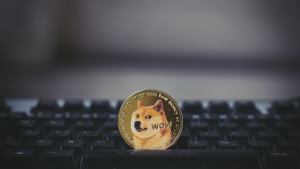
Yes, Dogecoin (DOGE-USD) is one of the cryptos to sell right now, regardless of the hype. I’d honestly argue that its unprecedented growth through 2021 was nothing more than a fluke brought on by the crypto bubble. Now that the bubble has popped, it’s time for DOGE to resume its duties as resident meme of the crypto world and nothing more.
Dogecoin owes much of its success to Bitcoin (BTC-USD). When Bitcoin began surging in late 2020, it gained thousands of dollars in value each month. BTC prices rapidly went far beyond where they had ever been and investors began to fear that they had already missed the boat.
In the search for a new crypto that could seemingly go up just as well, the masses apparently decided on Dogecoin. This makes sense, since Dogecoin borrows heavily from Bitcoin’s model. It’s a proof-of-work currency with its own blockchain. But unlike Bitcoin, its total supply is limitless, meaning it can be mined forever.
However, Bitcoin already serves the needs that Dogecoin faithfuls still hope DOGE will. It’s the king of peer-to-peer transactability and stands to be adopted far faster than DOGE. Not to mention, DOGE’s founders say the coin is meant to be a joke and nothing more. That means its developmental aspirations don’t exactly put it on a winning trajectory.
Bitcoin Cash and Bitcoin SV

Bitcoin Cash (BCH-USD) and Bitcoin SV (BSV-USD) are more examples of hard forks that aren’t worth holding onto at this point. While their use cases may be there, they’re just not projects that solve anything new or seem like they will see widespread adoption. That lands them on this list of cryptos to sell.
Bitcoin Cash came about in 2017 as one of the biggest hard forks in the history of Bitcoin. The fork came as a result of the BTC community’s divide over changing the Bitcoin protocol to accommodate layer-2 solutions on the network. As is the case with Ethereum’s 2017 hard fork, a camp of Bitcoiners opposed the changes, unhappy with how the upgrade would affect the processing of data blocks.
Bitcoin Cash was thus created to retain the old Bitcoin. Though, as is also the case with Ethereum Classic, Bitcoin Cash is a stagnant product. Sure, it’s more affordable than Bitcoin and transactions can be handled by the whole BCH rather than the fractions that BTC traders deal in. But the pros pretty much end there. Bitcoin’s Taproot upgrade is a major plus for investors that most have flocked to by now.
Bitcoin SV is a further hard fork of the Bitcoin Cash hard fork, occurring in 2018. This fork occurred as a result of another developmental pursuit, with Bitcoin SV supporters claiming the project is the most true to Satoshi Nakamoto’s intended vision.
Maybe so, but both of these projects are still esoteric and don’t offer anything better than what Bitcoin already does. Leave these projects to the Bitcoin maximalists.
Solana, Avalanche and Tron
I want to preface these choices by saying that I don’t find S0lana (SOL-USD) or Avalanche (AVAX-USD) or Tron (TRX-USD) to be bad projects. They are very expansive, with deep pockets of investors and lots of dapps. But I don’t see any of these projects holding up to what Ethereum already offers and what Binance (BNB-USD) threatens to produce. That makes them cryptos to sell. While I don’t see these projects going away for a while, I do believe they’re going to be relegated to niches down the line, rather than the everyman’s network that Ethereum will be.
Ethereum was running before anybody even heard the starting gun and that’s enough to make it the future king of Web 3.0. Already, the network has thousands of projects. These three networks, on the other hand, just have a few hundred apiece. It will be hard for any of them to close such a gap. In fact, unless Ethereum suffers some catastrophic failure, one can expect it to be one of the top locales for a blockchain-based iteration of the web.
In recent years, these projects have been able to rely on scaling as a selling point over Ethereum. Each use far less energy-intensive transaction methods and could process many thousands more transactions per second than Ethereum. But after the Merge upgrade, Ethereum is capable of processing just as many transactions. Ethereum also threatens to do even more as it implements sharding and other scaling products.
These project may have been described as “Ethereum killers,” but they won’t be. Even Solana’s owner recognizes the situation that these three names find themselves in. Ethereum will likely handle 90% of the world’s transactions, leaving smaller projects to fight with the monstrous Binance for the other 10%.
ApeCoin

Rug-pull scams might have died down in recent months. However, the non-fungible token (NFT) market trend is still bringing out some of the worst cash grabs that the blockchain world has to offer. Nothing represents this as much as the Bored Ape Yacht Club (BAYC) — a collection of digital art consisting of randomly generated monkey drawings which regularly fetch thousands, if not millions, of dollars.
While many praise NFTs for creating a space to let artists distance themselves from the predatory art industry by being their own middlemen, collections like BAYC are simply capitalizing on the hype by putting out status symbol tokens that people buy for thousands of dollars. These collections can only last as long as the hype does. And, with sales in decline and critics becoming more vocally opposed to the trend, it’s only a matter of time before BAYC dies off.
This spells disaster then for the future of ApeCoin (APE-USD), a cryptocurrency made by BAYC fanatics solely to underlie the BAYC ecosystem. The token enjoyed quite a rally when it first released in March 2022, but since April it has been plateauing. The price of ApeCoin likely won’t sustain much longer. In fact, if BAYC sales are any indicator, a drop may come soon. Consider APE one of the cryptos to sell.
Chiliz

Chiliz (CHZ-USD) is a unique premise for a crypto, exemplifying just how creative developers can get with blockchain technology. Unfortunately, though, the project isn’t servicing any need nor offering any sort of entertainment that people will really want. It’s a novelty project that will likely not last, making CHZ one of the cryptos to sell.
Chiliz is the crypto underlying Socios.com, a “fan loyalty” platform for sports around the globe. The company behind the project enjoys a breadth of partnerships — from the NBA, NFL and NHL to many professional soccer teams around the world. Earlier this year, Socios even signed a $20 million deal to make soccer star Lionel Messi its brand ambassador.
But for all the money being funneled into the project, a pragmatic mind doesn’t see the crypto taking off beyond its previous successes. It’s a bit of a novelty; using CHZ, one can participate in polls, get VIP rewards (usually something like an NFT) and access promotions. Aside from the odd ticket discount or whatnot, though, these use cases are glitzy trinkets that are fun for a few minutes. Some would argue that the token will take off, as sports fans are statistically more likely to buy crypto. However, I remain skeptical about the barriers to entry being worth the half-baked product on the other side.
Sandbox, Decentraland and Zilliqa

The metaverse is a buzzword that has become quite polarizing throughout 2022. Will people use it? Do they need it? What can the metaverse do that person-to-person interaction can’t? Or social media, for that matter? While there’s a legion of metaverse faithfuls that think the space will change the way we interact, there are plenty more skeptics who see it as a fad akin to NFTs. And with Sandbox (SAND-USD), Decentraland (MANA-USD) and Zilliqa (ZIL-USD) competing with the likes of Meta Platforms (NASDAQ:META) and Microsoft (NASDAQ:MSFT), there’s a high chance the three get squashed out. That makes them cryptos to sell.
Contrary to popular belief, the metaverse doesn’t need the blockchain. The reason projects like Decentraland and Sandbox have taken off is because, with the blockchain, they can offer unique items and plots of land as NFTs, making them truly exclusive. As NFTs soared in popularity throughout 2021 and much of 2022, this was a major pro to using their services.
And yet, as Meta is proving with its Horizon Worlds experience, NFTs and blockchain tech don’t make metaverse spaces popular. The tech giant’s foray into the three-dimensional social experience is proving vastly more popular than any of these three blockchain metaverse stars. Even as Meta struggles to bring in and retain users, its 200,000 regular users stand in stark contrast to Decentraland’s 10,000. But that’s not all. These metaverse cryptos will also have to compete with the likes of Microsoft and other tech giants in the near future.
Axie Infinity (AXS)
Axie Infinity (AXS-USD) has been one of the top cryptos to sell for a while now. But if you haven’t unloaded all of your AXS tokens yet, now’s the time. Play-to-earn (P2E) dapps aren’t what they used to be and, after its parent chain’s hack in early 2022, the chance of a rebound is drastically decreasing for Axie.
For a six-month period, Axie Infinity prices couldn’t stop growing. The project, which allows users to play an arena-style game for passive income, had changed the way people saw passive income in crypto. Some had even to taken to playing the game full-time, as they were making more money from it than from working jobs elsewhere.
However, since reaching an all-time high of more than $160 in November 2021, AXS has been in fast decline. This token has been trending far downward. By January 2022, it was under $100 — and it hasn’t returned to that milestone, either.
Of course, the hack orchestrated on Axie’s parent blockchain, Ronin (RON-USD), didn’t help things. The heist — worth over $650 million — preceded more steady declines that brought AXS prices to around $10. With P2E games on the decline and one of the largest hacks in crypto history on its record books, users are unlikely flock back to Axie Infinity anytime soon.
Polkadot and Kusama

Polkadot (DOT-USD) and its sister project, Kusama (KSM-USD), are some of the more unique projects in the crypto space. However, they’re not networks that lend well to the dapp scaling needed for the future of blockchain. That, combined with the “rental” model of their parachains, threatens their longevity and lands them on this list of cryptos to sell.
These projects aren’t just any layer-1 blockchain networks. Rather, they’re both 100 “parachains” that coexist with one another. These parachains each hold one dapp, whose developers compete with others in an auction to use. Developers rent these parachains for a set length of time before they are auctioned off once more.
The pros are obvious for developers and their users. Having an entire parachain for one project is fantastic for scaling. Transaction times and gas fees are greatly helped by this, too. These projects also have the benefit of Polkadot’s support team helping them through their terms.
However, there are several drawbacks which don’t aid DOT or KSM for the long run. For one, each project is only capable of holding 100 dapps at a given time. And they don’t choose which dapps they have onboard. Instead, they randomly select them from a pool of bidders. This doesn’t lend well to creating a network that serves specific needs. Not to mention, these projects don’t stay forever, meaning popular dapps will need to compete in auctions every time their leases are up. Couple this with the fact that both projects rely heavily on bridges — one of the least secure tools in crypto — and there’s reason to be skeptical of both cryptos’ futures.
Internet Computer

Internet Computer (ICP-USD) had made some big claims about what it would be in the past. Unfortunately, though these plans didn’t pan out and the network imploded almost immediately, followed by a string of controversies. Now, it’s attempting to mount a comeback, but don’t believe any hype. ICP is one of the cryptos to sell.
At the time of the project’s launch in 2021, ICP was threatening Ethereum and every other layer-1 with bold claims around its scalability. The blockchain, developed by Dfinity, claimed it could run at internet speeds — far faster than anything witnessed beforehand on the blockchain. The non-profit institution which put the network out had sourced investments from top crypto investment firms like Andreessen Horowitz.
Launching at a price of over $400 in May 2021, however, the project proved unsustainable from the jump. By July, just two months later, prices were under $50. Now, they are under $5. Almost immediately, claims of secret transactions plagued Dfinity, saying the institution put profit-taking over its long-time supporters and early investors.
Stellar

Stellar (XLM-USD) is a solid project with big promise in the world of cross-border payments. Of the names on this list of cryptos to sell, XLM might be the one with the strongest fundamentals. However, the crypto world is hyper-competitive and, like the layer-1 networks we’ve discussed throughout, Stellar has some major competition standing in its path: Ripple (XRP-USD). If there’s only room for one on the market, XLM will likely be the one to go.
The Stellar project and Ripple are both cut from the same cloth. Jed McCaleb, founder of Stellar, also helped co-found Ripple years earlier. Both projects are focused on making lightning-fast cross-border payments to cut through the red tape of traditional banking and change how money moves.
Stellar does have its positives over Ripple — mainly that it’s much more decentralized and has some scaling benefits over Ripple. However, Ripple is a much larger project already. What’s more, I would argue that the greater centralization of Ripple will help it land a role serving banking institutions. Moreover, Ripple has already struck up deals with many national banks. It’s also a member of the ISO 20022 banking committee, which gives it a lot of sway over crypto’s role to come in international banking. Couple that with a likely catalyst in the event of a court case win and you’ve got a great case for XRP over XLM.
Aptos

Aptos (APT-USD) is the newest project on this list, launching its APT token just this week. Because many haven’t even bought APT yet, it’s less one of the cryptos to sell and more one to avoid. There’s glitz and glamor to the project, sure, but it’s not worth it.
In the lead up to launch, this network had a lot of hype. The crypto was founded by two Meta Platforms alum who worked on Meta’s crypto initiatives in years past. Aptos has also secured investment from FTX, a company that does not throw money around carelessly. It promises to send 130,000 transactions-per-second (tps) as well, a jaw-dropping speed. And, Aptos utilizes a unique programming language called Move, which it hopes will attract developers.
Upon launch, though, the network is already seeing some steep hurdles. For one, Aptos has been criticized heavily because developers airdropped nearly half of the total APT supply among themselves and private investors. The network is also only churning out tps in the single digits — obviously a stark contrast to the promised speed. Founders assert that this throughput will increase as dapp developers join the network. However, there’s also uncertainty that the Move language will succeed in attracting them in the first place.
With so many red flags present, investors should remain skeptical of APT.
Tether

Stablecoins have become a crypto investor’s best friend in recent months, but if there’s any stablecoin project at the top that risks collapse, it’s Tether (USDT-USD). Given its history of misleading investors, a ban in New York and its uncertain future amid regulations, USDT remains one of the best cryptos to sell in favor of other stablecoins.
Tether is far-and-away the largest stablecoin, with a market capitalization of over $68 billion. It’s the most popularly used for DeFi applications and enjoys status as one of the only remaining stablecoins one can trade on Binance outside of Binance USD (BUSD-USD).
However, the project has seen plenty of controversy already. For one, it lied to investors regarding its reserves; Tether used unsecured commercial debt to underlie USDT’s peg, something it only just stopped doing earlier this month. This misrepresentation has already cost the company. Now, USDT trading is banned entirely in New York. These activities have prompted scrutiny by Congress as well, resulting in multiple bills looking to clamp down on stablecoins.
One recent New York Times article shows that crypto experts and economists alike are quite skeptical of Tether. These experts believe Tether’s hubris can only take it so far and, when it fails out, the result on the crypto market could be similarly devastating to what we saw this summer.
On the date of publication, Brenden Rearick did not hold (either directly or indirectly) any positions in the securities mentioned in this article. The opinions expressed in this article are those of the writer, subject to the InvestorPlace.com Publishing Guidelines.
Brenden Rearick is a Financial News Writer for InvestorPlace’s Today’s Market team. He mainly covers digital assets and tech stocks, with a focus on crypto regulation and DeFi.
More From InvestorPlace
38
34


 Manage all your crypto, NFT and DeFi from one place
Securely connect the portfolio you’re using to start.


0
0

