
Ripple SEC lawsuit impact: $150 million bill now fuels Washington’s crypto rethink

0
0
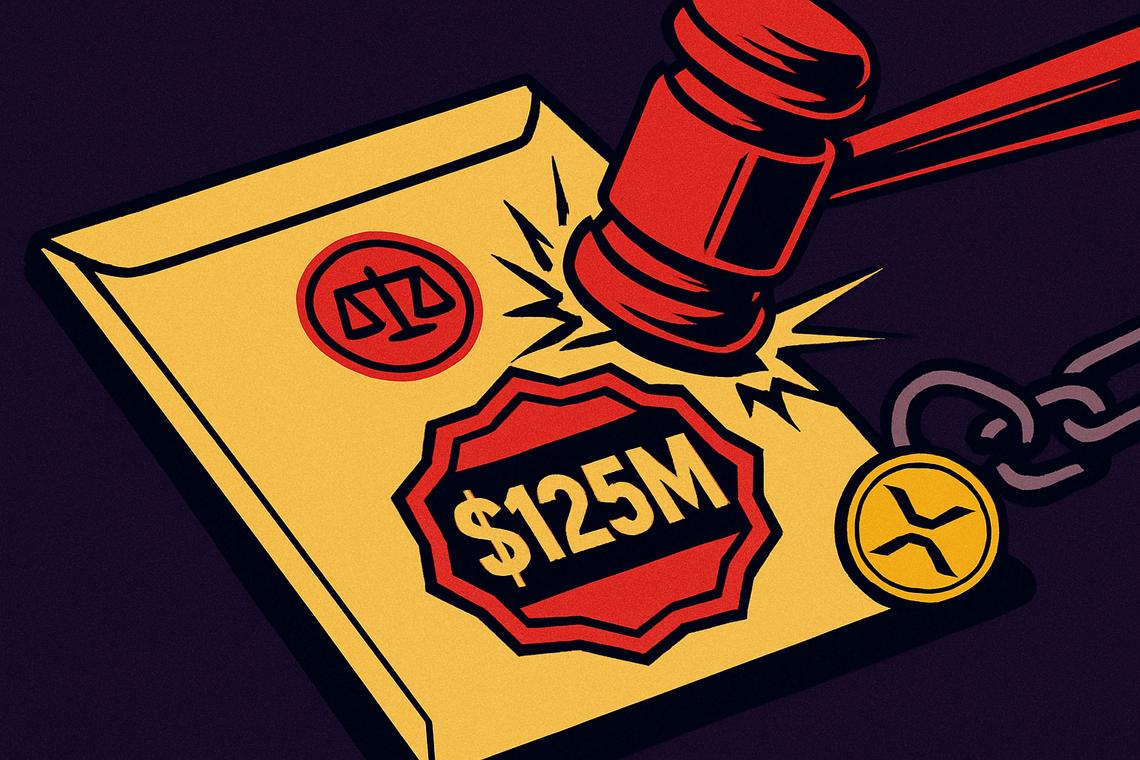
For more than four years, the words “Ripple SEC lawsuit” meant one thing to crypto investors: a legal fight with no clear end date and a bill that kept climbing. Ripple CEO Brad Garlinghouse recently put a number on that fight, saying the company spent roughly $150 million defending itself against the U.S. Securities and Exchange Commission. That figure, and the case behind it, is now being cited in Washington as evidence of what happens when regulators go after crypto companies without clear rules in place.
Key takeaways
- Ripple spent about $150 million fighting the SEC lawsuit, which was filed in December 2020 over unregistered XRP sales.
- The case settled in August 2025 with a $125,035,150 civil penalty and a registration-related injunction.
- The ruling separated institutional XRP sales from secondary-market trading rather than exempting the token entirely.
- CFTC Chair Michael Selig said enforcement-led regulation of crypto is over, pointing to a White House innovation meeting on August 19.
- The stalled CLARITY Act would divide oversight of digital assets between the SEC and CFTC.
Ripple’s Lengthy Legal Battle With the SEC
The Ripple SEC lawsuit began in December 2020, when the SEC sued Ripple along with Garlinghouse and co-founder Chris Larsen, alleging the company raised money through unregistered securities sales of XRP. What followed was years of motions, rulings, and appeals that neither side fully won outright.
Both parties eventually filed a joint stipulation dismissing their appeals in August 2025, according to the SEC’s own litigation release. What remained standing was a civil penalty of $125,035,150 and a registration-related injunction. Garlinghouse has described that resolution as a long overdue surrender by the agency, arguing the SEC pursued Ripple to intimidate the broader industry rather than to address actual fraud.
The ruling itself carried an important nuance that often gets flattened in headlines. It distinguished between Ripple’s institutional sales of XRP and the token’s trading on secondary markets, rather than declaring XRP categorically exempt from securities law. That distinction matters because Ripple has since invoked the case as a kind of template for how digital assets should be treated going forward, even though the legal outcome was narrower than a blanket win.
Regulatory Ambiguity and Its Real-World Costs
Beyond the dollar figure, Garlinghouse has pointed to a second cost of the litigation: talent. He noted that a majority of Ripple’s hiring during the years the lawsuit dragged on happened outside the United States. For Garlinghouse, that’s proof that regulatory uncertainty doesn’t just generate legal fees, it pushes capital and jobs offshore while competitors overseas absorb the growth.
That argument surfaced again around an August 19 White House innovation meeting bringing together crypto executives and regulators to discuss digital-asset policy, including the stalled CLARITY Act. Garlinghouse SEC Chair Paul Atkins joined representatives from Coinbase, Kraken, Gemini, Robinhood, Nasdaq, and Intercontinental Exchange at the event. In comments afterward, he cited a figure showing that 67 million Americans, or close to one in four people, now hold crypto — the political backdrop he says makes the Ripple SEC lawsuit relevant beyond its own case file.
Garlinghouse is positioning the years-long dispute not as a closed chapter but as a cautionary example lawmakers should reference when arguing for a formal SEC regulatory pathway for crypto issuers. In other words, the same case that cost Ripple $150 million is now being repurposed as a lobbying tool for clearer rules.
A Shift in Washington’s Approach to Crypto
The tone coming out of federal regulators has changed noticeably since the case wound down. CFTC Chair Michael Selig used his appearance at the August 19 White House meeting to draw a hard line under the enforcement-heavy posture that defined the Ripple SEC lawsuit era. He said innovators are now being welcomed to the White House instead of being, in his words, “railroaded to the big house.”
Selig added that more regulatory roadmap details would follow at the CFTC’s inaugural Innovation Advisory Committee meeting on August 20, with a published agenda covering digital assets, tokenized collateral, and emerging financial products. That kind of public commitment from a sitting CFTC chair, delivered with Ripple’s leadership in the room, signals more than a mood shift — it suggests agencies are actively trying to move away from the litigation-first model that produced years of uncertainty for XRP holders and other token issuers alike.
The CLARITY Act and What Comes Next
At its core, this debate centers on legislative action. The CLARITY Act, currently stalled, would shift away from the protracted litigation approach that drained Ripple’s resources toward establishing clear regulatory boundaries between the SEC and CFTC. Industry stakeholders have similarly advocated for a token safe harbor mechanism, enabling ventures to gather capital and establish platforms without risking enforcement proceedings after years of operation.
The likelihood of this approach advancing through Congress during the current legislative session remains uncertain. Selig’s remarks indicate the CFTC plans to move forward with its own regulatory framework independent of legislative progress, though establishing a stable jurisdictional arrangement between both agencies ultimately requires congressional intervention beyond regulatory initiatives alone.
For traders, the immediate legal risk tied to the Ripple SEC lawsuit itself is closed — the penalty and injunction from the district court’s judgment stand as final, and there’s no new courtroom threat to XRP on the horizon. The more meaningful signal is political: a CFTC chair publicly renouncing enforcement-led regulation, with Ripple’s own leadership present to hear it, raises the likelihood that market-structure legislation receives attention in the current cycle instead of being postponed once again.
FAQ
What was the outcome of the SEC lawsuit against Ripple?
The case settled in August 2025 with Ripple paying a $125 million civil penalty and agreeing to a registration-related injunction.
Why does Ripple’s CEO link regulatory ambiguity to capital moving offshore?
Brad Garlinghouse noted that most hiring happened outside the US during the lawsuit period, showing regulatory uncertainty drives capital and jobs offshore.
What regulatory changes has the CFTC announced regarding crypto enforcement?
CFTC Chair Michael Selig announced an end to enforcement-led regulation of crypto, signaling a shift to welcoming innovation at the White House.
What is the purpose of the CLARITY Act in crypto regulation?
The CLARITY Act aims to clarify the split in regulatory jurisdiction between the SEC and CFTC to reduce litigation uncertainty like Ripple’s case.
Article produced with the assistance of artificial intelligence and reviewed by the editorial team.
0
0

 Manage all your crypto, NFT and DeFi from one place
Securely connect the portfolio you’re using to start.


