
Top Crypto Coins That Could Define the Next Market Phase: BlockDAG, Dogecoin, Litecoin & Toncoin

0
0
Crypto markets are no longer driven by a single type of asset. Among today’s top crypto coins, BlockDAG, Dogecoin, Litecoin, and Toncoin each reflect different design choices and usage patterns.
Dogecoin represents sentiment-driven movement, where community attention often plays a key role in short-term price behavior. That contrasts with Litecoin, which is built around steady, payments-focused usage and has maintained a consistent role in peer-to-peer transactions over time. Moving further along the spectrum, Toncoin connects blockchain activity with messaging and application ecosystems, linking adoption more closely to platform usage.
BlockDAG sits alongside these but follows a more activity-driven structure, where circulation design, buyback activity, and ongoing participation shape how supply and engagement interact. Together, these assets show different approaches to network design, usage, and market behavior.
1. BlockDAG: Pricing Windows Shaping Market Participation Cycles
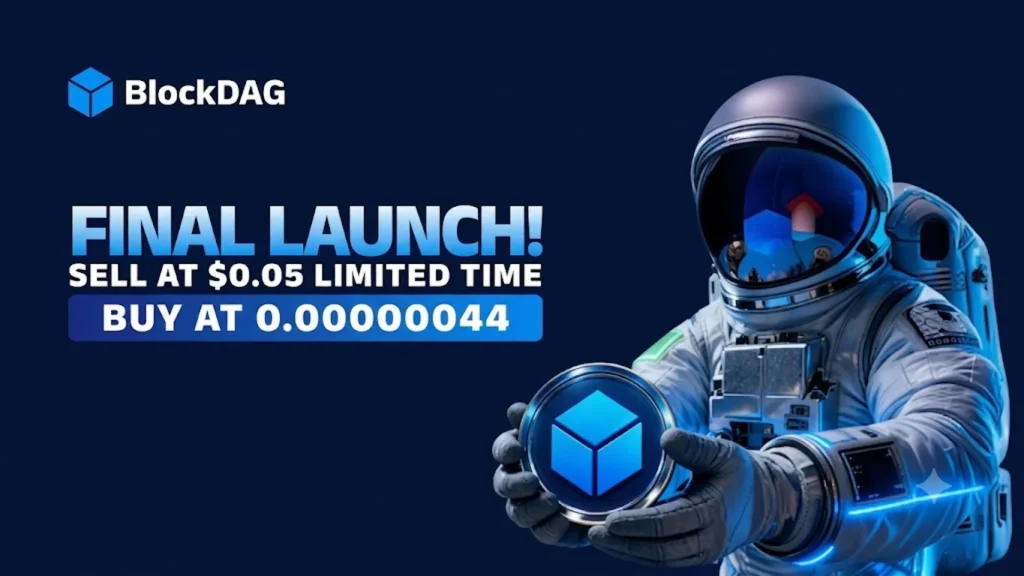
BlockDAG operates with a structured market cycle built around active buyback mechanisms and controlled liquidity windows that influence how supply moves through the system. Within the top crypto coins, BlockDAG (BDAG) is often referenced for its structured pricing and circulation phases. The ongoing Legacy Sale offers BDAG at $0.00000044 and is linked to system-side buyback valuation at $0.05 with no upper sell limit.
More than 1B coins have already been returned to the system through the buyback program, marking significant participation and high transaction throughput within the ecosystem. Existing holders from earlier price windows can access the buyback framework, where approved holdings may be sold at $0.00025 per coin.
These transactions will be processed within a structured daily sell limit, and all completed settlements will be delivered in a single USDT payment. This structure is designed to regulate flow while maintaining consistency across participation cycles.
BlockDAG continues to repurchase supply from exchanges and its internal dashboard as part of a broader strategy to strengthen circulating structure and maintain controlled distribution. This aligns with its stated objective of progressing toward becoming a Top 50 cryptocurrency by market presence and network activity metrics.

As these structured windows remain active, access is time-bound and dependent on current program availability. The present phase reflects a limited operating cycle where conditions are actively in motion, and once it closes, the same buyback and pricing framework may no longer be available in its current form.
2. Dogecoin: Community Sentiment Shaping Short-Term Price Moves
Dogecoin continues to function as a high-liquidity digital asset with trading activity closely linked to market attention and retail participation patterns. Its valuation behavior tends to reflect shifts in overall crypto risk appetite rather than protocol upgrades or network changes.
Recent market data places Dogecoin in a fluctuating range of roughly $0.07 to $0.15, with intraday movement often influenced by trading volume spikes across major exchanges. These shifts can occur quickly during broader market rotations, especially when attention moves between large-cap assets.
Among the top crypto coins, Dogecoin is commonly tracked for its liquidity depth and accessibility across trading platforms. Its price direction typically follows sentiment cycles and macro crypto momentum, with limited deviation driven by internal network developments.
3. Litecoin: Stable Payments Network With Predictable Transaction Flow
A long-standing presence in crypto markets, Litecoin is generally used for peer-to-peer transfers and basic settlement activity rather than shifting network narratives. Within the top crypto coins, it is positioned as a payments-focused asset tied closely to broader market direction.
Recent trading data places Litecoin around $42 to $55 in early June 2026, reflecting a period of reduced volatility after earlier swings. Price movement has mostly tracked overall crypto sentiment, with sharper changes appearing during Bitcoin-led market shifts rather than coin-specific developments.
Network usage remains centered on transaction confirmation and transfer efficiency. Activity levels are steady, with limited structural changes influencing valuation over time. As a result, Litecoin’s behavior is typically evaluated through macro market cycles and liquidity conditions rather than internal catalysts.
4. Toncoin: Messaging Ecosystem Linking Usage And Blockchain Growth
Toncoin trades around $1.56 to $1.69, reflecting a consolidation phase with moderate movement. It operates as a blockchain built for high throughput and integration with application-based environments linked to messaging platforms. Its activity is closely tied to ecosystem usage rather than short-term speculative cycles.
Within the top crypto coins, Toncoin is assessed based on how consistently its network supports application-linked transactions. Price fluctuations generally follow broader crypto sentiment and shifts in on-chain activity rather than independent momentum.
Network engagement rises during higher usage periods and slows when interaction declines. Development remains focused on scalability and integration, with valuation trends shaped mainly by adoption patterns and overall market conditions.
Looking Ahead
Dogecoin, Litecoin, Toncoin, and BlockDAG each occupy different roles within the top crypto coins. Dogecoin is largely shaped by sentiment, Litecoin reflects steady payment usage, and Toncoin is tied to application and messaging-driven adoption patterns.
BlockDAG stands out through its structured circulation model, where legacy sale levels around $0.00000044 sit far from the system-linked buyback level at $0.05. This gap effectively defines how different participation stages are positioned within the current cycle. Instead of relying on static holding dynamics, the model places weight on how supply is absorbed back through buyback activity and ongoing management from exchanges and internal dashboards.
This creates a flow-based structure where pricing is linked to activity phases rather than passive valuation. It also means participation is shaped by timing within these operational windows, as conditions evolve during the cycle rather than remaining fixed.
This article is not intended as financial advice. Educational purposes only.
0
0

 Manage all your crypto, NFT and DeFi from one place
Securely connect the portfolio you’re using to start.


0
0

0
0

0
0