
Why Nvidia stock is tanking 5% despite stellar earnings

0
0
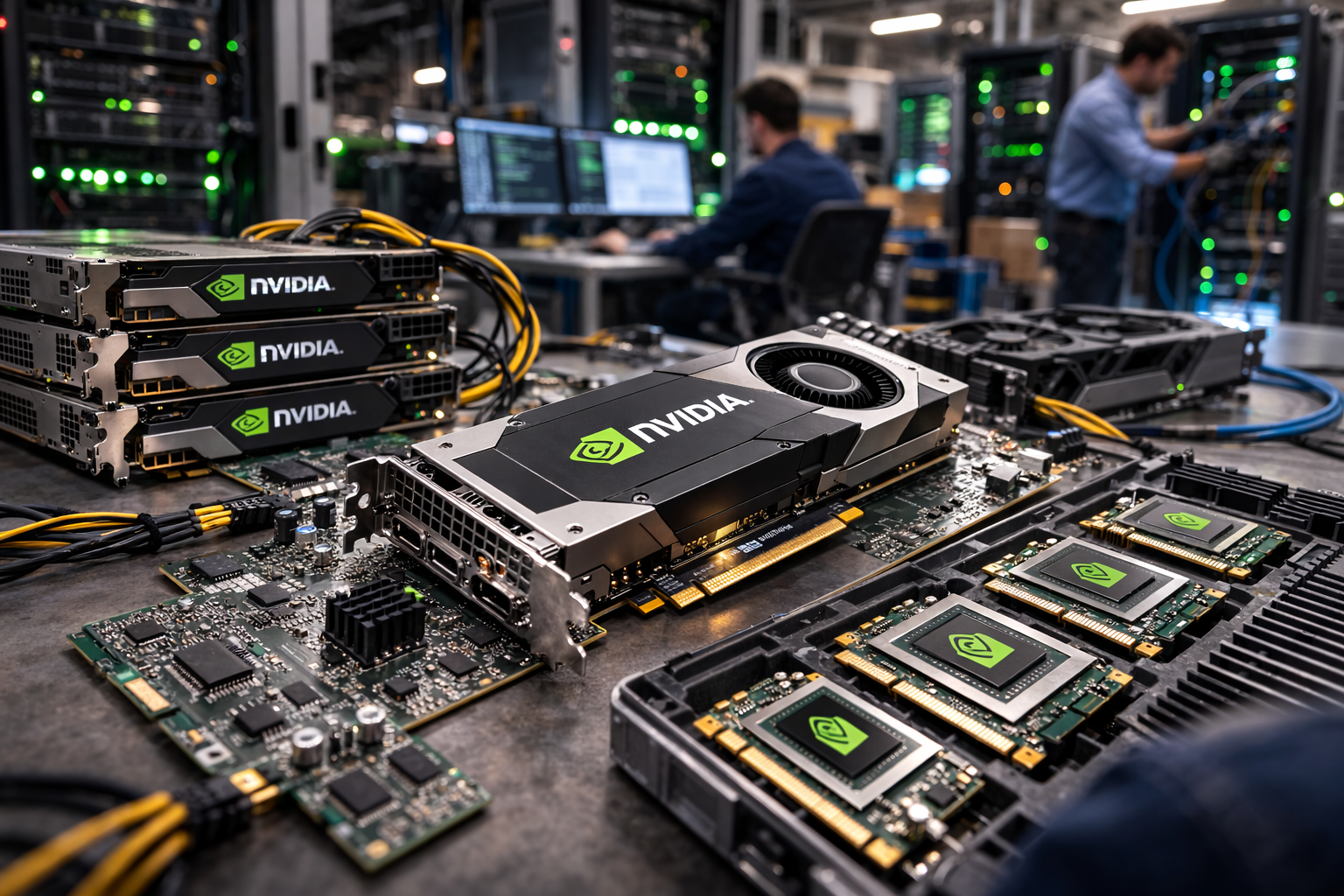
Nvidia once again stuck to its established script on Wednesday, delivering blowout financial results that would normally ignite a market rally.
The chipmaking giant reported that its quarterly profit nearly doubled year-on-year to $43 billion, yet the news failed to enthuse Wall Street.
By the time the opening bell rang on Thursday, Nvidia’s stock price had slid by about 5%, signalling a growing disconnect between the company’s stellar performance and investor expectations.
The company easily beat revenue estimates for its fiscal fourth quarter, posting $68.13 billion against the $66.21 billion anticipated by analysts.
Total revenue increased by 73% compared to the previous year, supported by a staggering gross margin of 75%.
Despite these figures, the immediate market reaction suggests that a "beat and raise" is no longer enough to satisfy a market increasingly sceptical of the long-term AI trade.
The high bar for AI monetisation
The muted gains for the chipmaker may reflect broader anxieties across the technology sector rather than a flaw in Nvidia’s specific business model.
In the opening months of 2026, investors have shifted their focus toward the sheer cost of the artificial intelligence buildout.
The top hyperscalers—including Microsoft, Alphabet, and Amazon—have indicated they plan to spend approximately $650 billion this year alone on infrastructure such as data centres.
Market analysts suggest the needle has shifted.
"Markets are now moving into a phase where they want to see tangible results of AI monetisation before pushing AI stocks above their recent ranges," said Raffi Boyadjian, lead market analyst at Trading Point.
While Jensen Huang, Nvidia’s CEO, told analysts that AI is "only going to get better from here," the market is beginning to fret over how this technology might disrupt existing software industries and whether the billions being poured into hardware will eventually yield a proportional return on investment.
Emerging bottlenecks and competitive pressures
Several logistical factors are also dampening the fervour.
Top hyperscalers are planning to spend nearly $650 billion this year alone; however, NYT columnist Andrew Sorkin said supply constraints for critical components—specifically memory chips—have created a bottleneck industry insiders are calling “RAMageddon.”
Furthermore, he said, the cost of building and maintaining data centres is rising due to increased power requirements and political pressure.
"Steeper competition for Nvidia, including from AMD — which just signed a huge chip supply deal with Meta — Google and others," he said, could be weighing on investor enthusiasm.
Debt concerns and the China question
Investor worry is also extending to the balance sheets of companies funding the AI revolution.
Sorkin said there is growing concern regarding the amount of debt tech companies are raising for data centres.
Private credit lenders, who have been instrumental in funding major projects for companies like Meta, are already showing signs of strain as fears around the software sector's future ripple through the credit markets, he said.
Geopolitics remain a persistent overhang when it comes to the future of AI chip demand in China, once one of Nvidia's biggest markets.
"Washington has allowed the company to sell only small numbers of its H200 chips, a lower-powered model earmarked specifically for the Chinese market, but it’s unclear how many sales Beijing will allow," Sorkin said.
Analysts remain bullish; see a buying opportunity
Despite the immediate share price dip, many stock analysts have raced to lift their forecasts.
JPMorgan raised its price target to $265 a share, suggesting that fears of a slowdown in AI investment are overblown.
Gil Luria at D.A. Davidson echoed this sentiment, stating that demand for compute shows no sign of slowing down for the foreseeable future and maintaining a $250 price target.
KeyBanc analyst John Vinh also raised estimates, noting that Nvidia's guidance "solidly exceeded expectations," particularly in the data centre segment.
Meanwhile, Morningstar analyst Brian Colello maintained that shares remain undervalued at current levels, setting a fair value estimate of $240.
While the broader market appears to be taking a breather, the underlying fundamentals suggest that Nvidia remains the primary architect of the AI industrial revolution.
The post Why Nvidia stock is tanking 5% despite stellar earnings appeared first on Invezz
0
0


 Manage all your crypto, NFT and DeFi from one place
Securely connect the portfolio you’re using to start.


0
0

0
0

0
0