
Arkham Identifies Iran Central Bank Wallets After $344M USDT Freeze

0
0
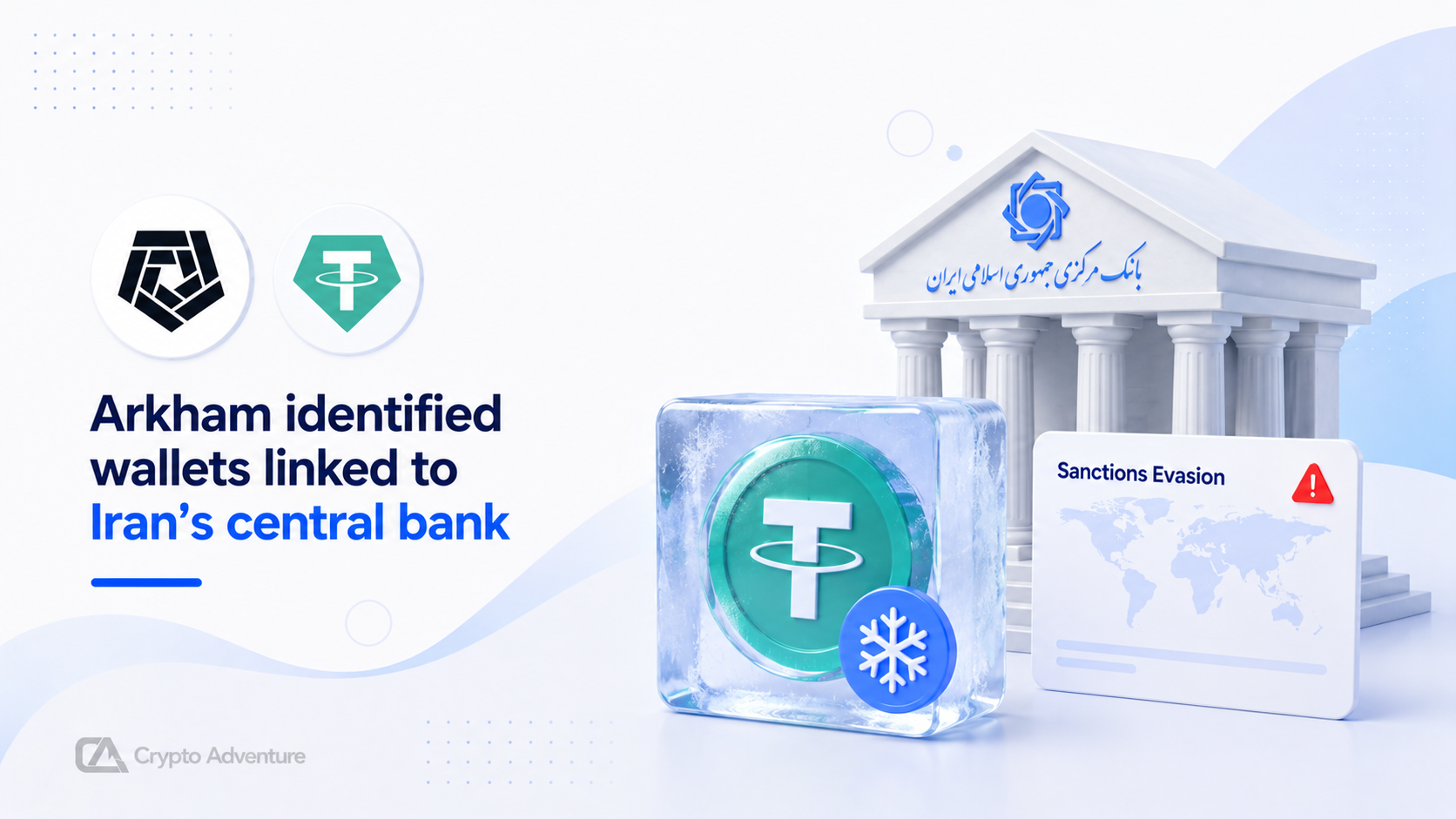
Arkham has identified onchain wallets linked to the Central Bank of Iran after a major USDT freeze tied to suspected sanctions evasion, adding a new layer of visibility to state-linked crypto flows.
The Arkham research update says the label was built from two Tron addresses that were previously frozen by Tether in coordination with the Office of Foreign Assets Control and law enforcement. The frozen balance totaled more than $344 million in USDT, making the action one of the largest stablecoin freezes tied to Iranian state-linked wallets on public record.
Arkham’s Central Bank of Iran entity currently consists of the two Tron addresses linked to the enforcement action. Those wallets are no longer useful for moving liquidity because the USDT has been frozen, but they remain important for investigators trying to map older flows, counterparties, exchange routes and possible connected wallets.
TRM Labs also tied the two addresses to the Central Bank of Iran and described the freeze as approximately $344.2 million across wallets with links to the IRGC-Qods Force and Hizballah. The firm framed the action as the first OFAC designation of wallets associated with Iran’s central bank, highlighting how stablecoin infrastructure is now part of sanctions enforcement.
Stablecoin Freezes Become A Sanctions Tool
The case puts Tron-based USDT back at the center of sanctions scrutiny. Stablecoins remain attractive for cross-border settlement because they are liquid, dollar-denominated and easier to move than traditional banking rails. The same features also make them useful to sanctioned actors trying to preserve access to dollar liquidity outside normal correspondent banking channels.
That tension has become clearer across Iran-linked activity. Earlier coverage of Iranian crypto exchange outflows showed how onchain monitoring can expose sudden movement during geopolitical stress. Separate reporting around Iran demanding Bitcoin tolls for Strait of Hormuz shipping also underlined how crypto rails can enter state-level finance when traditional payment access is constrained.
The enforcement side is also changing. Tether can freeze USDT at the token-contract level when addresses are sanctioned or flagged through law-enforcement channels. That gives centralized stablecoin issuers a direct control point that Bitcoin or fully non-custodial assets do not have. For regulators, that control improves recovery and blocking options. For crypto users, it reinforces the difference between holding a centralized dollar token and holding a censorship-resistant asset.
The latest Arkham label does not mean every Iran-linked wallet has been mapped. Arkham itself noted that the identified entity is only a starting point and that the broader network may include other unidentified wallets and links to Iranian or Russian exchanges. The immediate result is narrower but still important: two frozen Tron addresses now sit inside a labeled Central Bank of Iran profile, giving compliance teams and onchain researchers a clearer starting point for tracing suspected sanctions-evasion flows.
The post Arkham Identifies Iran Central Bank Wallets After $344M USDT Freeze appeared first on Crypto Adventure.
0
0


 Manage all your crypto, NFT and DeFi from one place
Securely connect the portfolio you’re using to start.


0
0

0
0

0
0