
Polkadot Staking Upgrade Aims to Reduce Slashing Risk for DOT Nominators

0
0

The Polkadot staking upgrade is quickly becoming one of the most discussed happenings within the blockchain environment. The blockchain network is updating their staking model in a bid to foster equality, safety, and validation accountability.
The main focus of discussion is on whether the Polkadot staking update will be able to minimize or even nullify validator risks in 2026. With the DOT selling at $1.26 after experiencing some ups and downs in the market, the need to make such an important move becomes more urgent than ever before.
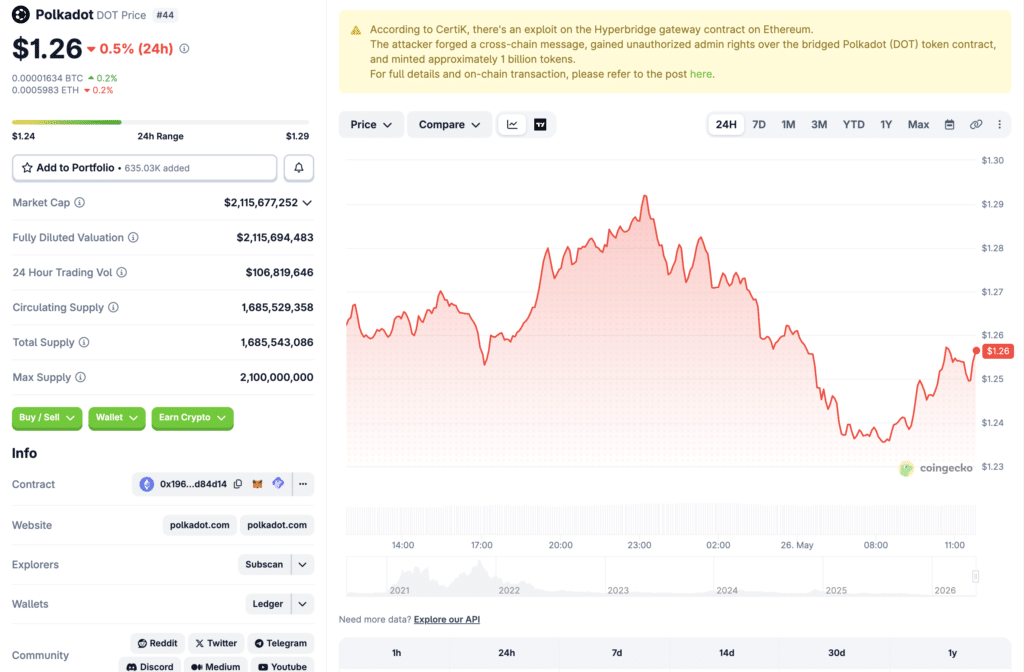
Assessing present-day Polkadot infrastructure
The current discussion regarding the Polkadot staking upgrade requires us first to have an understanding of how Polkadot operates at present. Polkadot has adopted the model of Nominated Proof-of-Stake, wherein validators are in charge of performing the processes on the network while nominators hold onto their DOTs.
Although it promotes distribution among all users, this has its downsides, especially when it comes to risk-sharing among all parties involved. In the current scenario, both validators and nominators may lose funds if slashing were ever to take place.
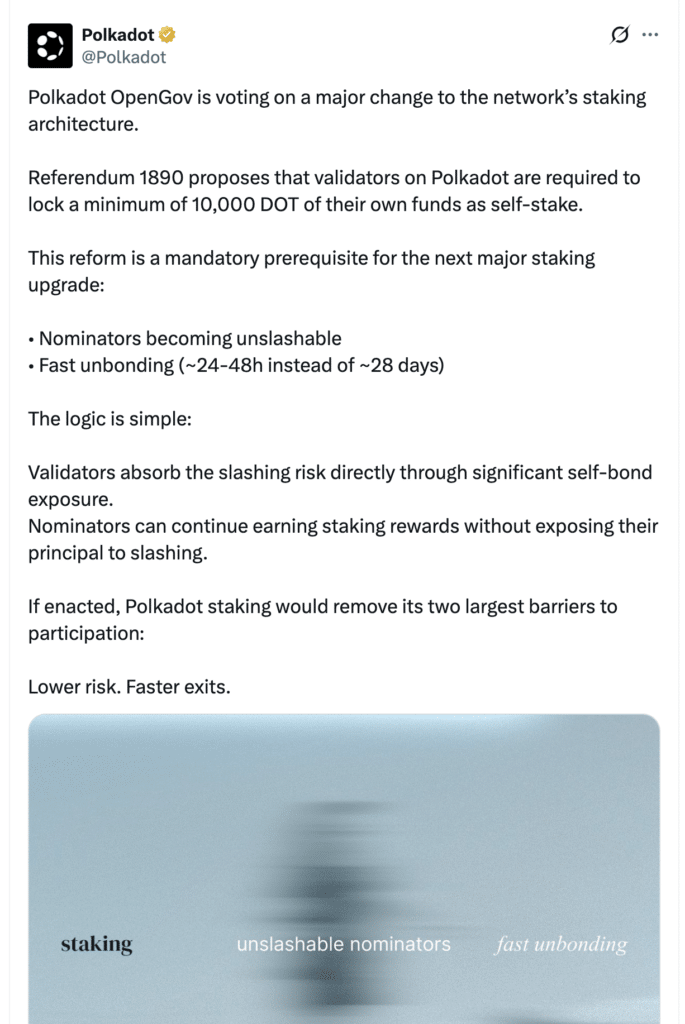
Referendum 1890 and Validator First Strategy
An important factor in the motivation behind the introduction of the new Polkadot staking protocol is the passage of Referendum 1890 in the context of Polkadot OpenGov system. According to this proposition, validators will be forced to self-stake no less than 10,000 DOTs. Such measure implies the transfer of economic liability to the validators directly.
As a result, Polkadot staking changes will undergo a significant transformation since nominators may receive additional protection in case of slashing penalties which means that they will have much lower downside risks. The Polkadot staking upgrade latest news 2026 provides valuable insight into the possible implications of this development.
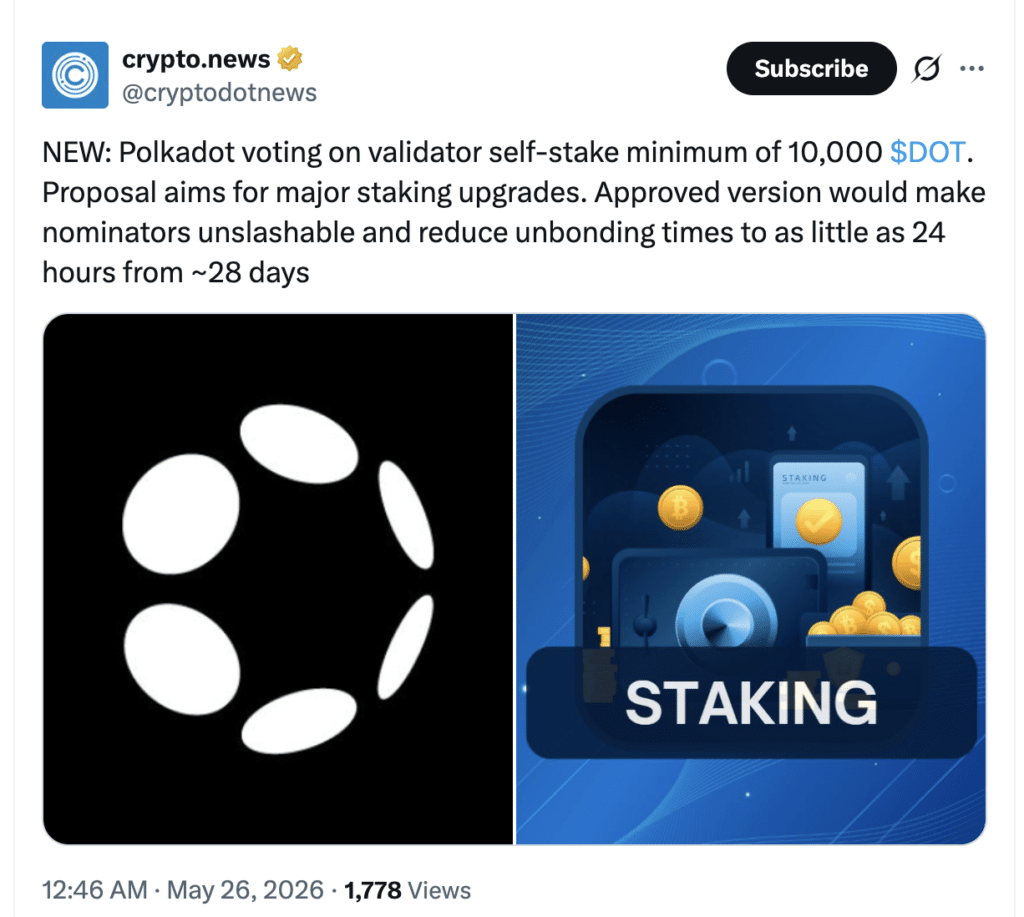
Validator Risk Reduction and Slashing Protocol
In regard to the Polkadot staking upgrade, another controversial issue is connected to the nature of such process itself – namely, if this process actually reduces risks of becoming involved in the process of validation on Polkadot network, or only relocates them. In other words, before nominators incur serious slashing penalties, the validator will have to burn the stake of the validator itself. This leads to an interesting question of whether Polkadot validators will remain risk-free, or just more liable.

Fast unbonding and improved capital flexibility
Another important feature tied to the Polkadot staking upgrade is the reduction of the unbonding period. Currently, users must wait up to 28 days to withdraw staked DOT, creating liquidity constraints. The proposed changes shorten this window to as little as 24–48 hours. This adjustment significantly impacts what Polkadot staking changes mean for DOT holders, especially those seeking flexibility in volatile markets.
Faster unbonding improves capital efficiency while maintaining staking incentives. The Polkadot staking upgrade also aims to remove friction that has historically discouraged more active participation in staking.
Market dynamics and staking competition
The Polkadot staking upgrade arrives at a time when staking competition across Layer-1 blockchains is intensifying. Polkadot’s staking market cap ranks seventh at around $1.1 billion, while Ethereum dominates with over $82 billion. This gap highlights differences in adoption and capital allocation. Despite recent recovery from market disruptions, DOT remains under pressure.
The Polkadot network upgrade could strengthen investor confidence by improving staking design and reducing perceived risks. However, broader DOT staking news suggests that market sentiment will still depend heavily on adoption and ecosystem growth.

Validator rewards and long-term network impact
The Polkadot staking upgrade is not only about risk reduction but also about improving reward consistency. By increasing validator responsibility, the system aims to create more reliable network performance and fairer Polkadot validator rewards distribution. This raises a broader question: How Polkadot staking model upgrade affects validators in the long term.
Higher self-stake requirements could reduce casual participation but increase professionalism among validators. The balance between decentralization and performance remains a core challenge as Polkadot continues evolving its staking architecture.
Conclusion
The Polkadot staking upgrade represents a major structural shift in how staking operates within the ecosystem. By increasing validator accountability, improving liquidity access, and reducing nominators’ exposure to slashing, the network is aiming for a more efficient and secure model.
However, the question of whether validators become truly risk-free remains unresolved. Instead, risk is being redistributed rather than eliminated. The Polkadot staking upgrade could strengthen long-term stability, but success will depend on validator participation, governance decisions, and broader market adoption. Investors should closely monitor developments as these changes unfold in 2026 and beyond.
Appendix: Glossary of Key Terms
The Polkadot staking upgrade refers to proposed changes in Polkadot’s staking system designed to improve security and efficiency.
Validators are participants who run nodes and secure the network.
Nominators are DOT holders who delegate tokens to validators. Slashing is a penalty applied for malicious or faulty behavior.
Unbonding period refers to the waiting time required to withdraw staked tokens.
Referendum 1890 is a governance proposal under Polkadot OpenGov aimed at increasing validator self-stake requirements.
Frequently Asked Questions About Polkadot staking upgrade
What is the Polkadot staking upgrade?
The Polkadot staking upgrade is a proposed change to Polkadot’s staking system that increases validator self-stake requirements and reduces nominators’ exposure to slashing risks. It is designed to improve network fairness and security.
Will validators become risk free after the Polkadot staking upgrade?
The Polkadot staking upgrade does not make validators risk-free. Instead, it shifts more financial responsibility onto validators while protecting nominators from direct slashing losses.
How does Referendum 1890 impact staking?
Referendum 1890 introduces mandatory validator self-staking of at least 10,000 DOT. This change is a core part of the Polkadot staking upgrade and increases validator accountability.
References
Read More: Polkadot Staking Upgrade Aims to Reduce Slashing Risk for DOT Nominators">Polkadot Staking Upgrade Aims to Reduce Slashing Risk for DOT Nominators
0
0

 Manage all your crypto, NFT and DeFi from one place
Securely connect the portfolio you’re using to start.


0
0

0
0

0
0